
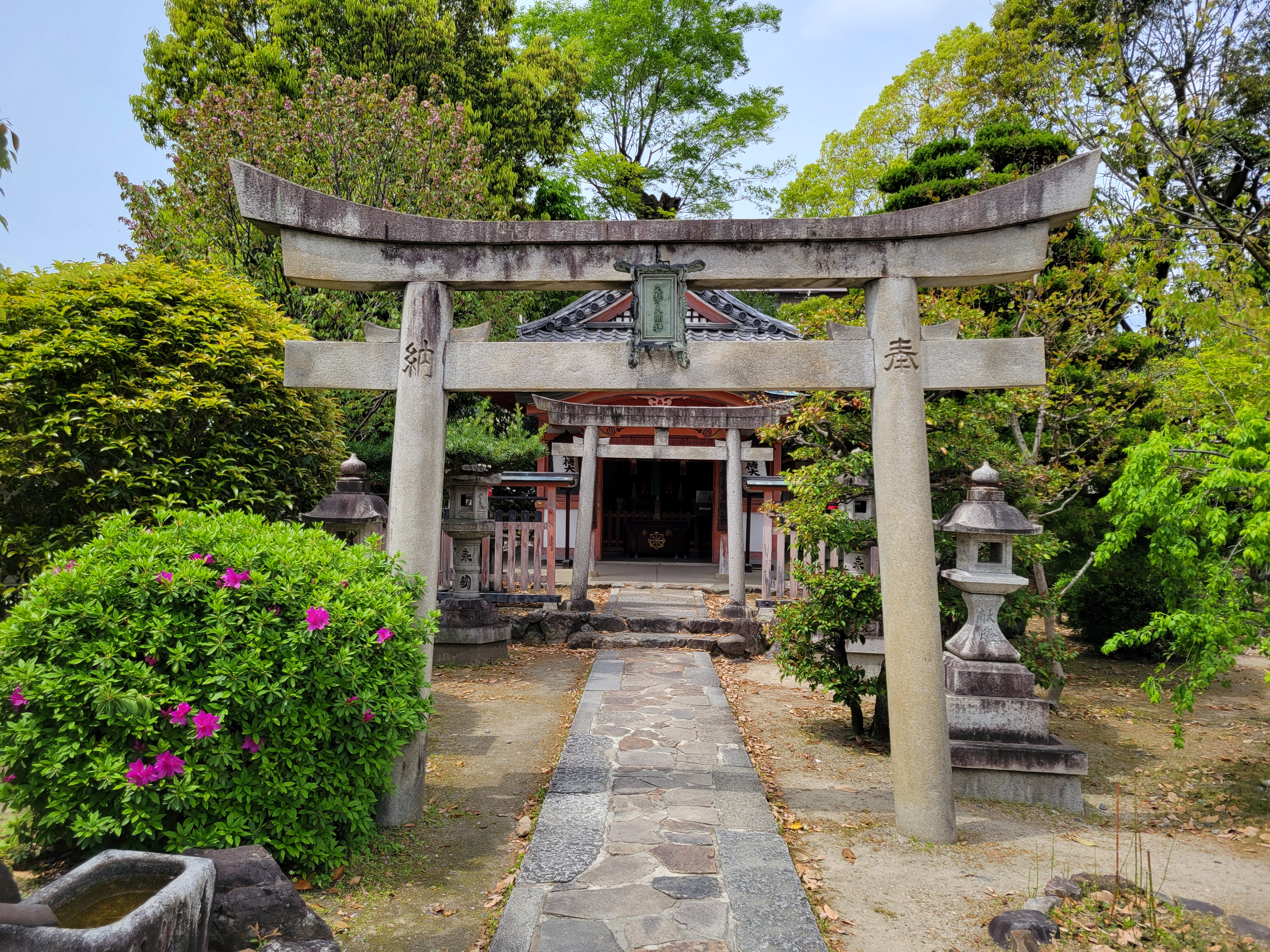
If you decide to come to Japan, at least read the wikipedia article on Shintoism–it’ll make things a lot clearer because you’re going to be seeing a lot of shrines. It’s funny–I don’t have to do that sort of research when I am a tourist visiting European churches because Christianity is something I sometimes understand. Shintoism is totally foreign. Plus Christianity is an exclusivist religion–you can’t worship or perform rites to any other deities so it’s generally less messy. Shintoism and Buddhism are very intertwined in Japan and honestly I think generally most people are okay with this. Why choose if you don’t have to?
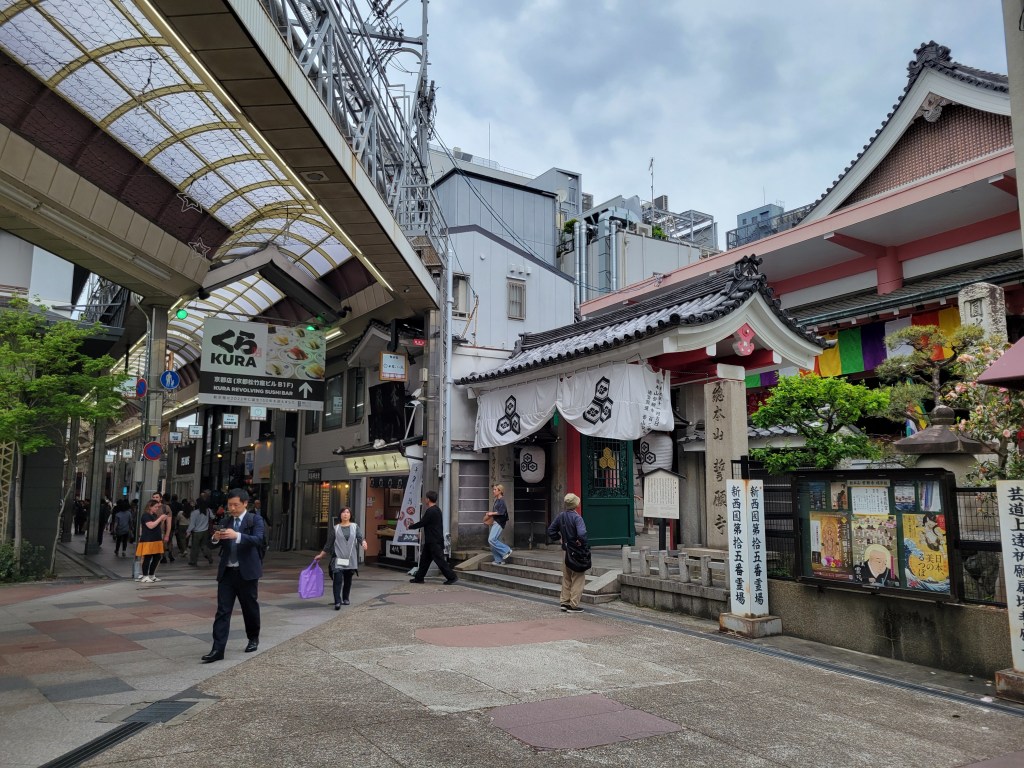
Anyway, the shrines are everywhere. This is in the main shopping area. Right in the middle, between Zara and a place that sells eyeglasses, a shrine.
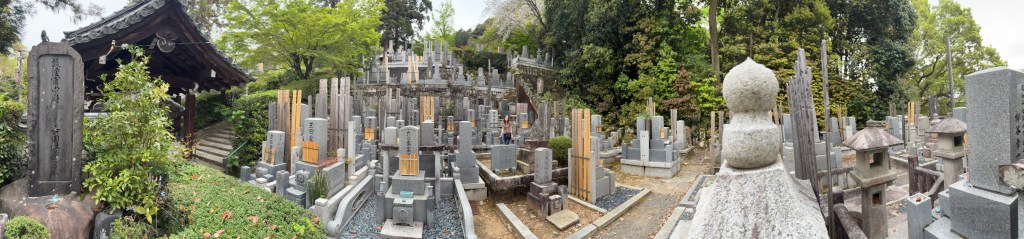
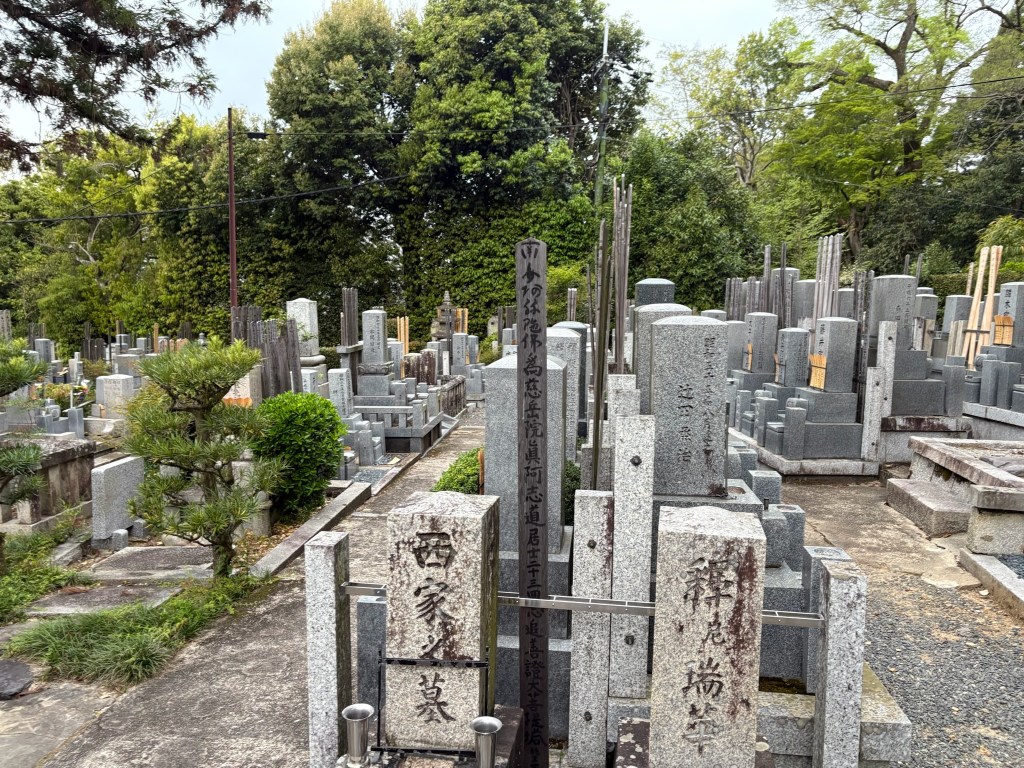
When we arrived in Kyoto, we went to a park nearby with, you guessed it, a shrine, but also a cool Buddhist graveyard. The wooden planks are called sotoba and they are inscribed with the name, prayers, and day of death of the deceased.
Fushimi Inari Taisha Shrine
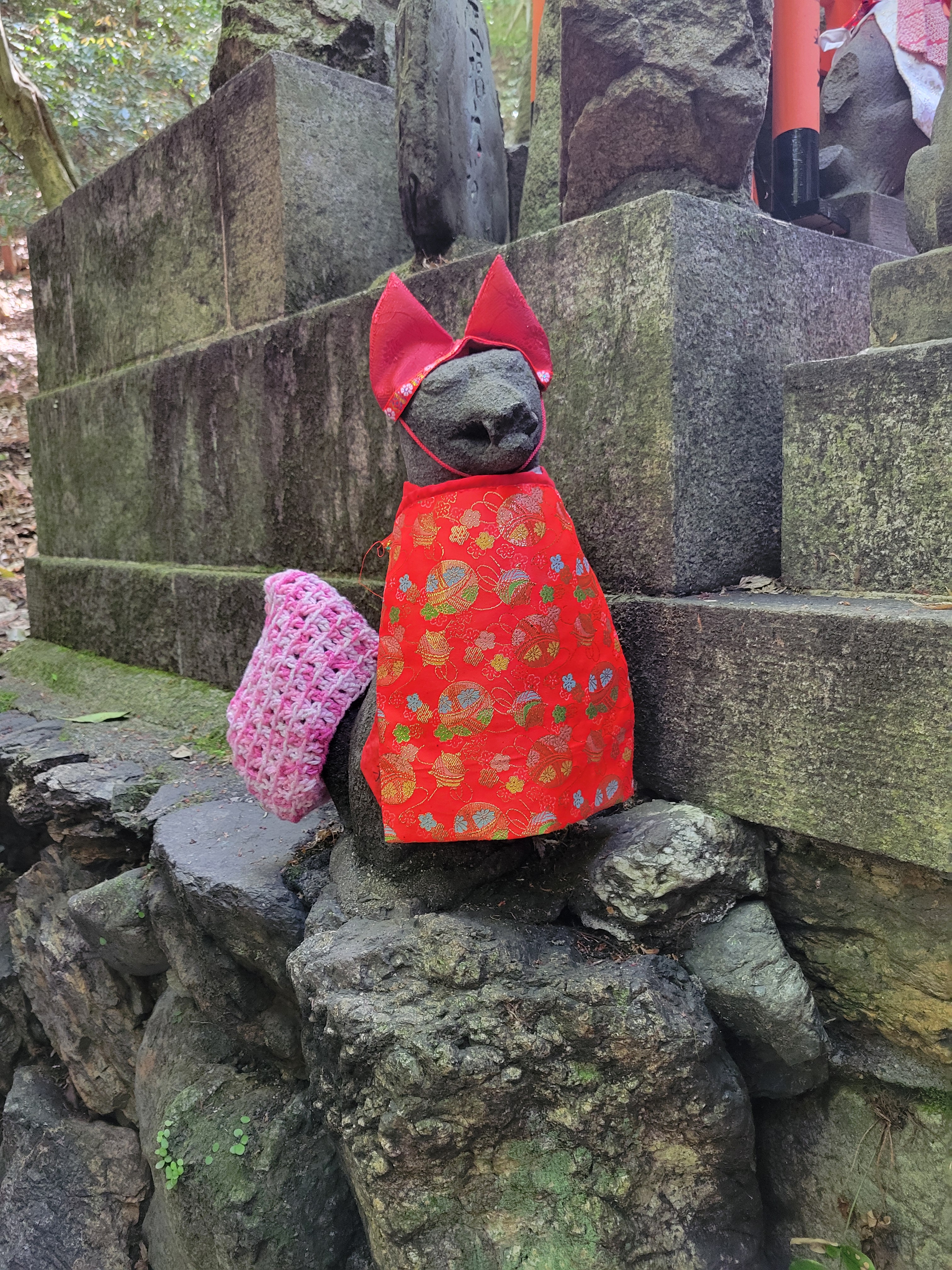
This next Shinto shrine is dedicated to Inari, a popular kami or deified ghost, that is associated with fertility, good fortune, and foxes. It is exceptional for its 10,000 bright red gates. We hiked through as many as we could–up the mountain and back down again; it’s about 3km and according to our phones, 57 flights of stairs. It was a beautiful, cool day and the insane crowds thinned out as we climbed higher.
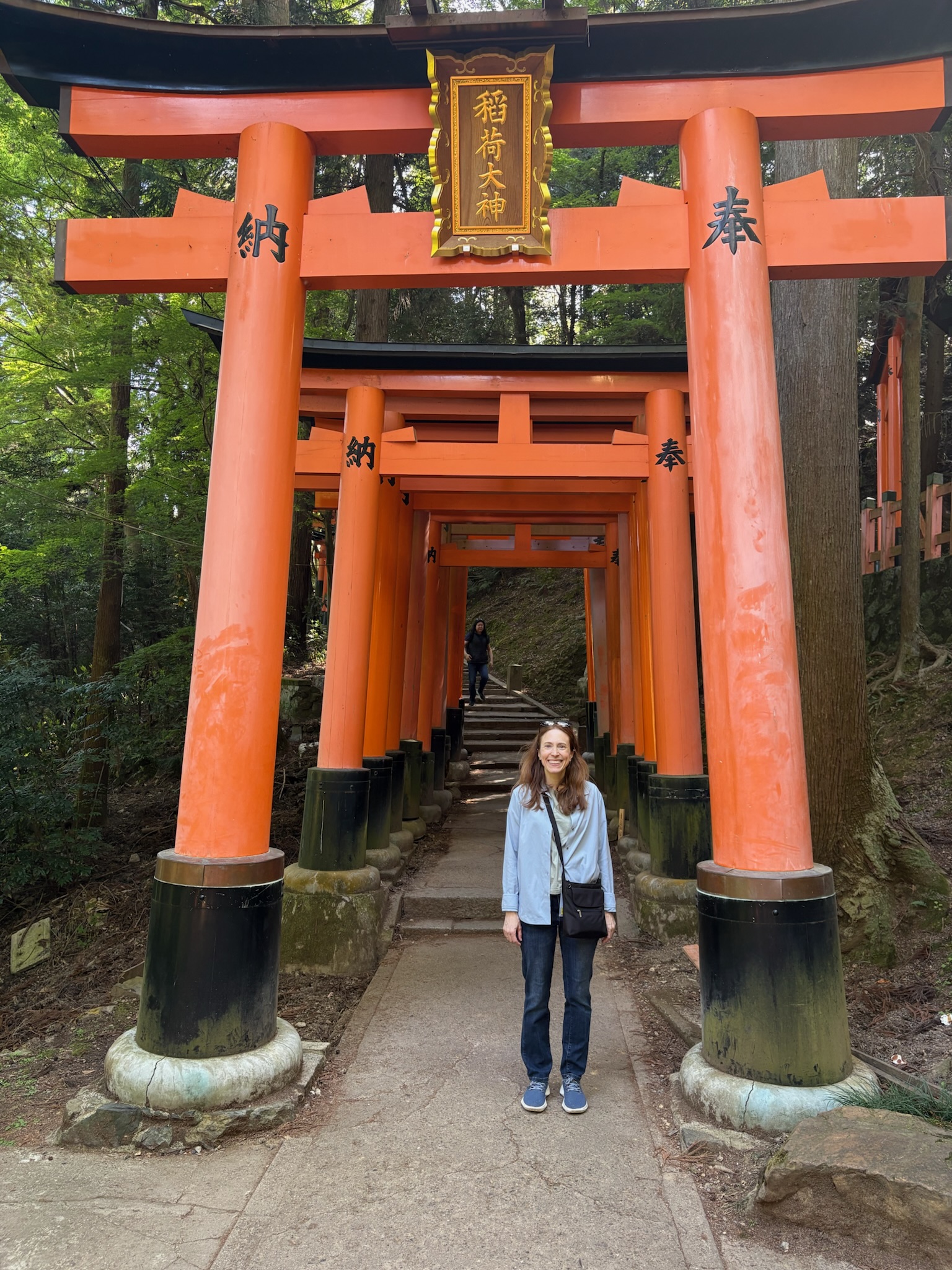
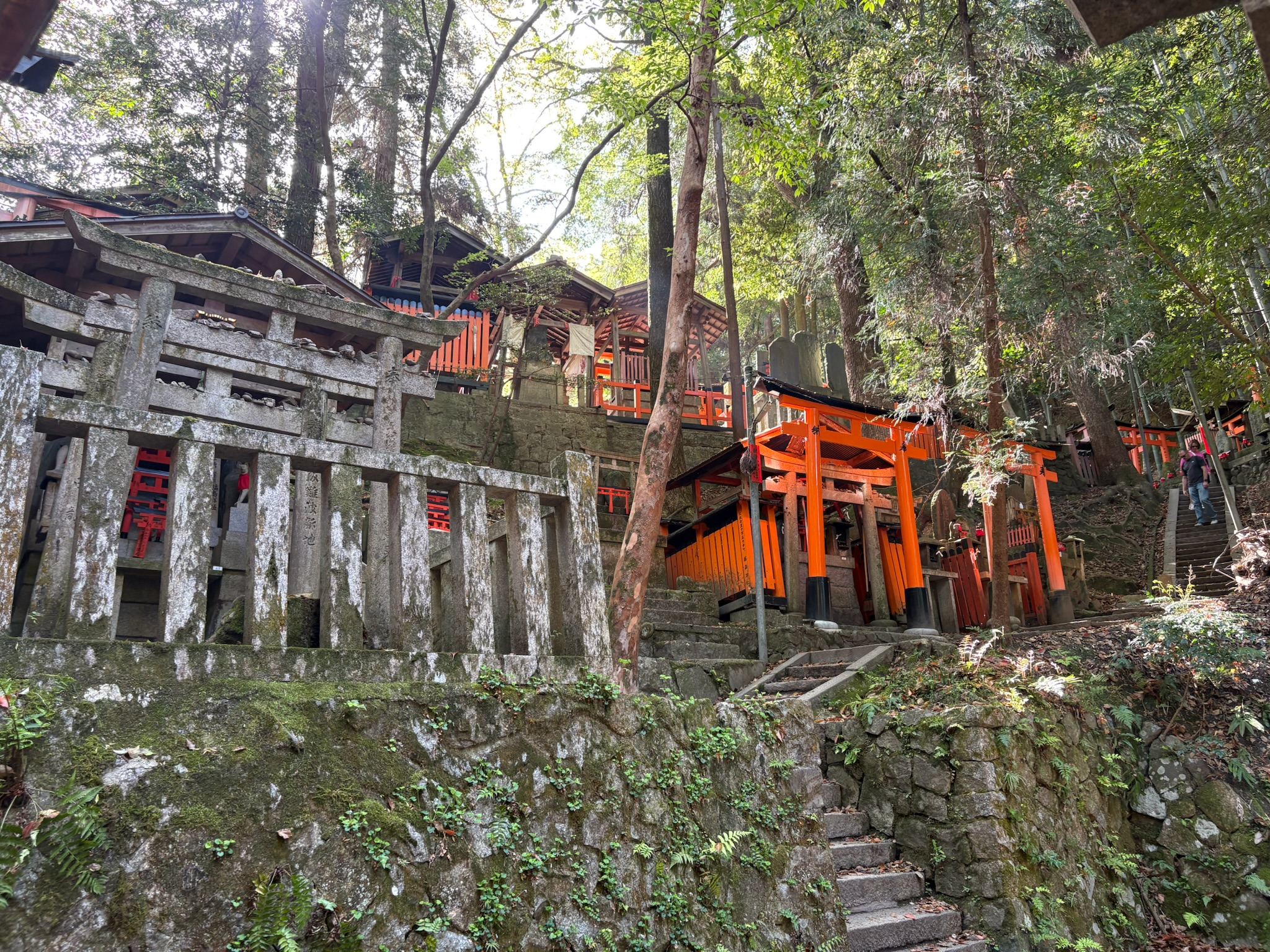
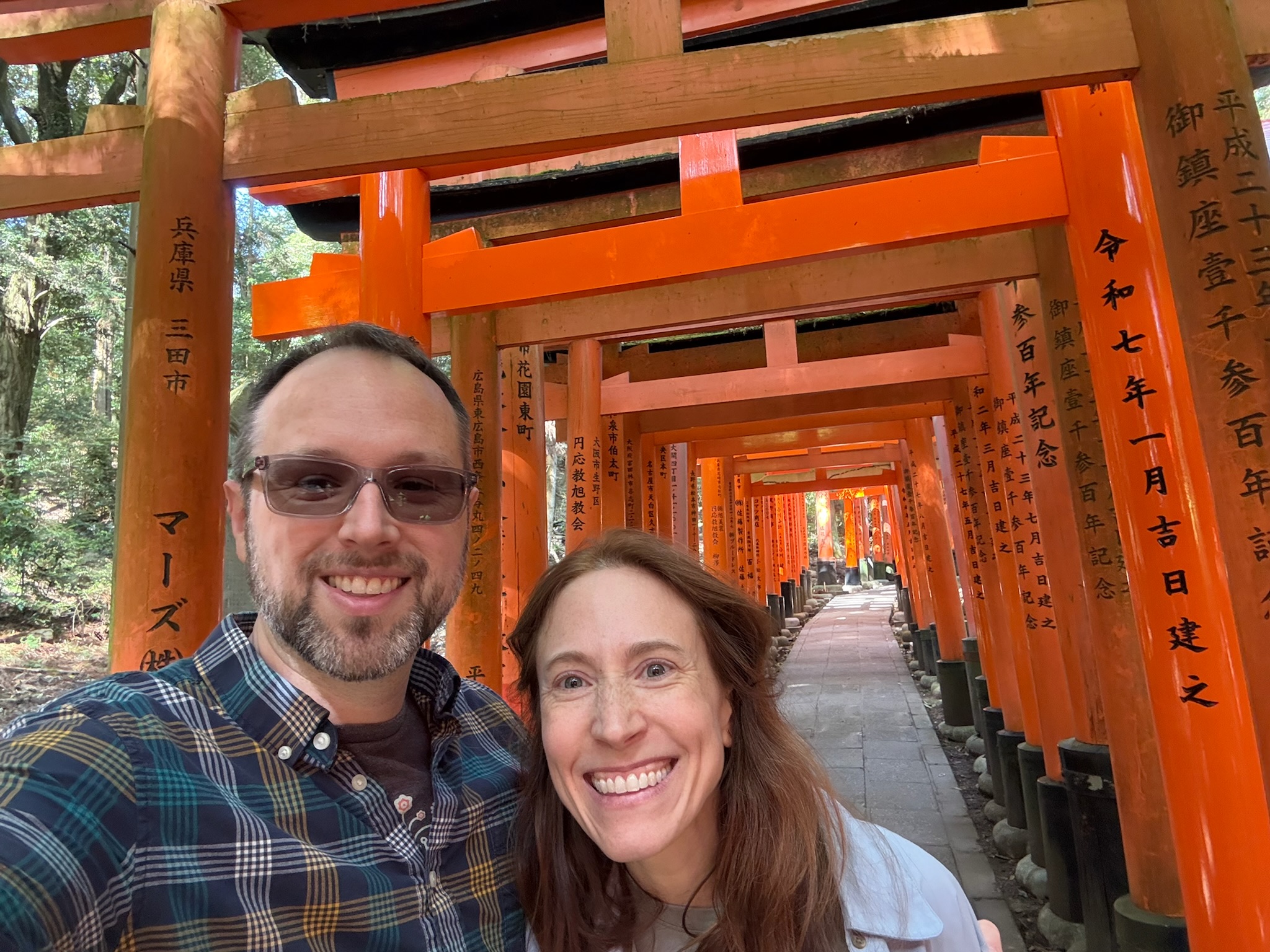
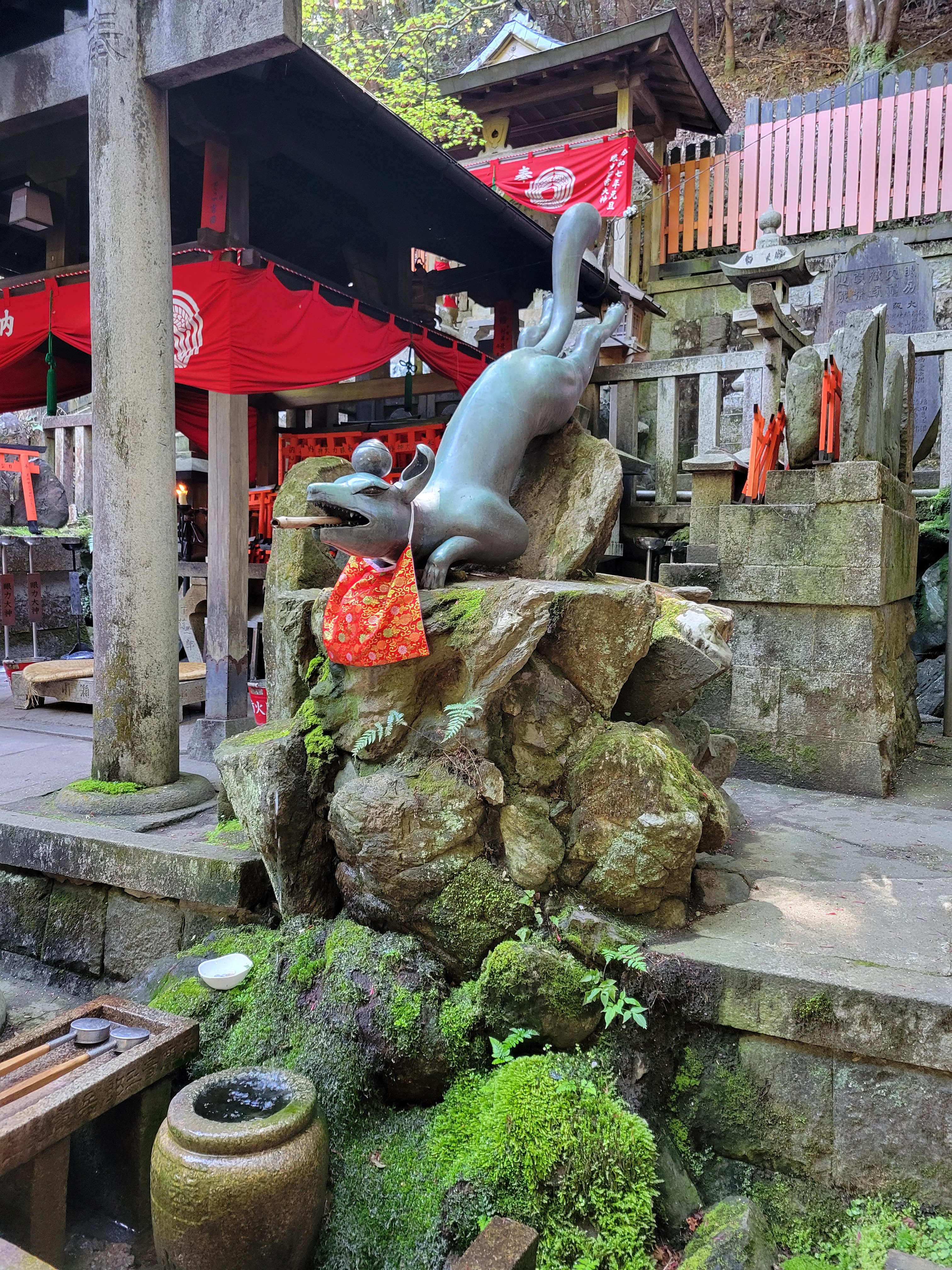
When we finished our climb, Garett went to the bathroom and then these three sweet tween girls came up and asked me to take my picture with them. I don’t have any record of this, but I wanted to mention it so I don’t forget in the future. It was pretty fun.
Kiyomizu-dera Buddhist Temple
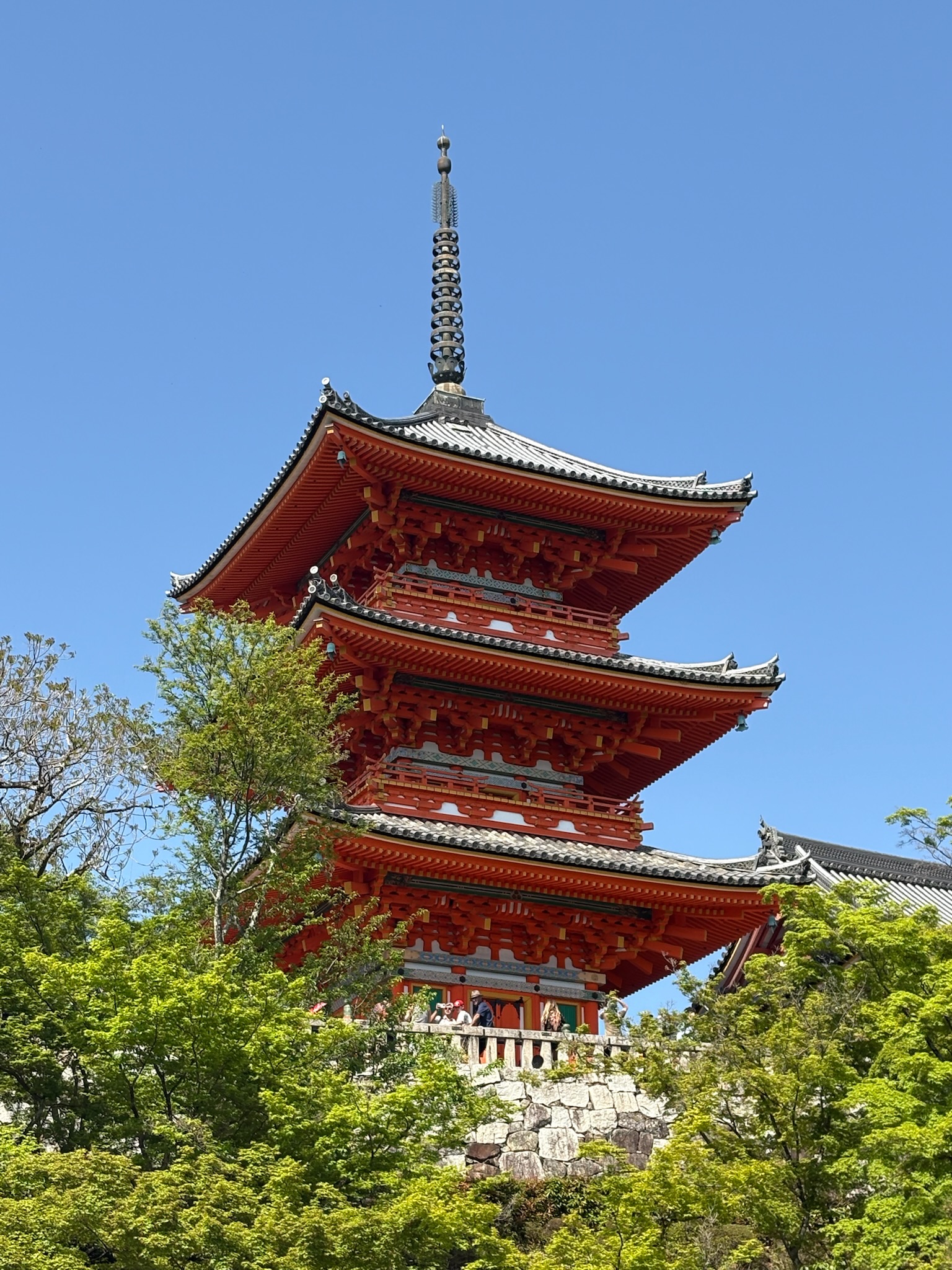
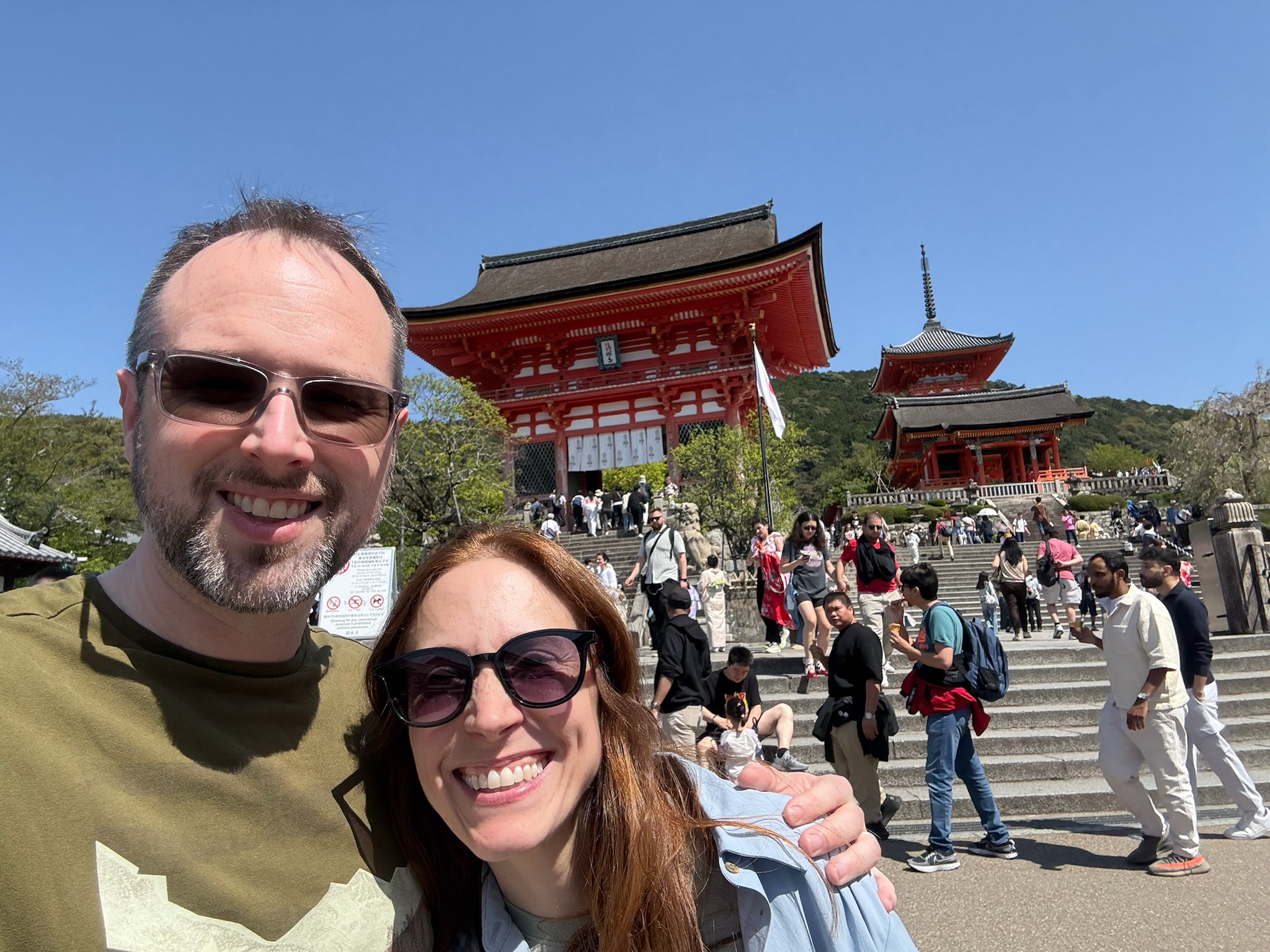
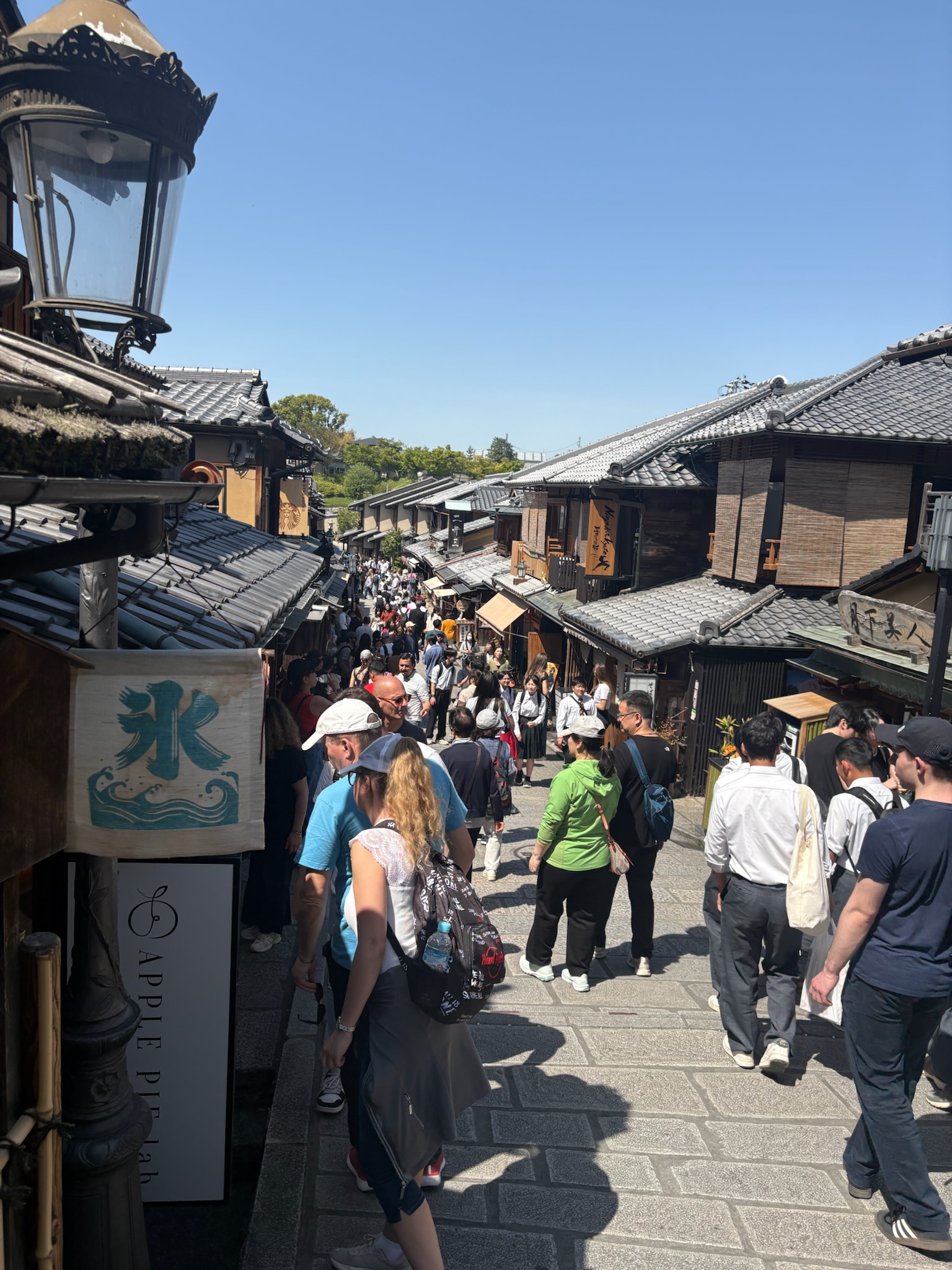
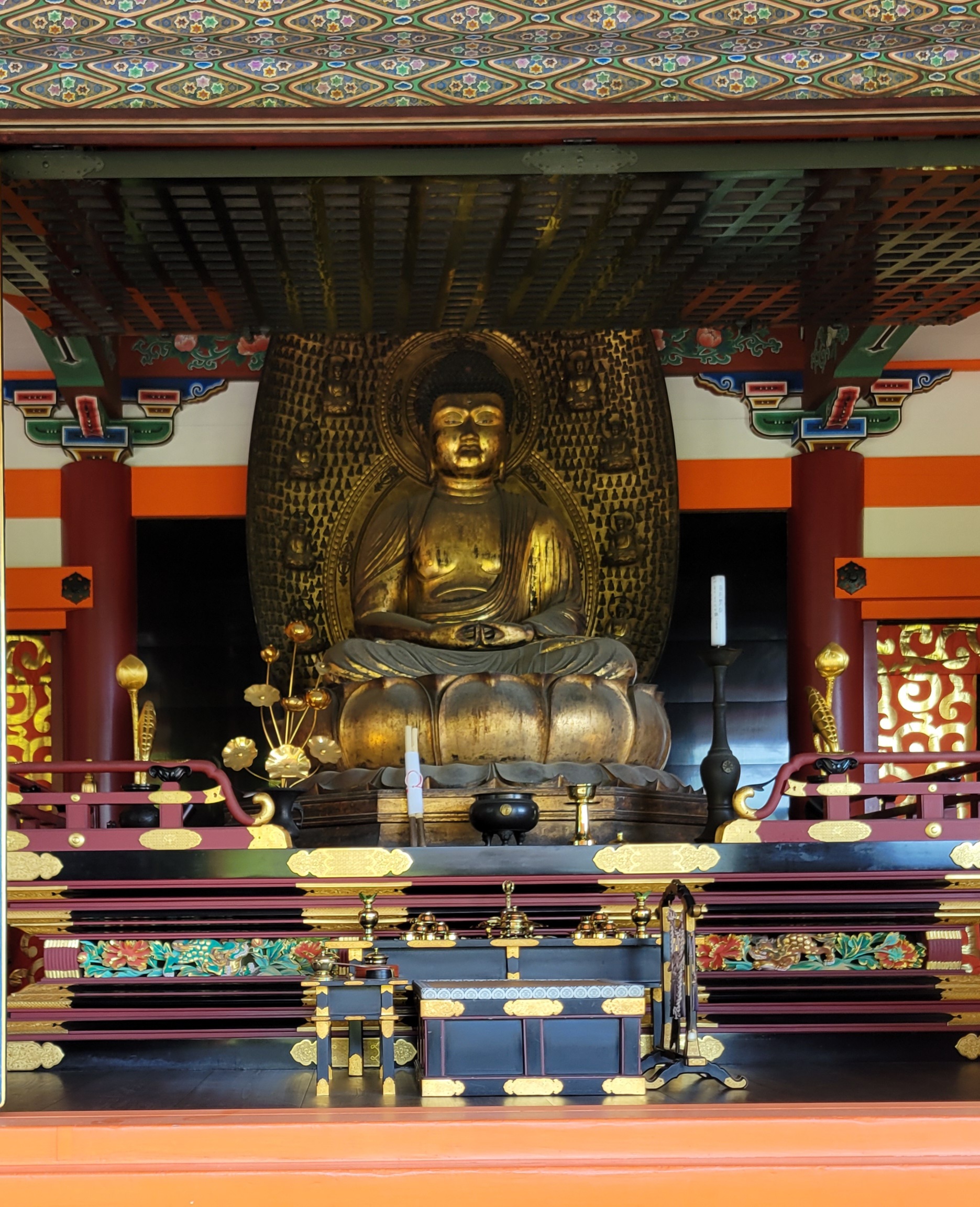
We then went to the Buddhist temple, Kiyomizu-dera. We had to climb up a pretty commercialized and crazy street called the Ninenzaka Walkway/Sannenzaka to get there and when got to the top, it was pretty crowded. Totally worth it though; it was pretty unbelievable. As a person who has been to a lot of churches, the amount of gilding didn’t surprise me, but the colors and patterns were so bright and lovely. Not a lot of bright orange Christian buildings.
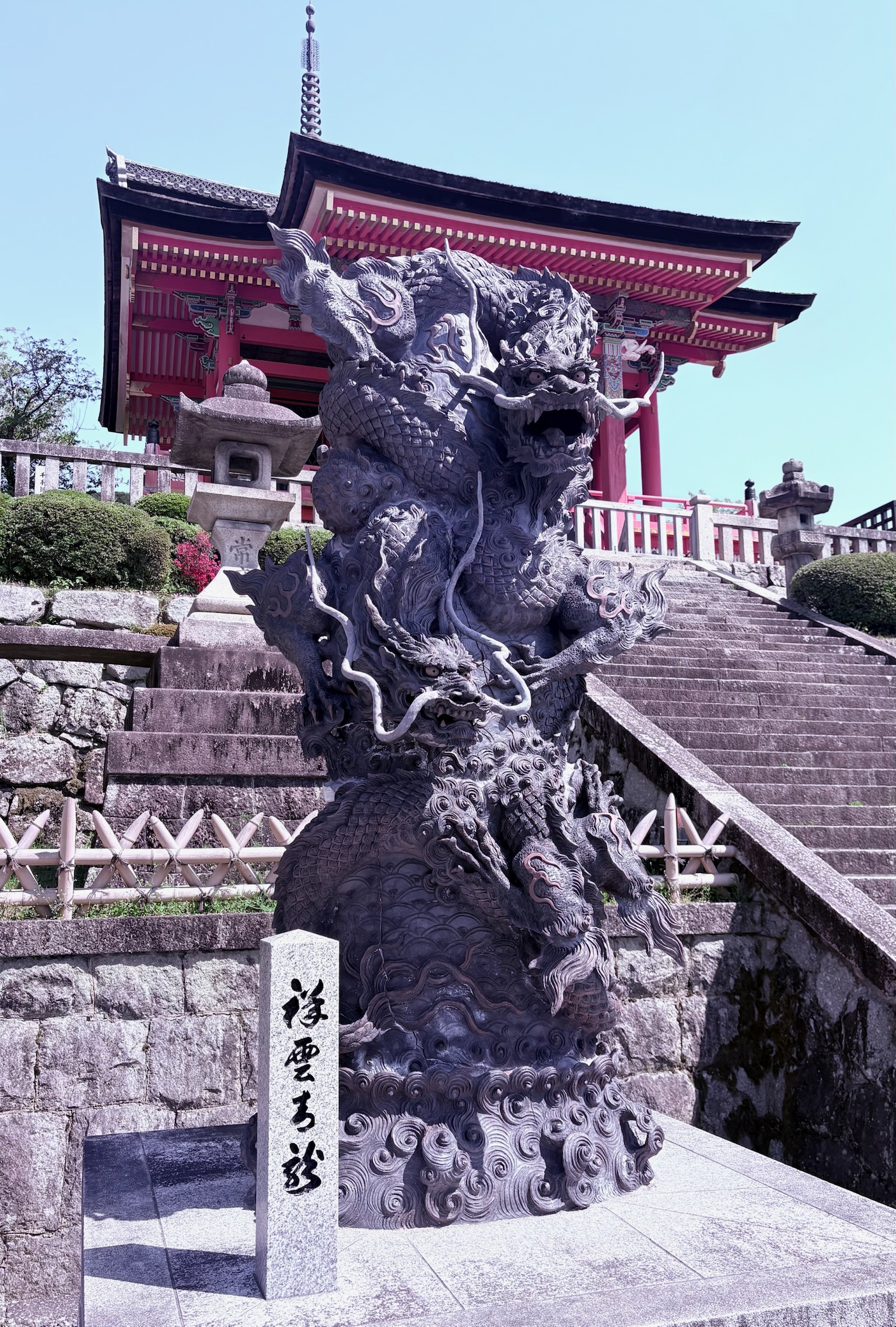
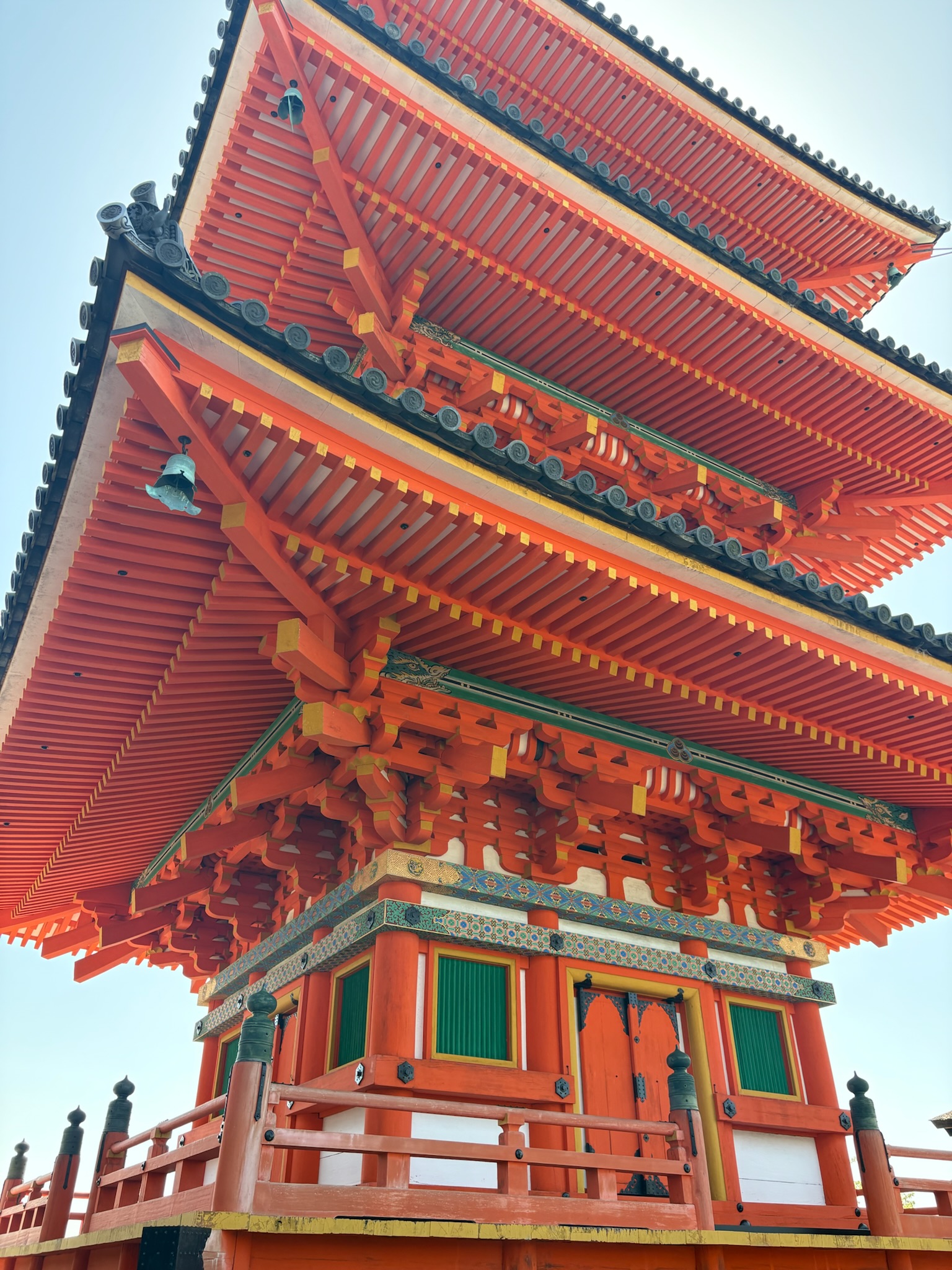
Sanjusagendo Temple and Kyoto National Museum
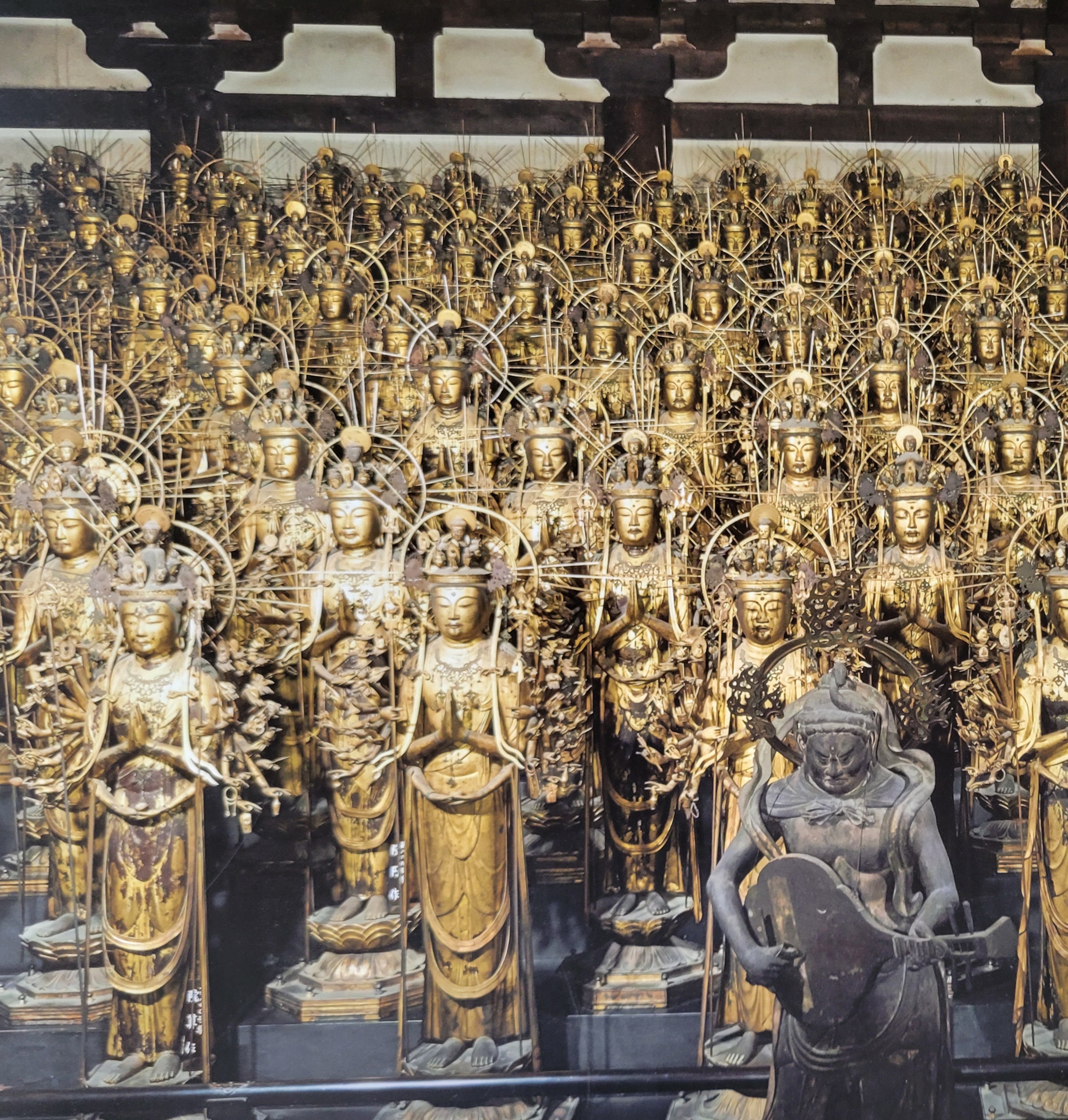
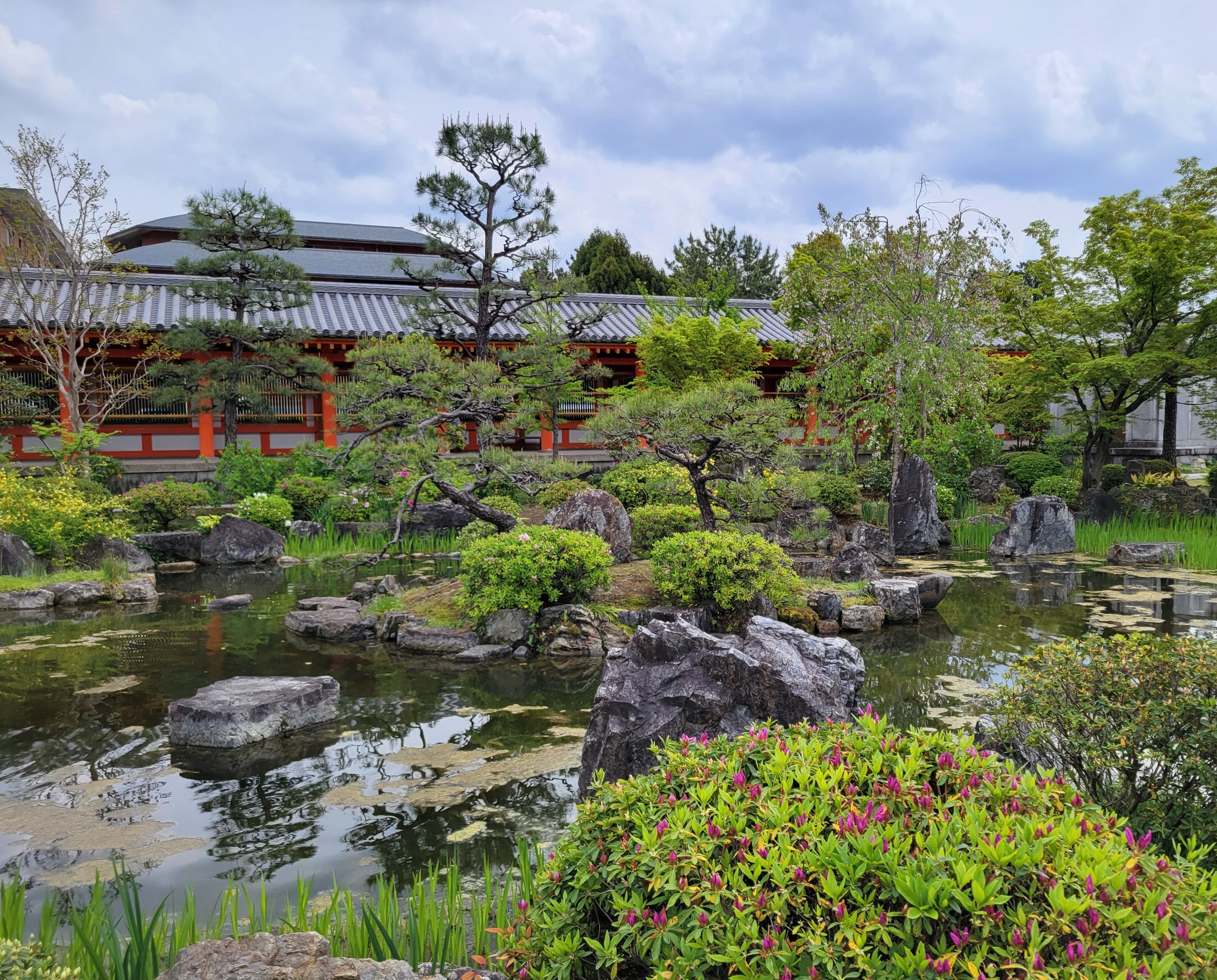
Today (Apr 22) Garett was feeling under the weather, so I took the chance to go to the Sanjusagendo temple, which has 1001 Buddhas! There were no pictures in the temple and we all had to take our shoes off. I took a picture of the Buddhas from a board posted outside. This one really made me wish I read Japanese–I couldn’t use my phone to translate because it would look like I was taking pictures–the Japanese signage was so much more comprehensive. This makes a lot of sense because it’s Japan and also the tourists were pretty much all Japanese school children. I just wanted to know so bad what all those Buddha arms meant–check them out! The grounds were also very beautiful and very Japanese–I love the spiky Japanese pine trees. Also, on the grounds there was another shrine to the kami, Inari (the one with all the gates/foxes above). This means that within the grounds of a Buddhist temple, there is also a Shinto shrine. You can do it all in one place.
I also went to the Kyoto History museum. They were having a special exhibition called: “Japan: An Artistic Melting Pot.” There was only one thing we were allowed to photograph in the entire museum. Here is Rahula, pulling open his chest to reveal the Buddha.
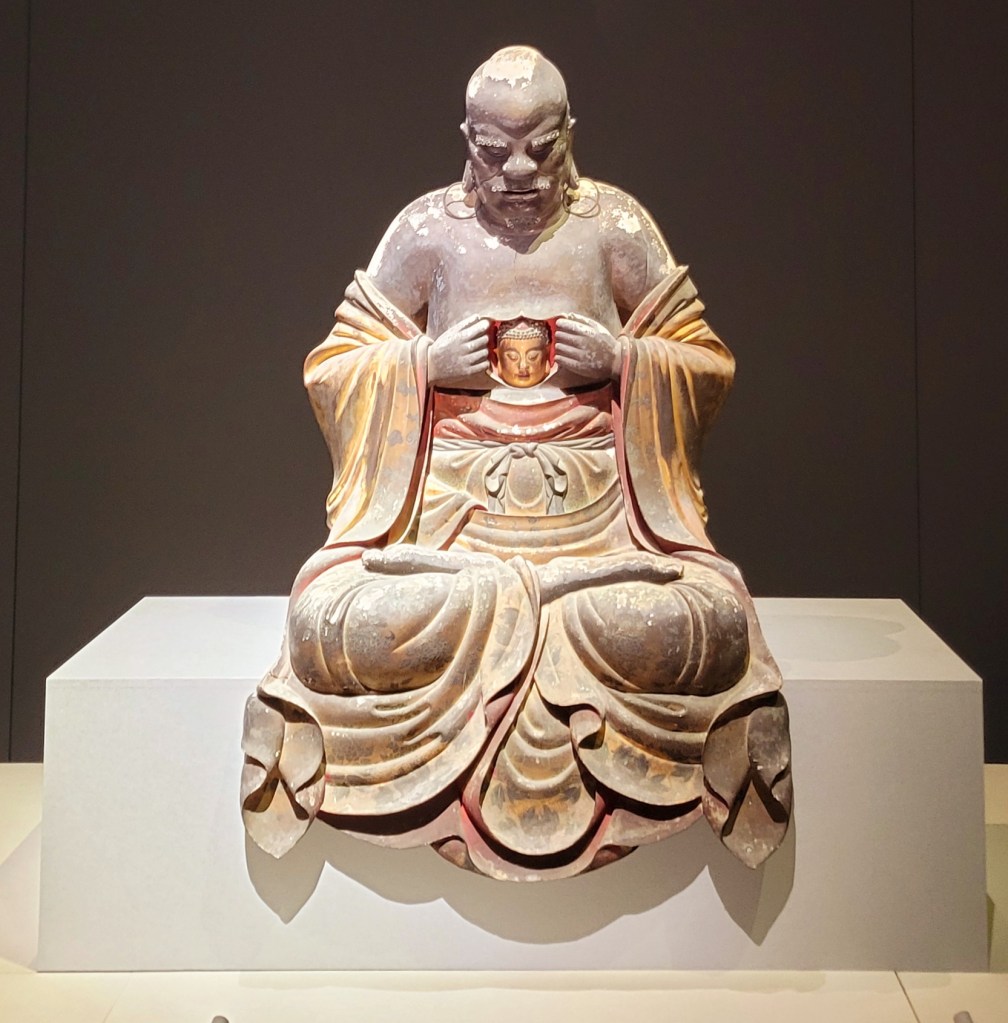
Generally I think that it’s okay I can’t share with you what I saw (although there was a tapestry with Priam and Hecuba, which is crazy to see in Japan). Basically the exhibition was about how Japanese art and world art flow together. Anyway, if you want to look at the building that houses the collection, you can see a wonderful example of the “artistic melting pot.” The building has obvious European and ultimately Greek influences–check out the columns!

But the pediment is distinctly Japanese.

Food Pictures
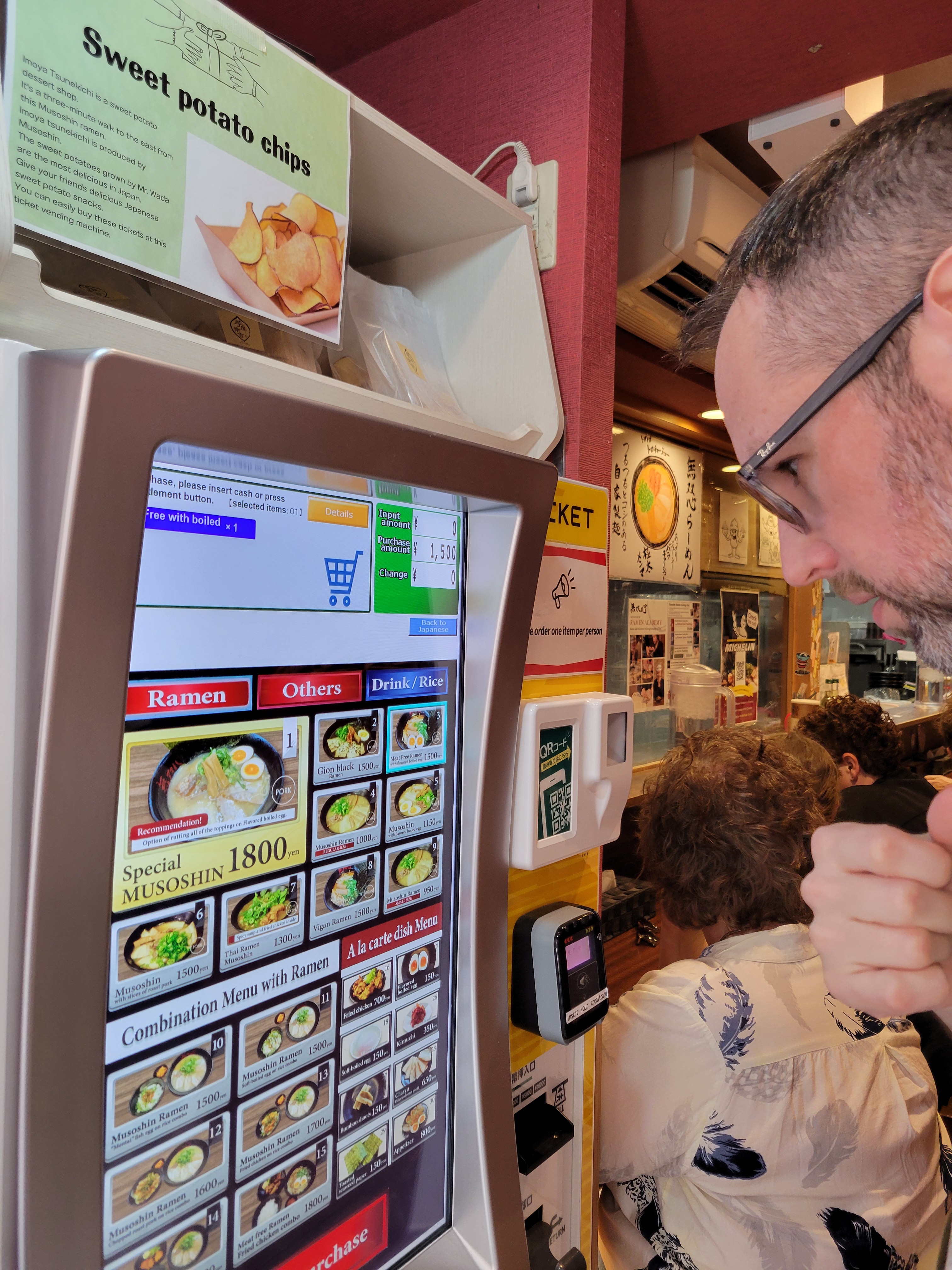
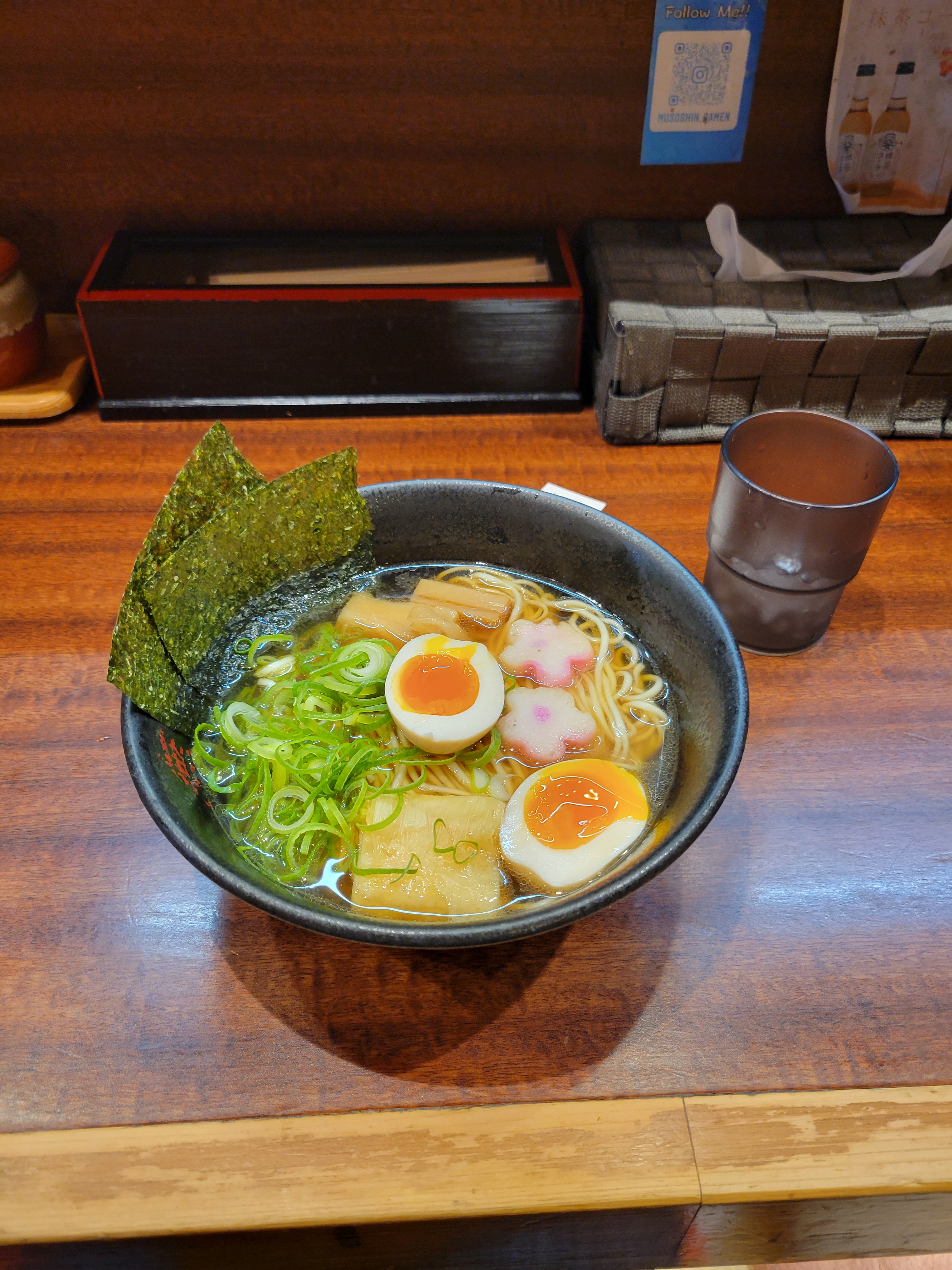
More Ramen – we had to order it in English, obviously.
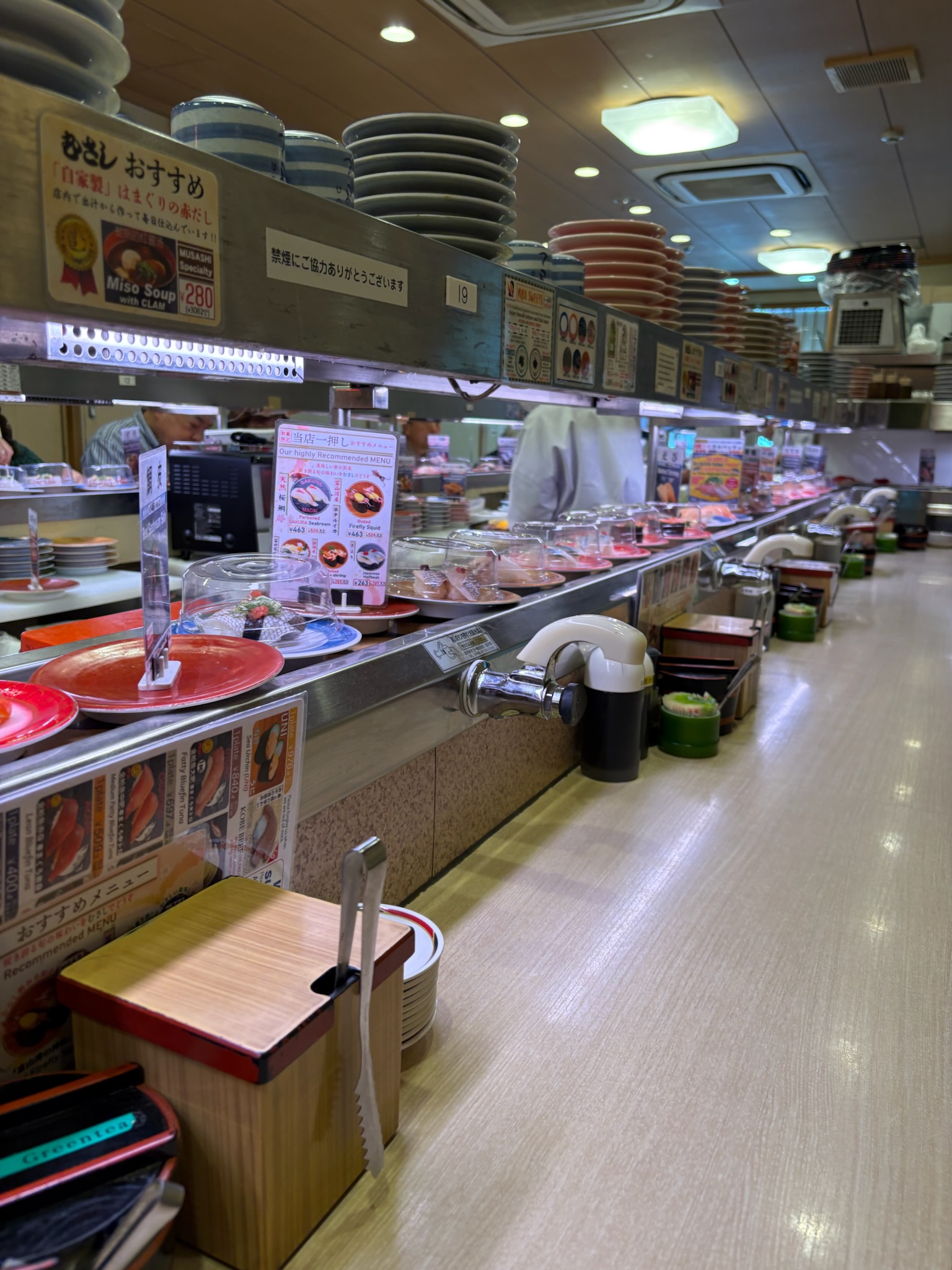
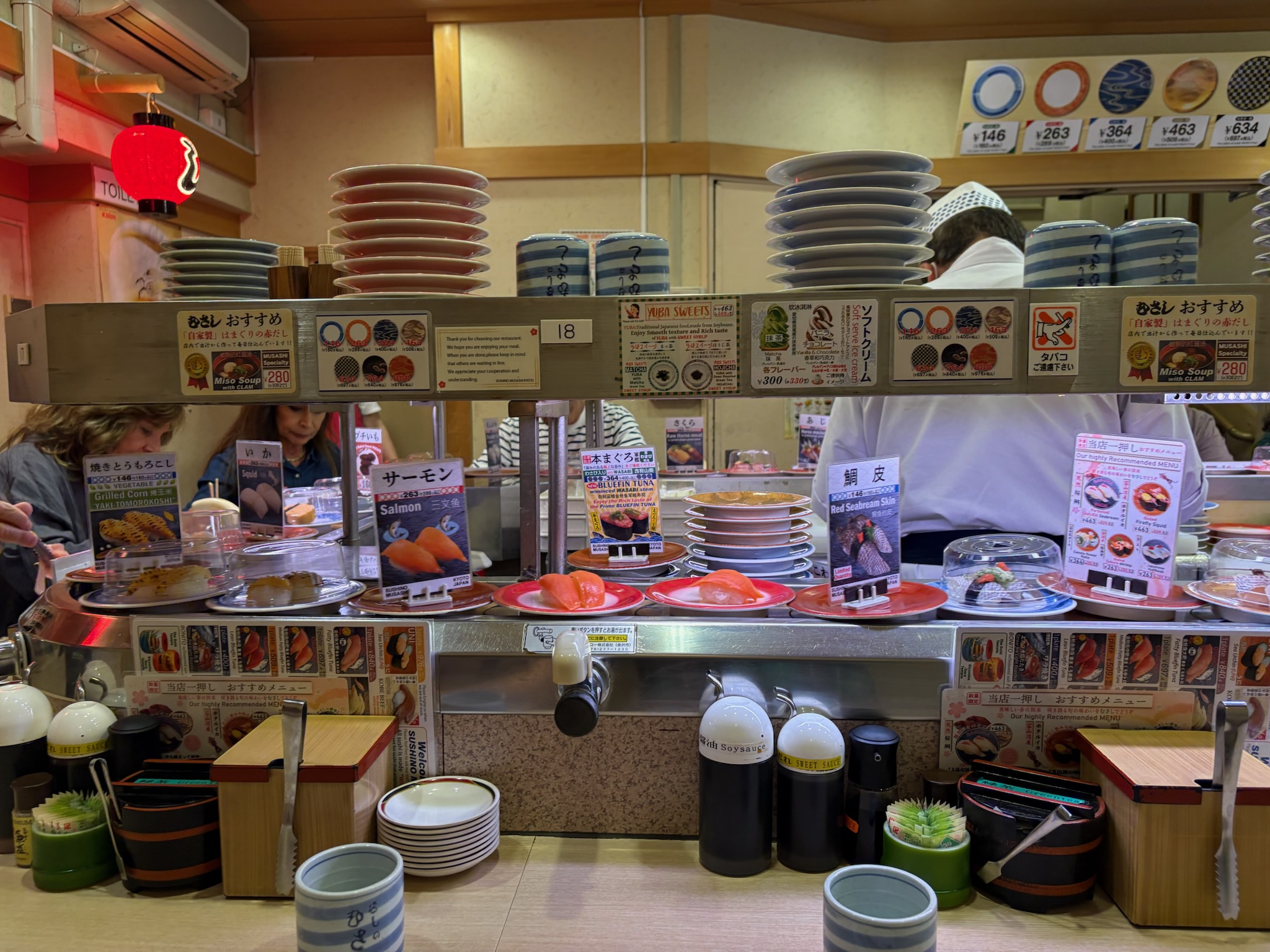
Revolving Sushi
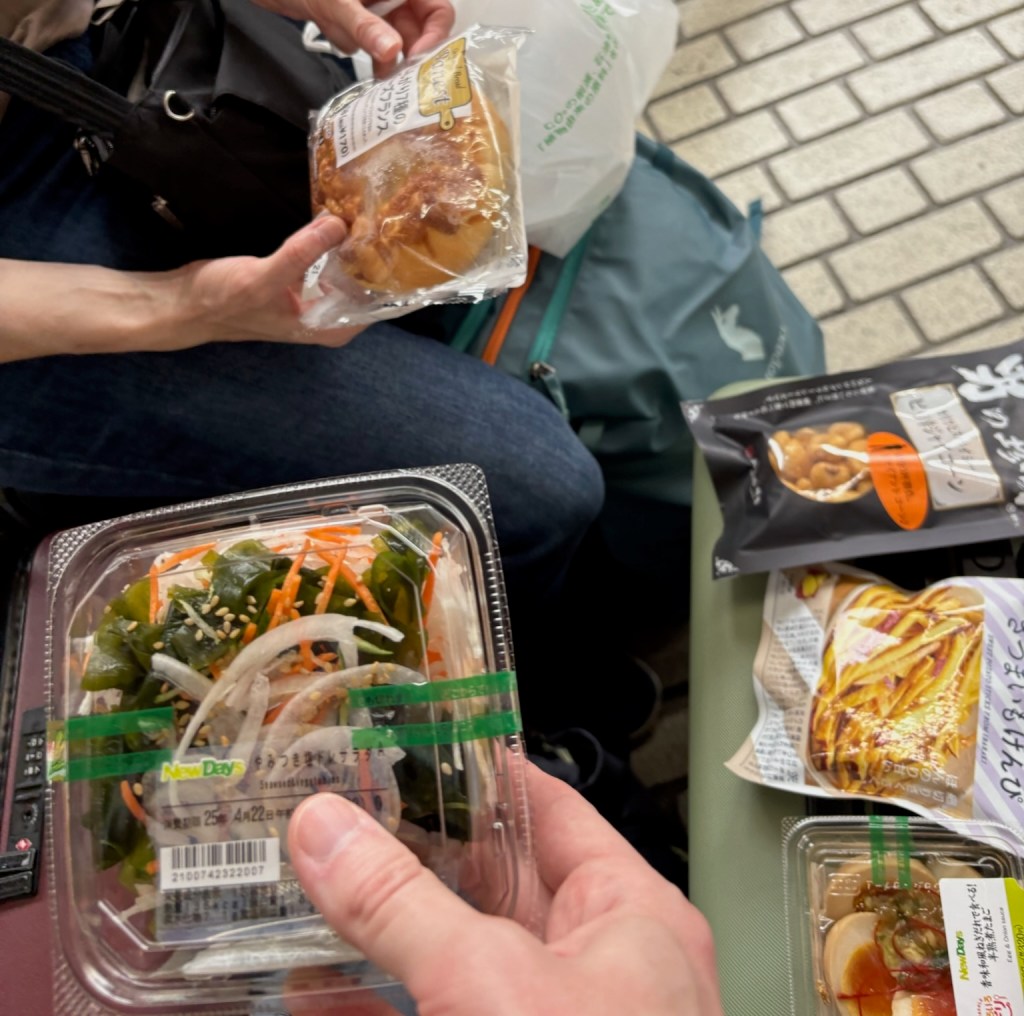
Train Snacks – sweet potato sticks, marinated hard boiled eggs, seaweed salad, some spicy corn kernals, and a pastry with soft cheese
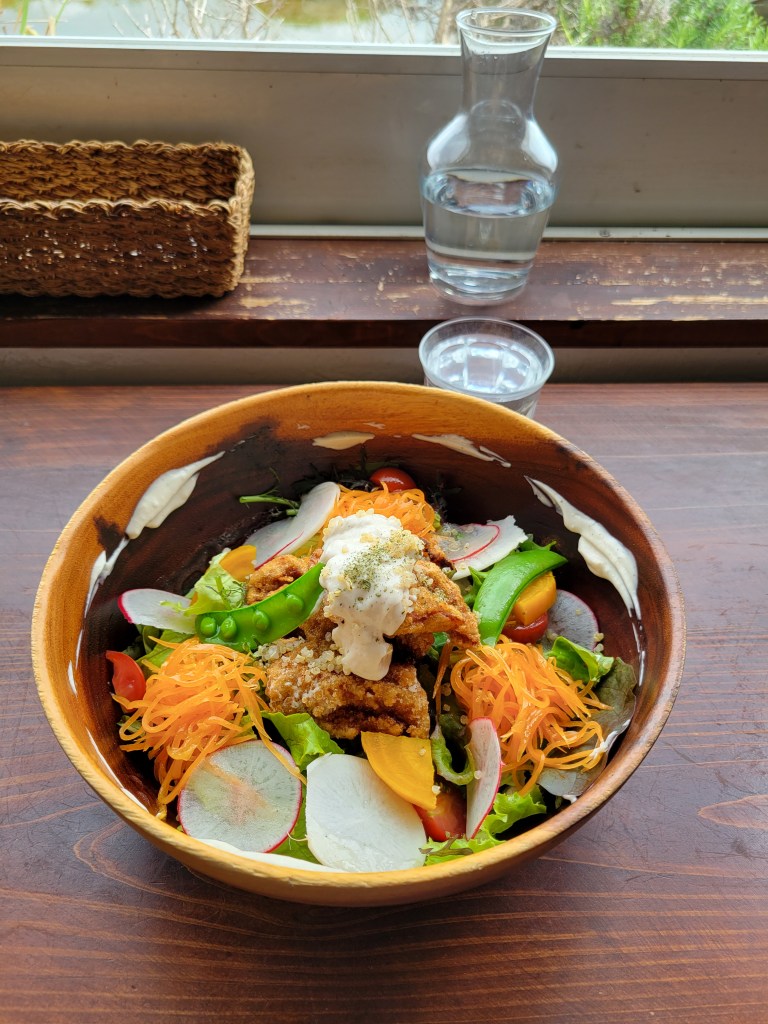
Donburi – a rice bowl
Thanks for reading!
 Kelly and Garett Get Away
So nice to read your post….Keep enjoying your travels
LikeLike