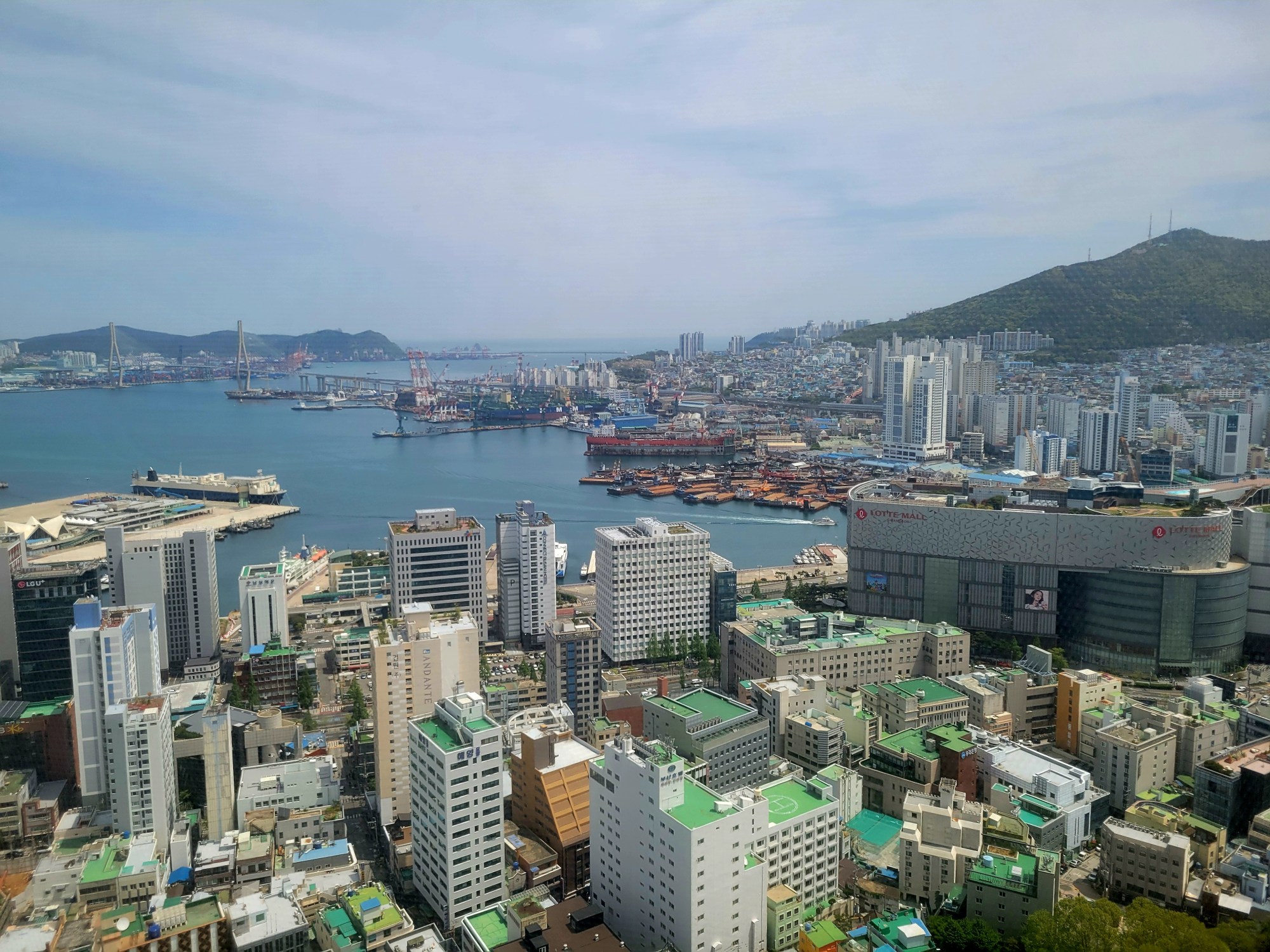
We spent the past few days in the second largest city in South Korea, Busan. As a frame of reference for our US readers, South Korea is a little bigger than the size of Indiana (but with a much larger population). It’s in the southeast, about as close to Japan as you can get.
We knew nothing about the city coming in, to be honest, but we’re enjoying it. The flight over from Japan was uneventful and we found passport control and customs a lot less overwhelming than Tokyo–although it would be pretty hard to top the insanity of Tokyo. Navigation has been a little difficult for us. South Korea didn’t opt in to the google system, so there’s another navigation app and there’s just generally less information for tourists here. It’s funny because we say we hate being around other tourists, but it turns out that we really like all the infrastructure and tolerance that tourism develops.
The first day we went to the Busan Modern and Contemporary History Museum because we wanted to get some context for how the city developed and changed. Basically, Japan controlled Busan from the 1870s on (after the fall of the shogonate in Japan) and used it as a central port from which to launch attacks throughout the rest of the country and the continent. It was modernized pretty quickly as a result. It also was a major place for refugees fleeing from war in the north, including refugees from the Korean War. Both the US and Japan have profoundly shaped the way that Busan is right now.
One thing that I found myself struggling with is the idea that, in some ways, Busan considers the US and Japan equally culpable in the difficulties of the last 150 years. It’s hard for me to understand, but I may definitely be being overly defensive of the US. Surely our actions can’t compare to the atrocities committed by the Japanese, right? It’s good for me to see our history through another lens.
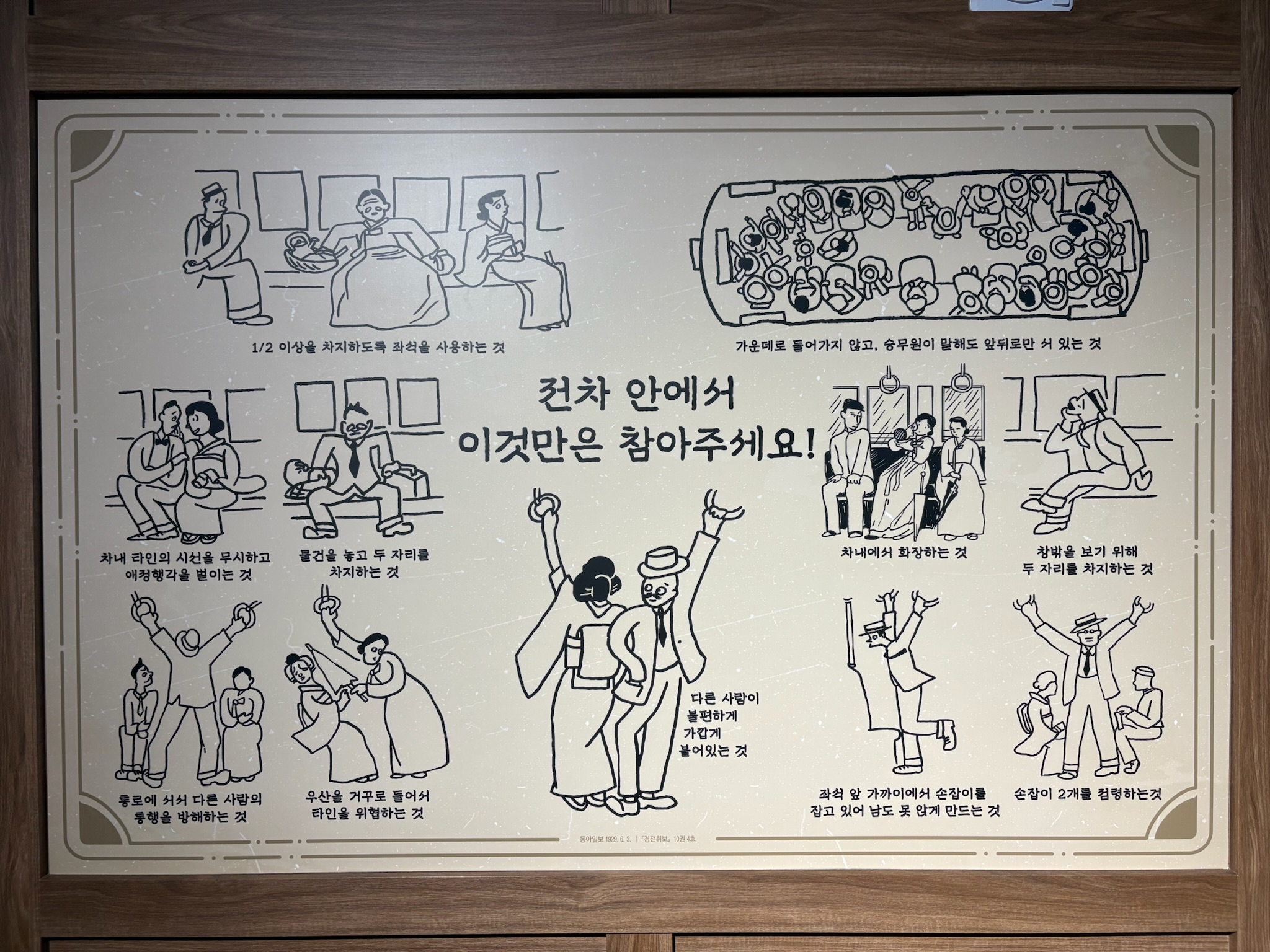
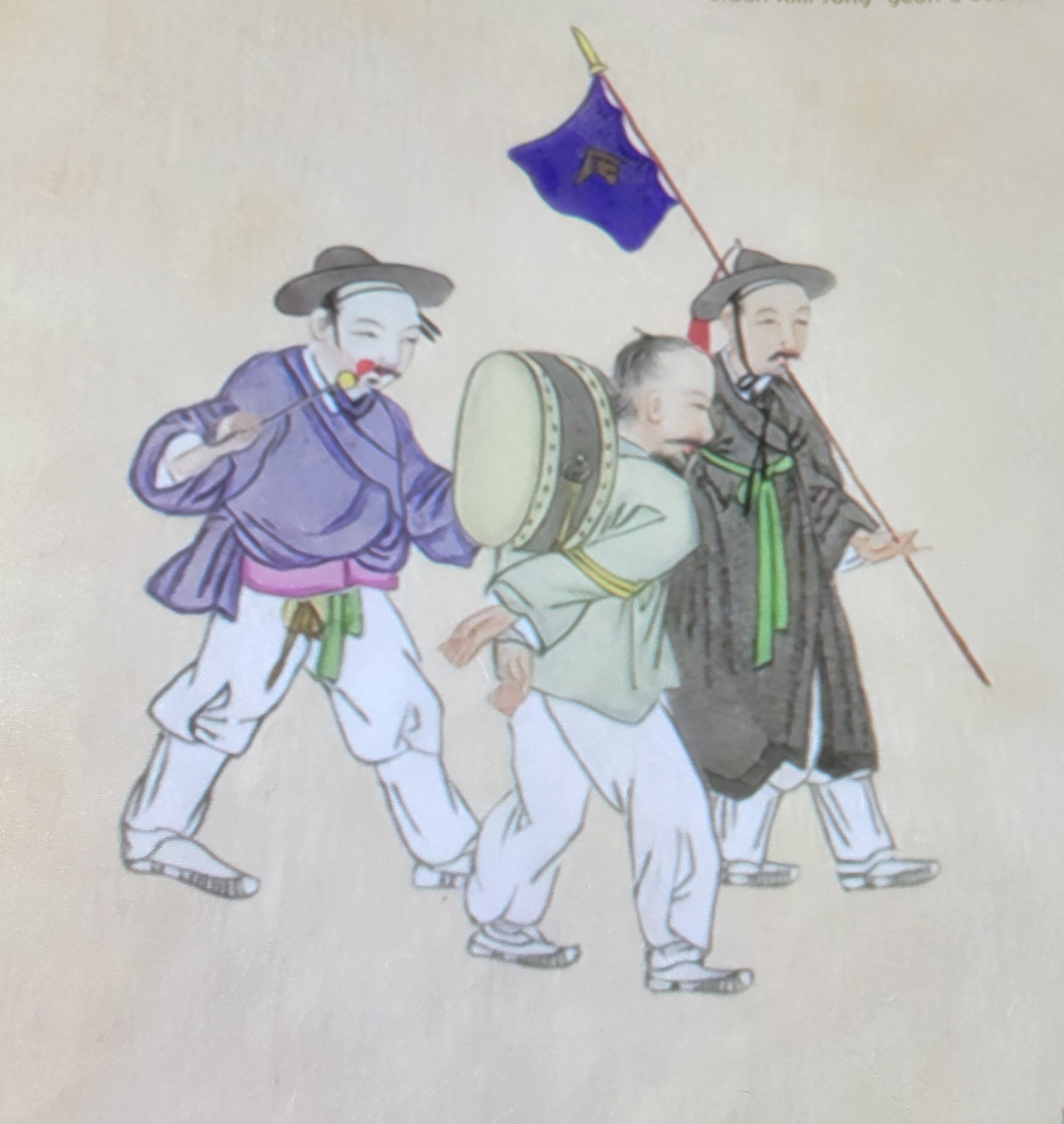
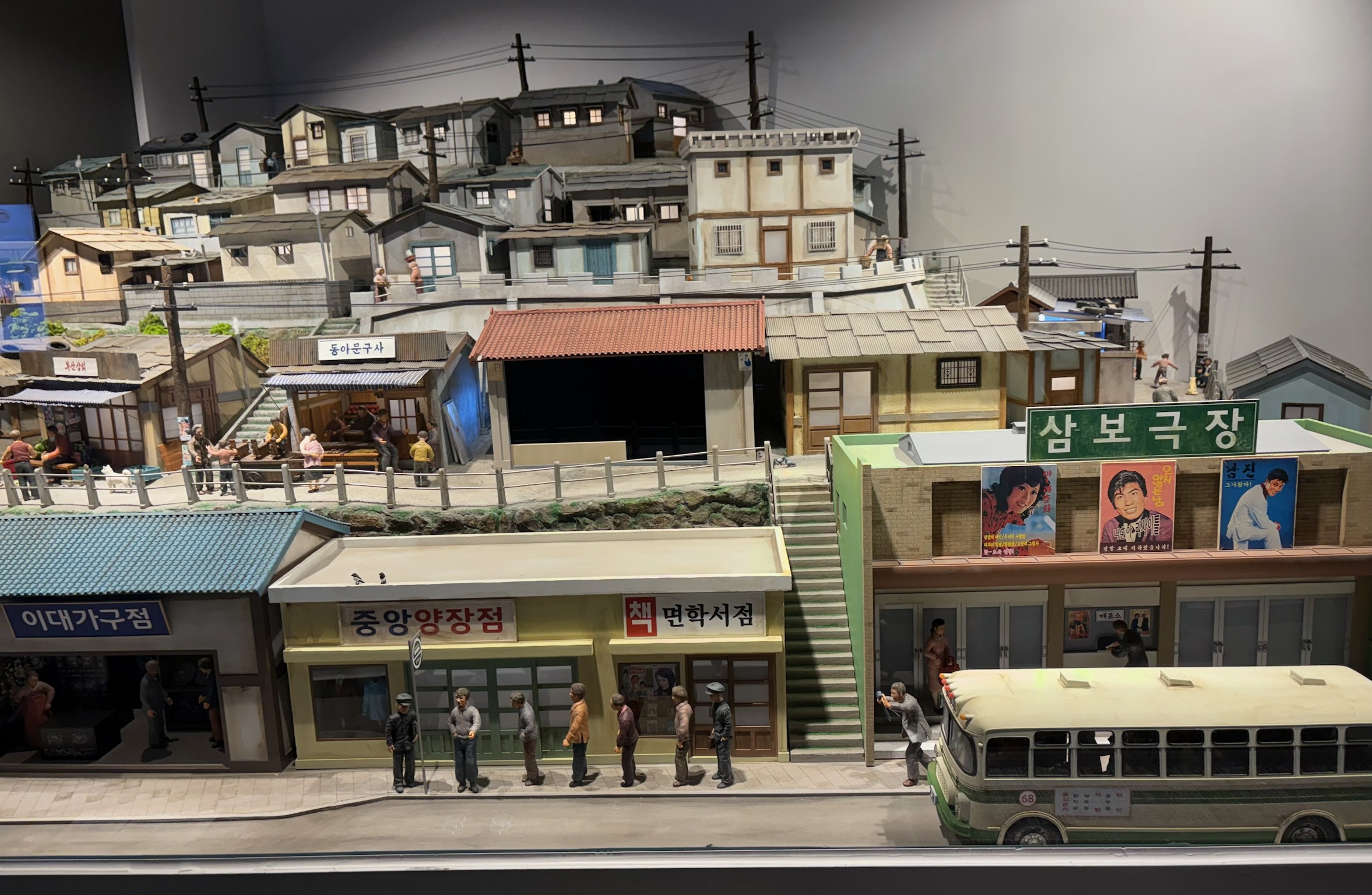
Some pictures from the museum–an early example of man/woman-spreading in the rules about riding the streetcar. An unusual humiliation punishment for criminals; they would put a drum on your back and beat it while you were walking down the street. The info card noted that the more standard “flogging” was another punishment option. And a model of Busan as it developed.
Here are a couple pictures of whimsical cat versions of Korean rural life and a contemporary art piece. The basketballs represent the US and Japan–the viewer is supposed to go up to the hoop and try to shoot a ball in only to realize that there’s no room for any balls because the US and Japan have taken up all the space. From the board: “This installation offers an indirect experience of the deep-seated sorrow and frustration of what was once ‘ours’ but was used and controlled by Japan and the United States.” Yikes.
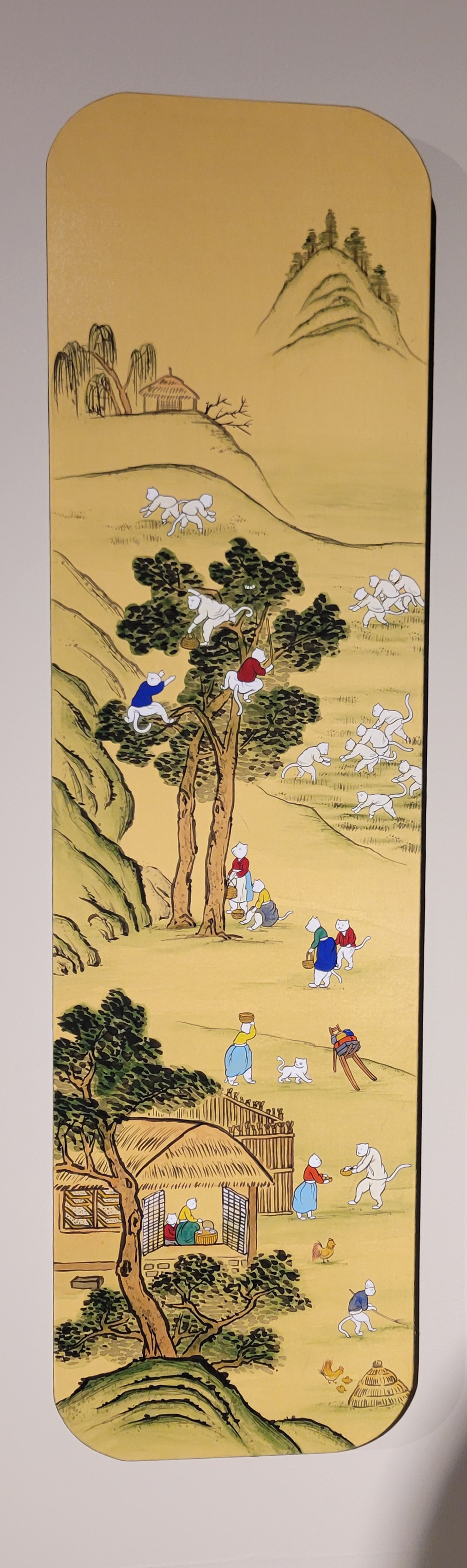
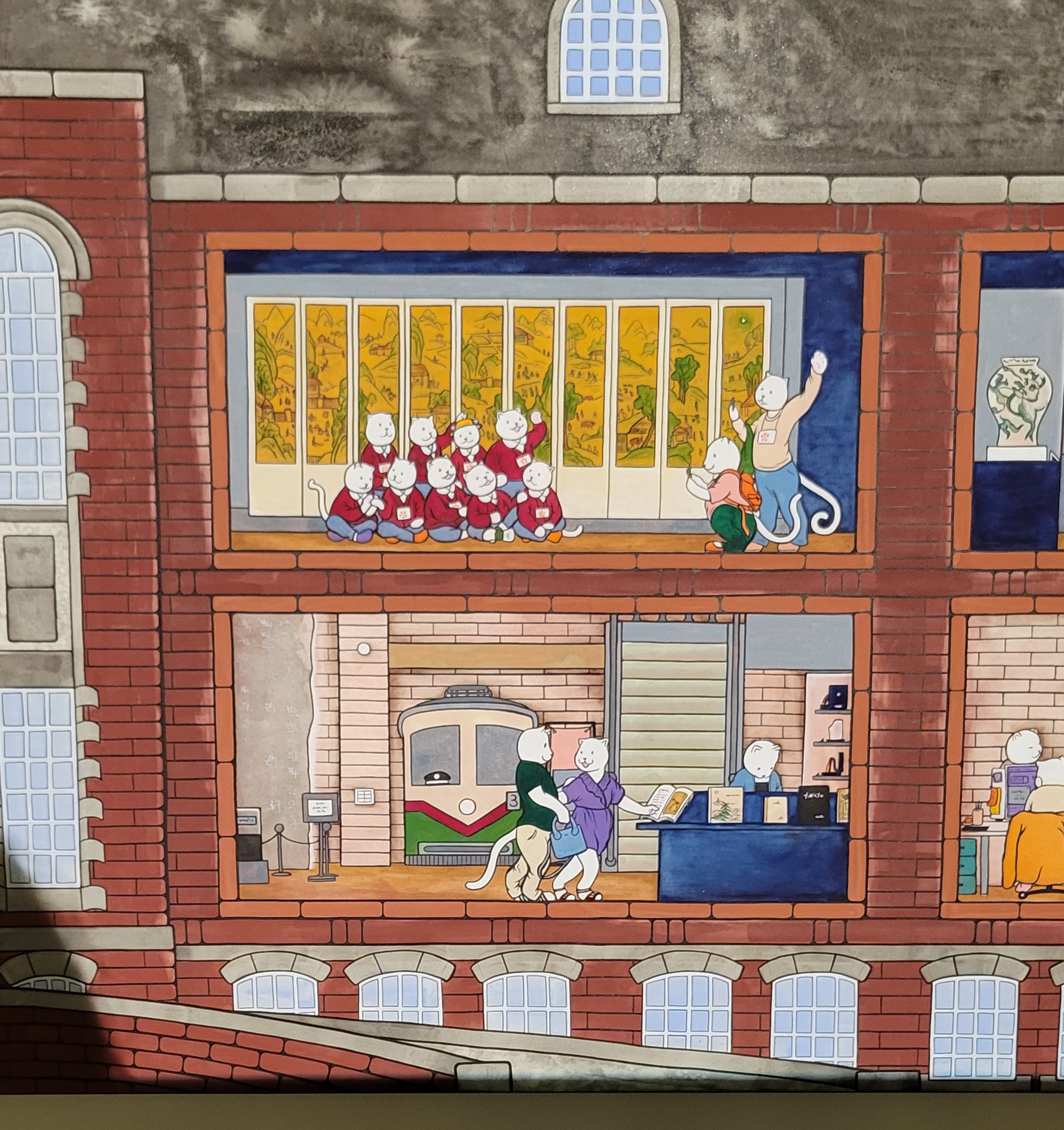
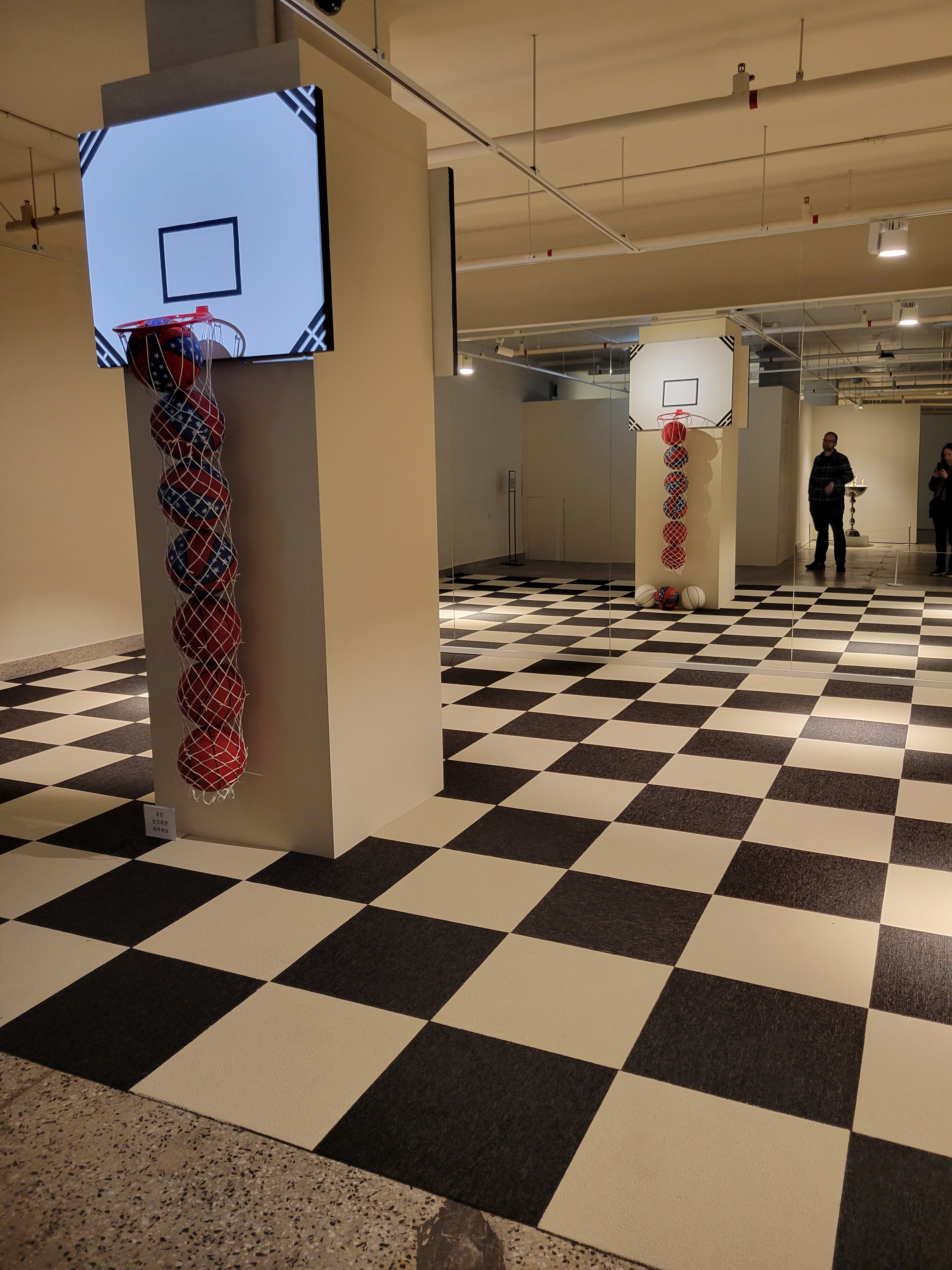
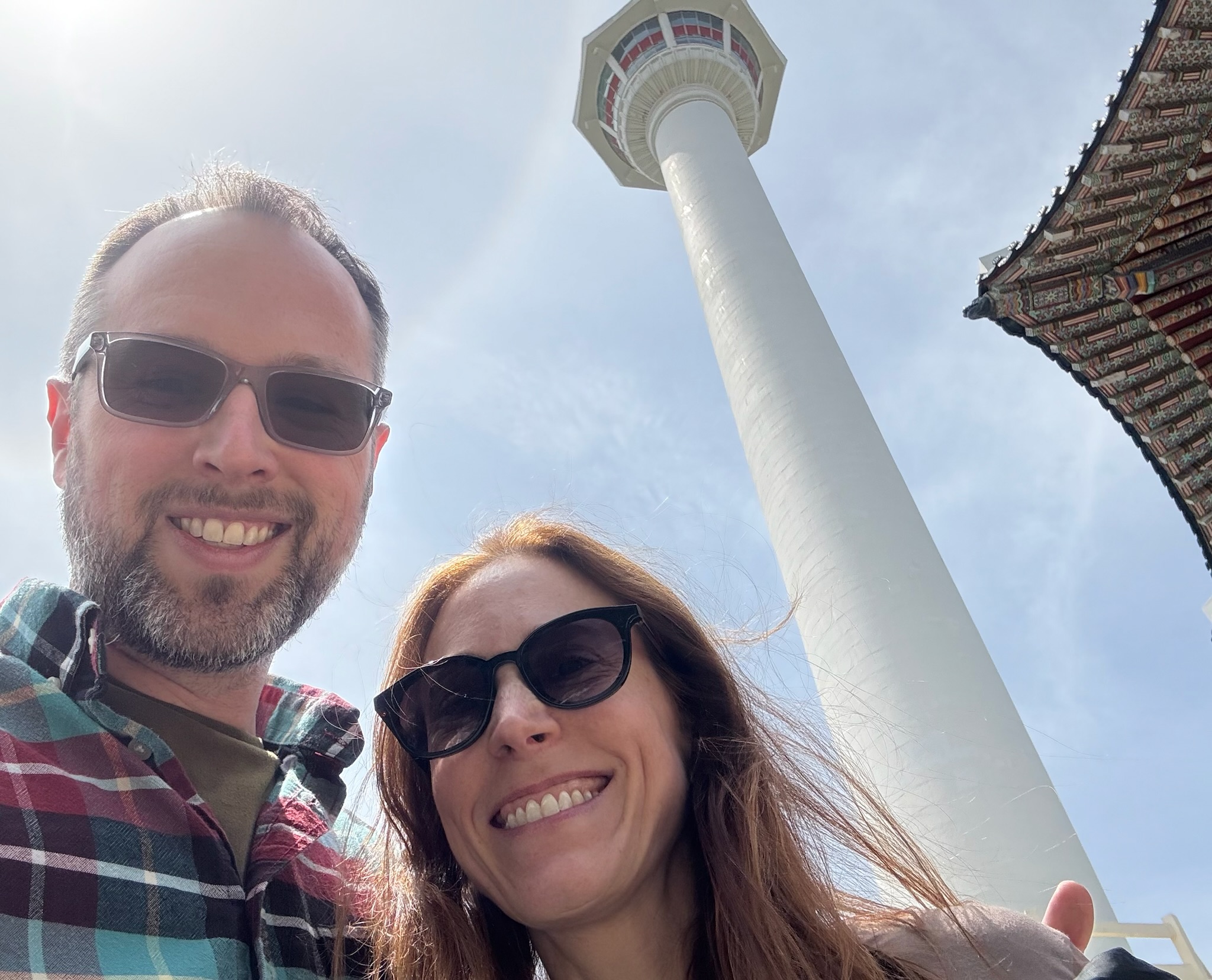
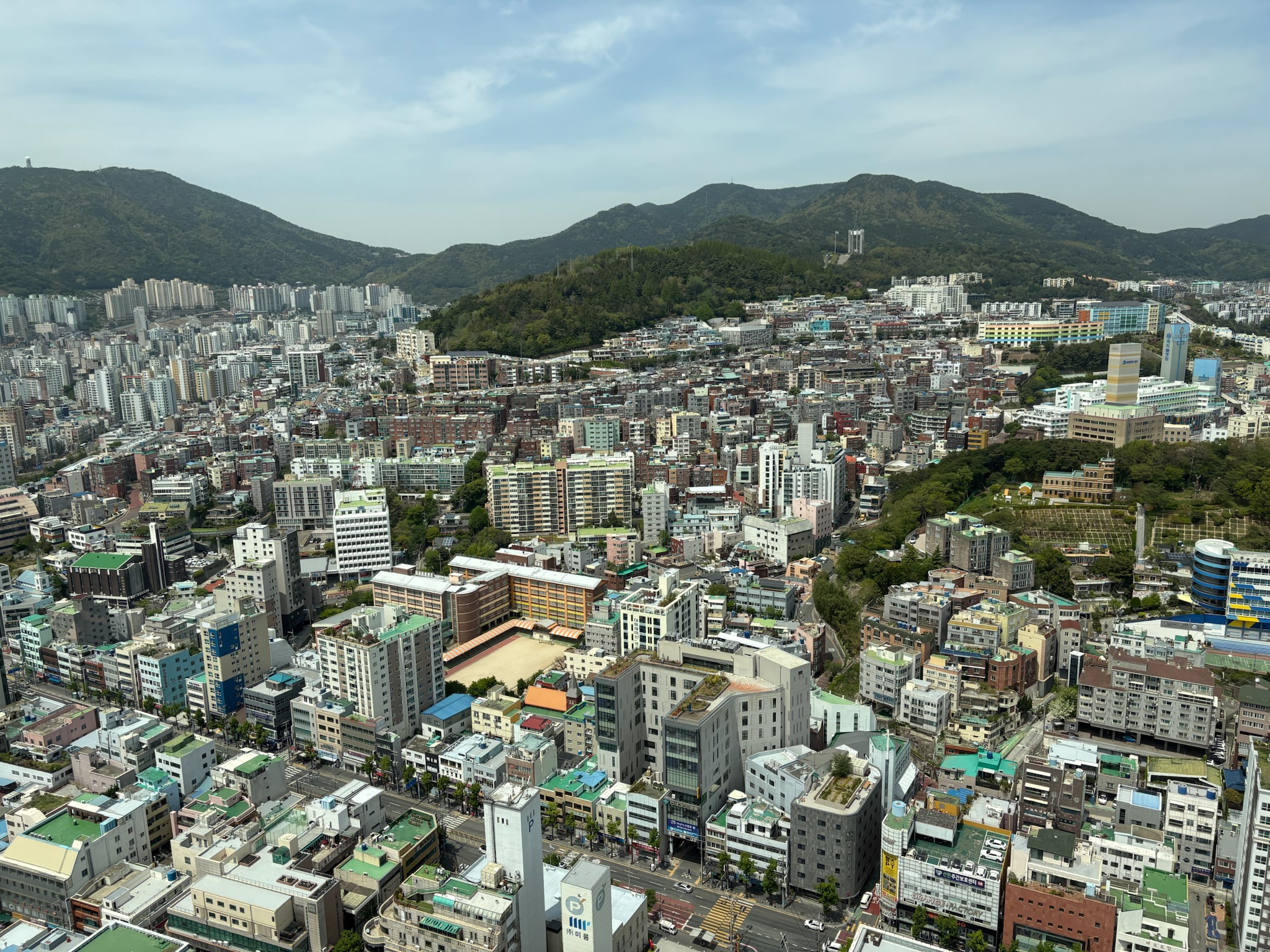
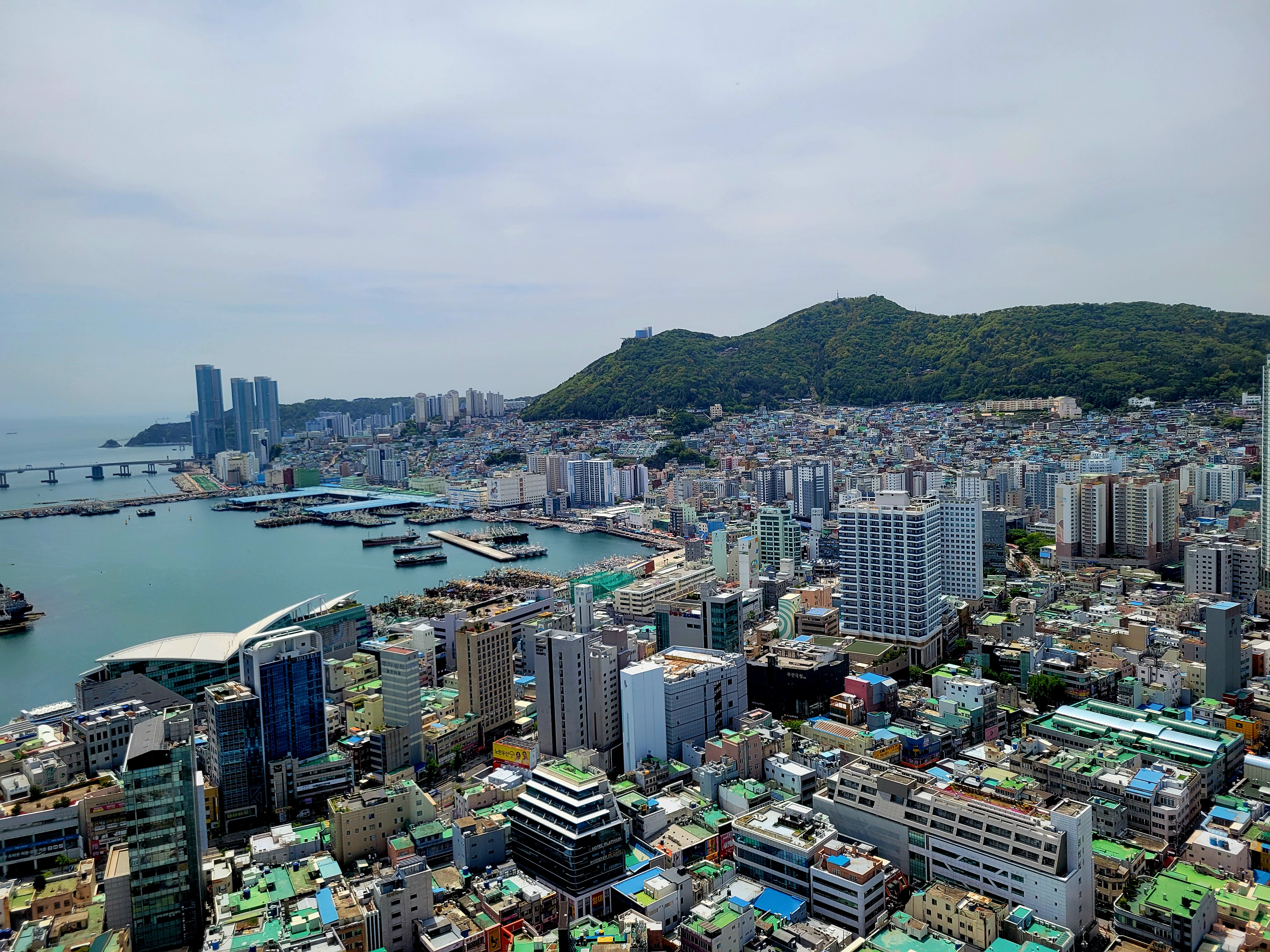
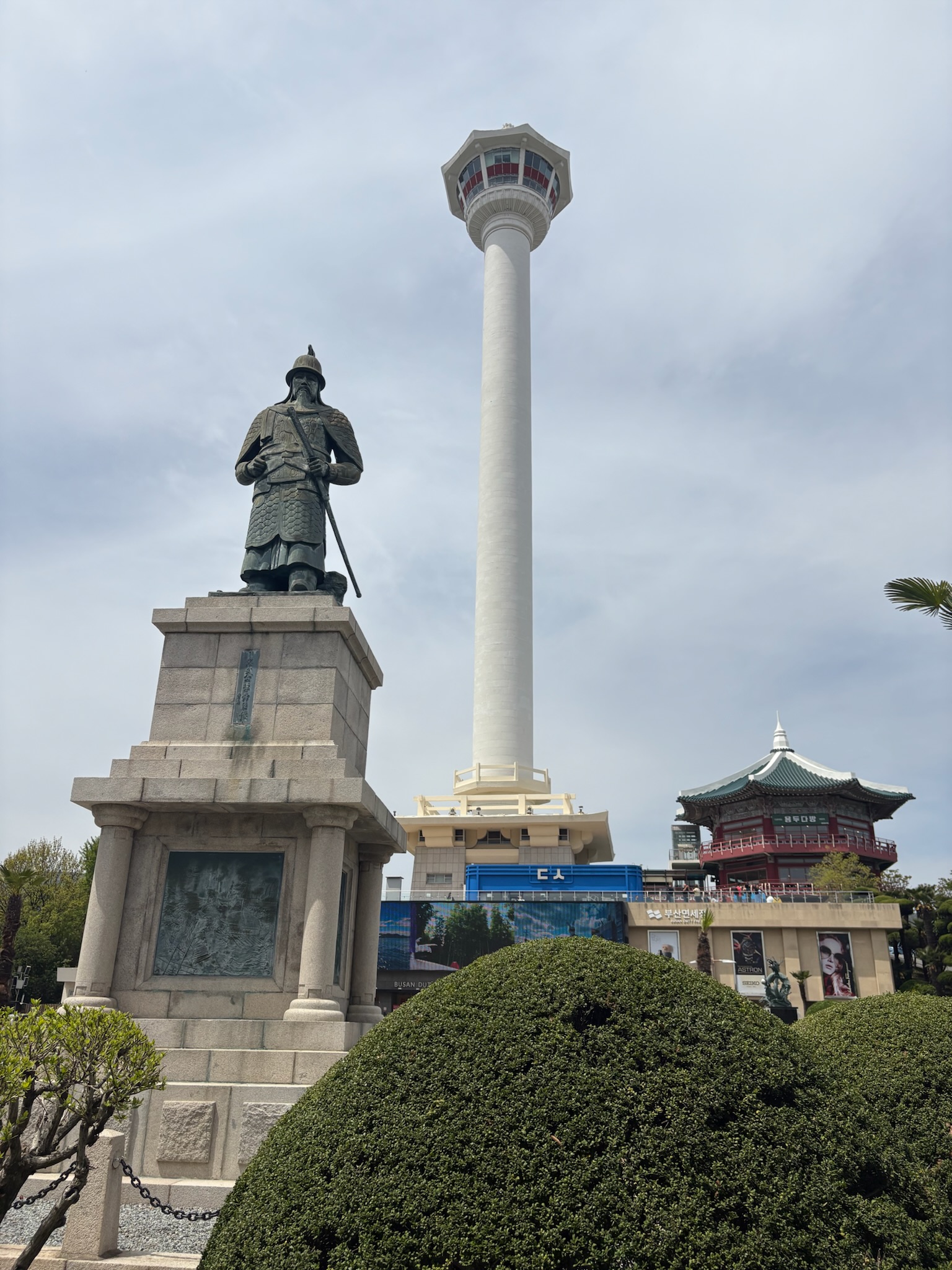
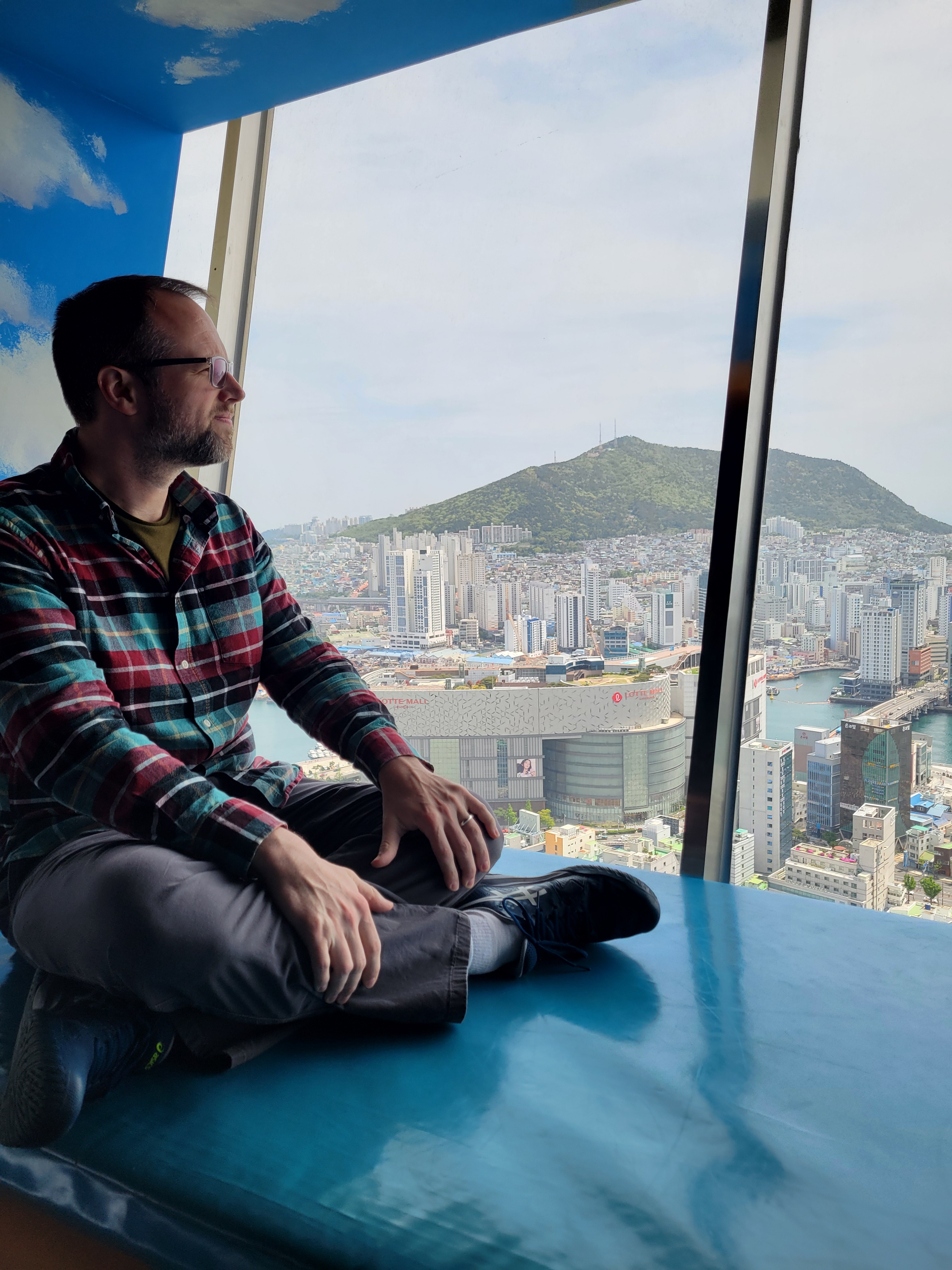
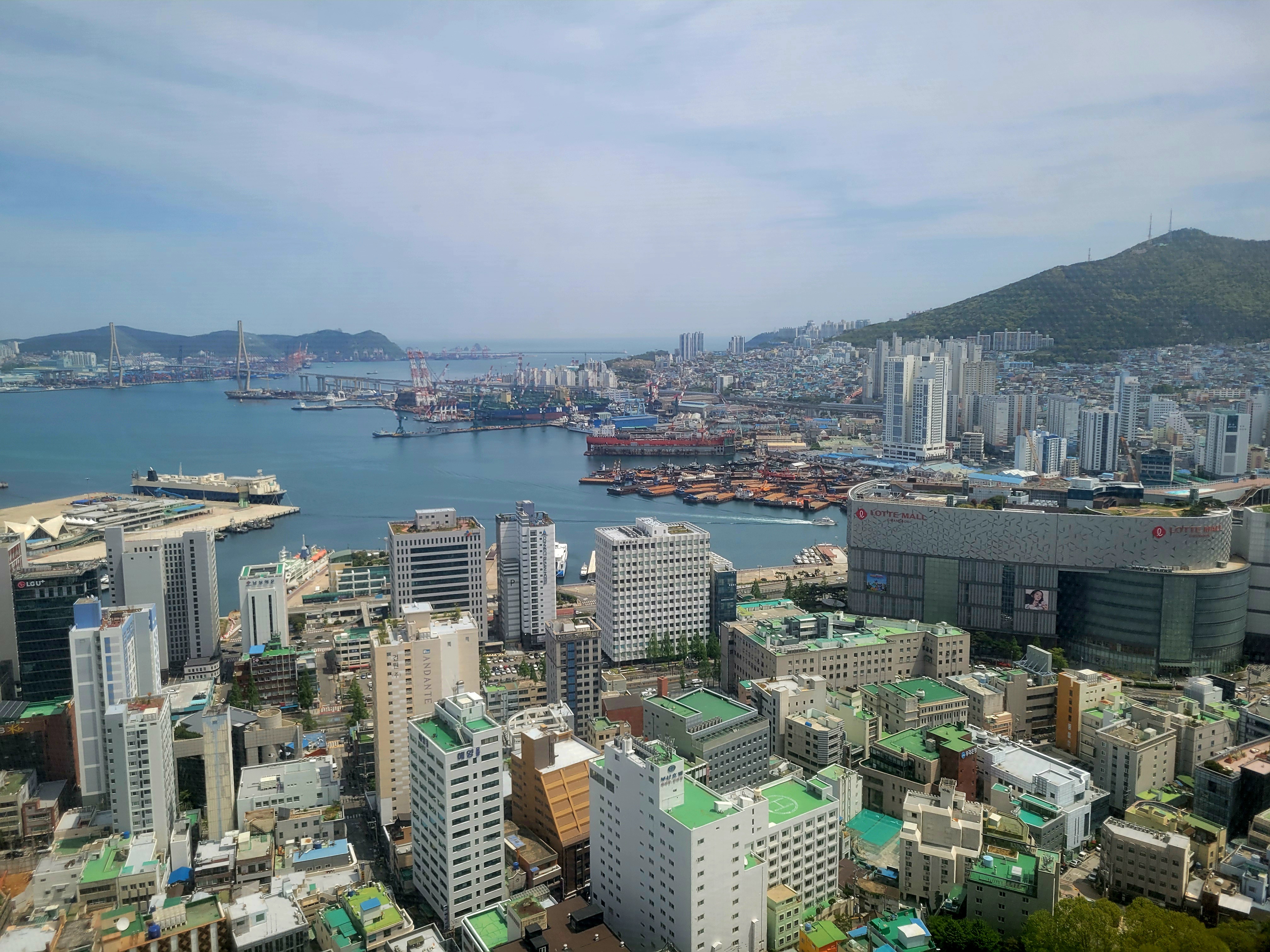
On a lighter note, we also went up to Busan Tower for some beautiful views of the city. The bay with the mountains reminded us a little of Rio.
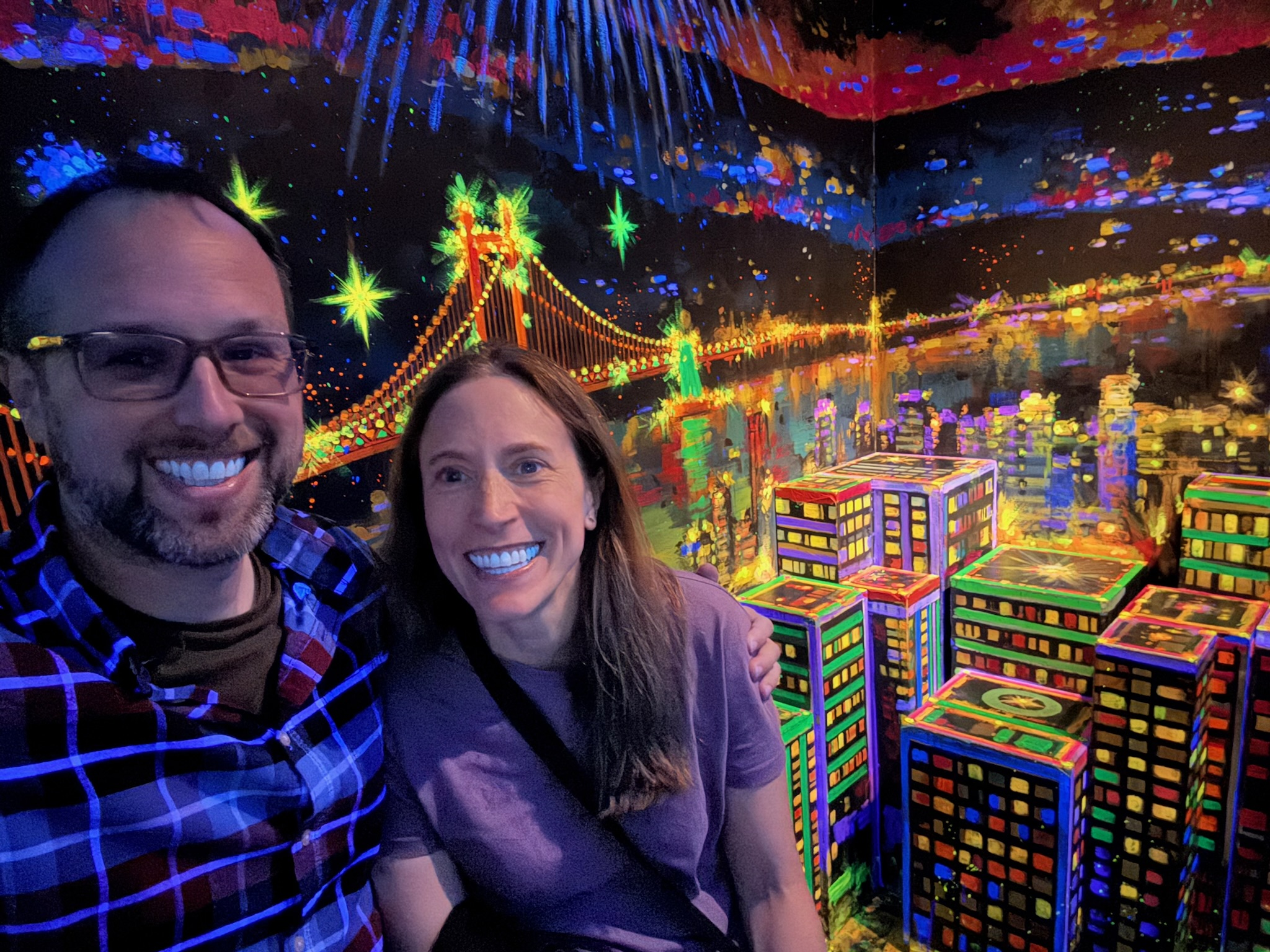
We also took a very long bus tour to places around the city of Gyeongju, which is decently far from Busan–we could have tried to do this all through public transit, but we’d never be able to see or learn as much. Plus, it was nice to talk about our travels with other people. Also, I’m a bit sick and it would have been a lot for me.
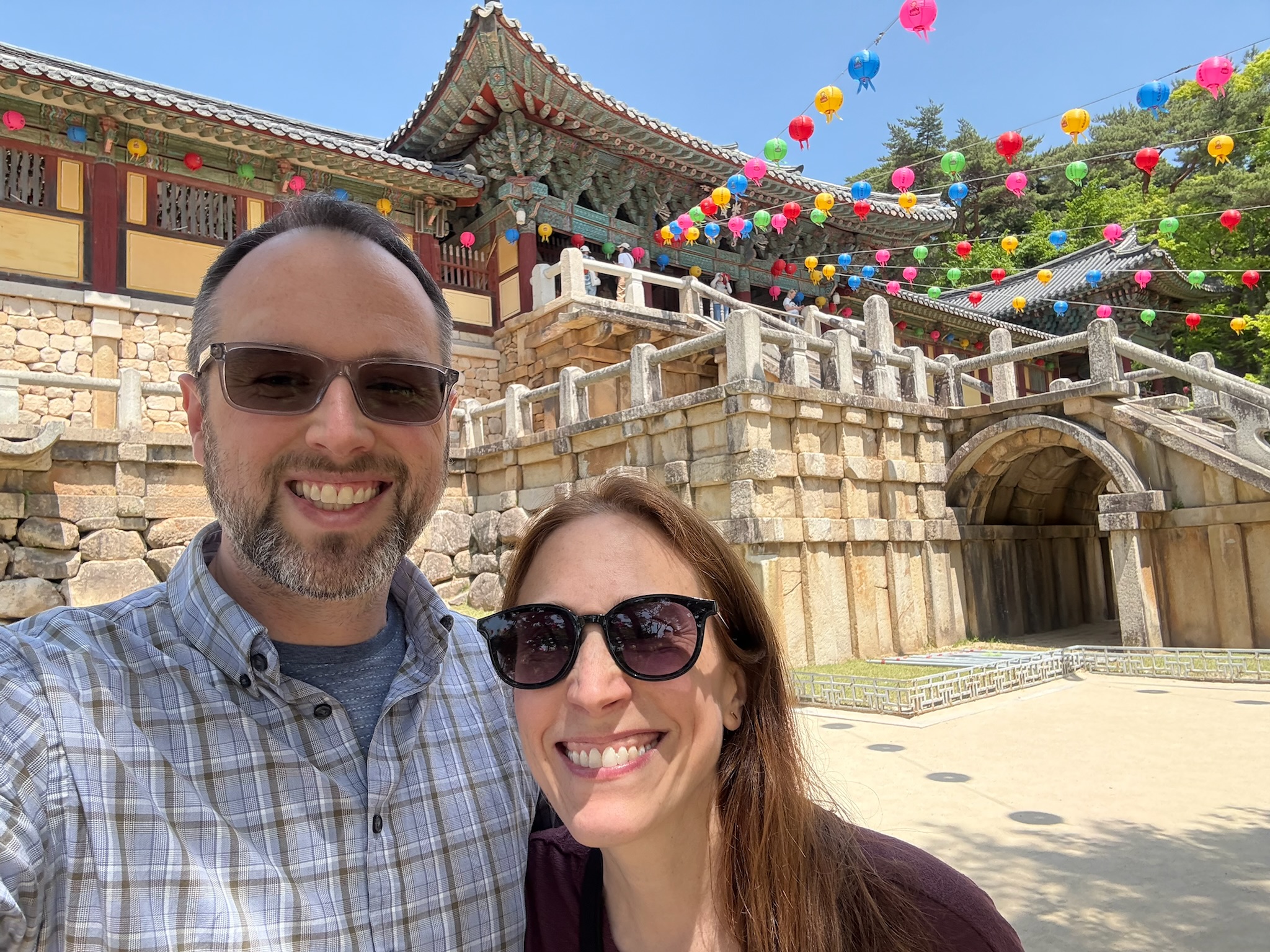
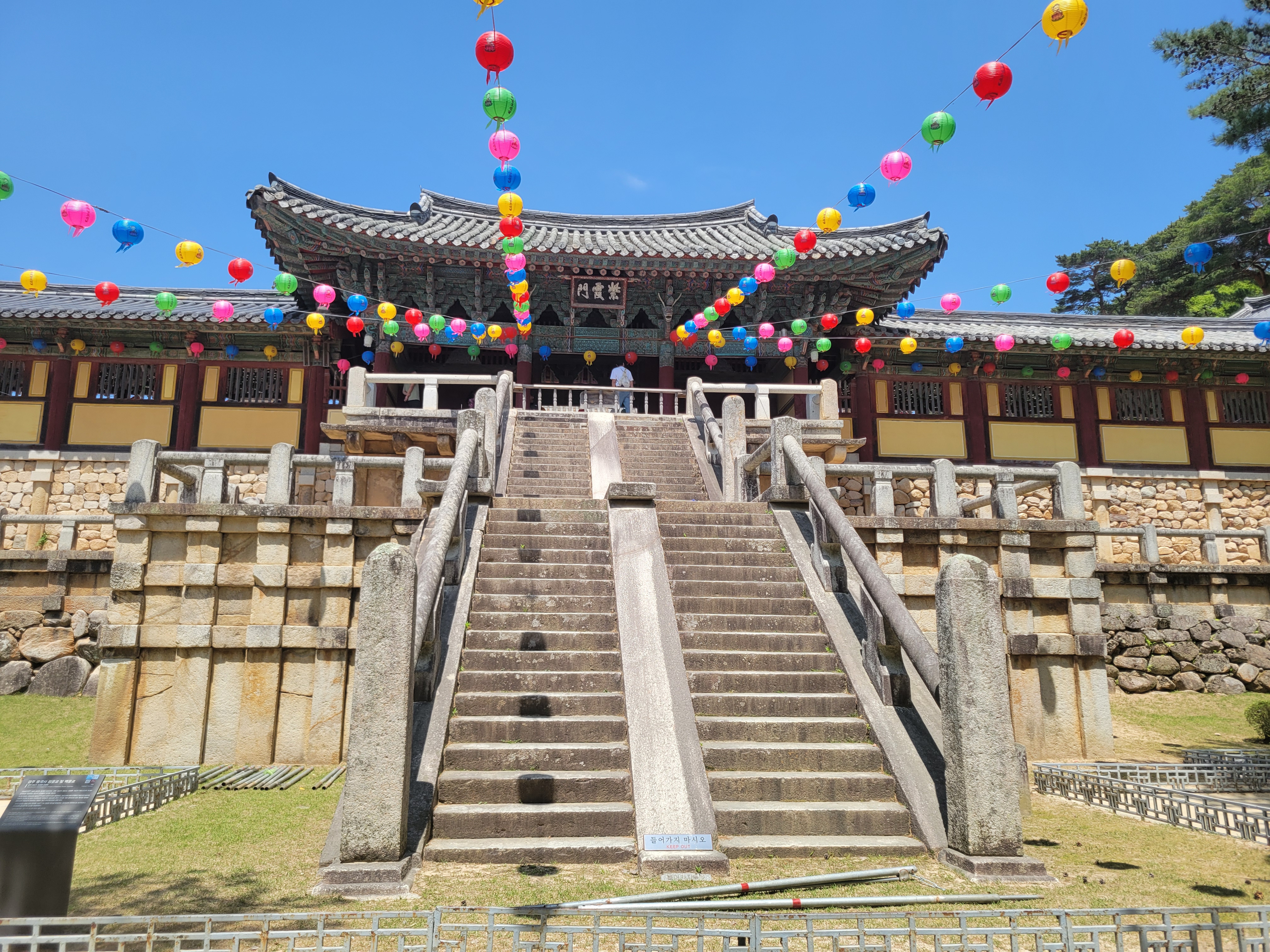
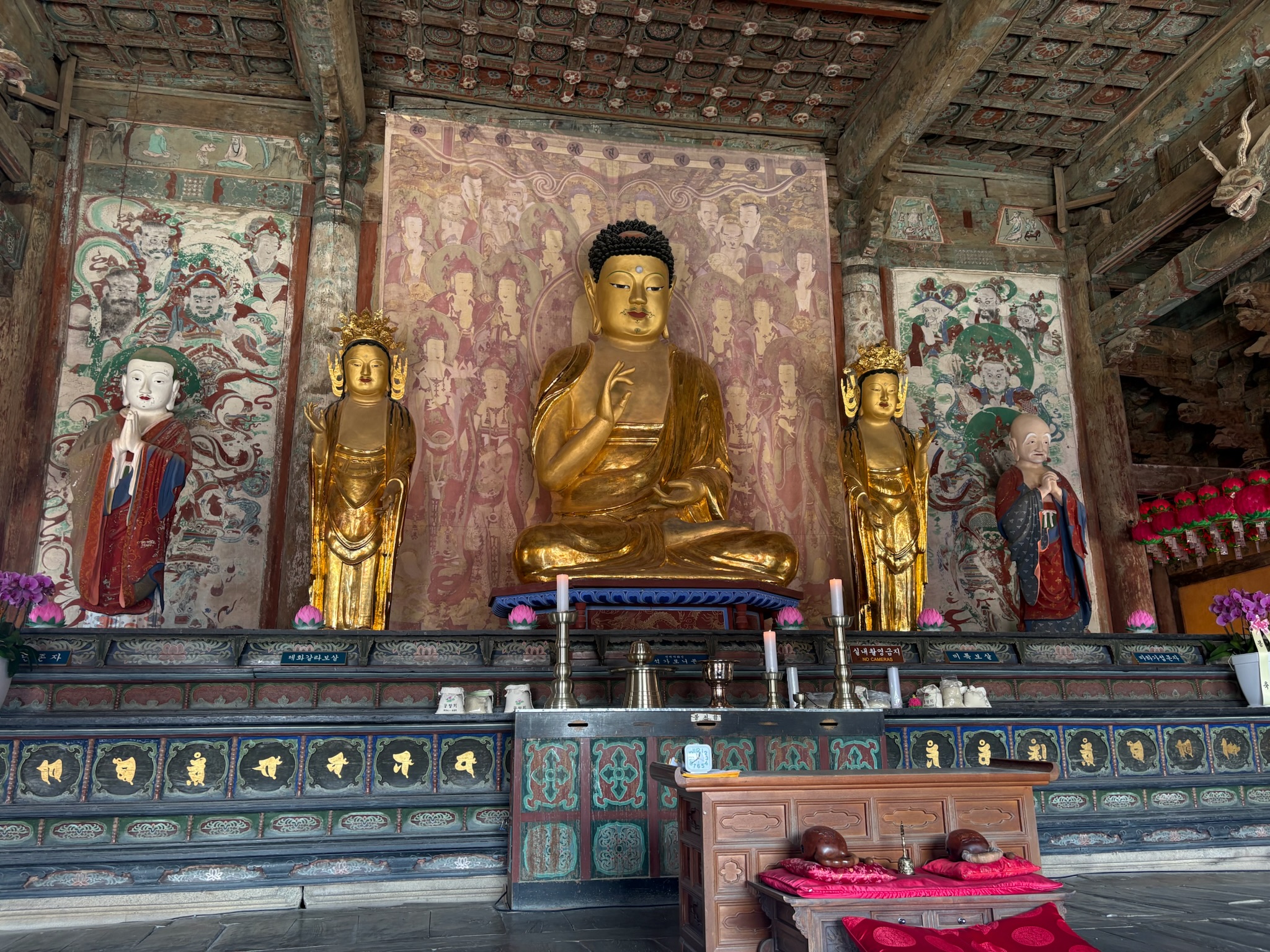
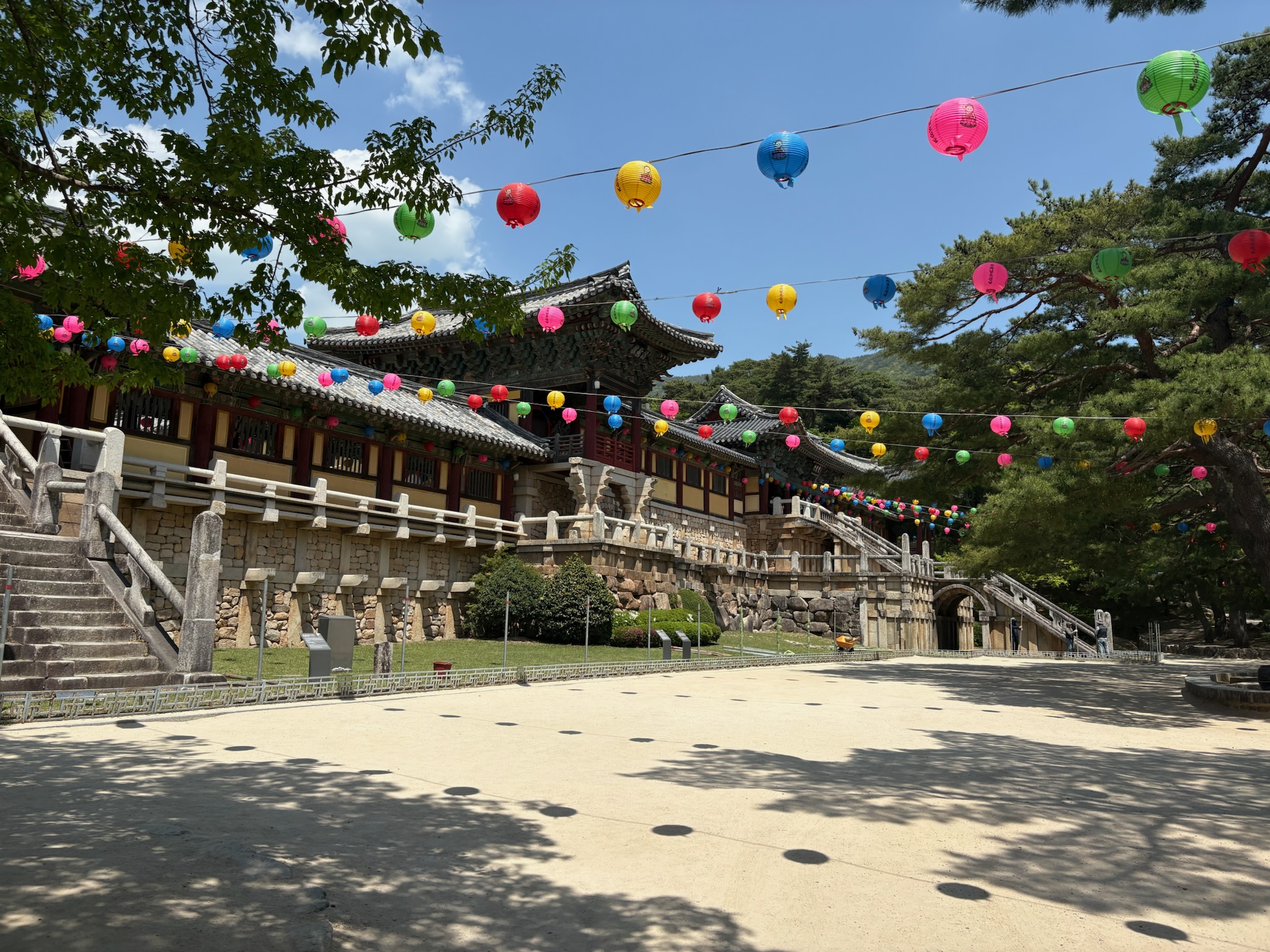
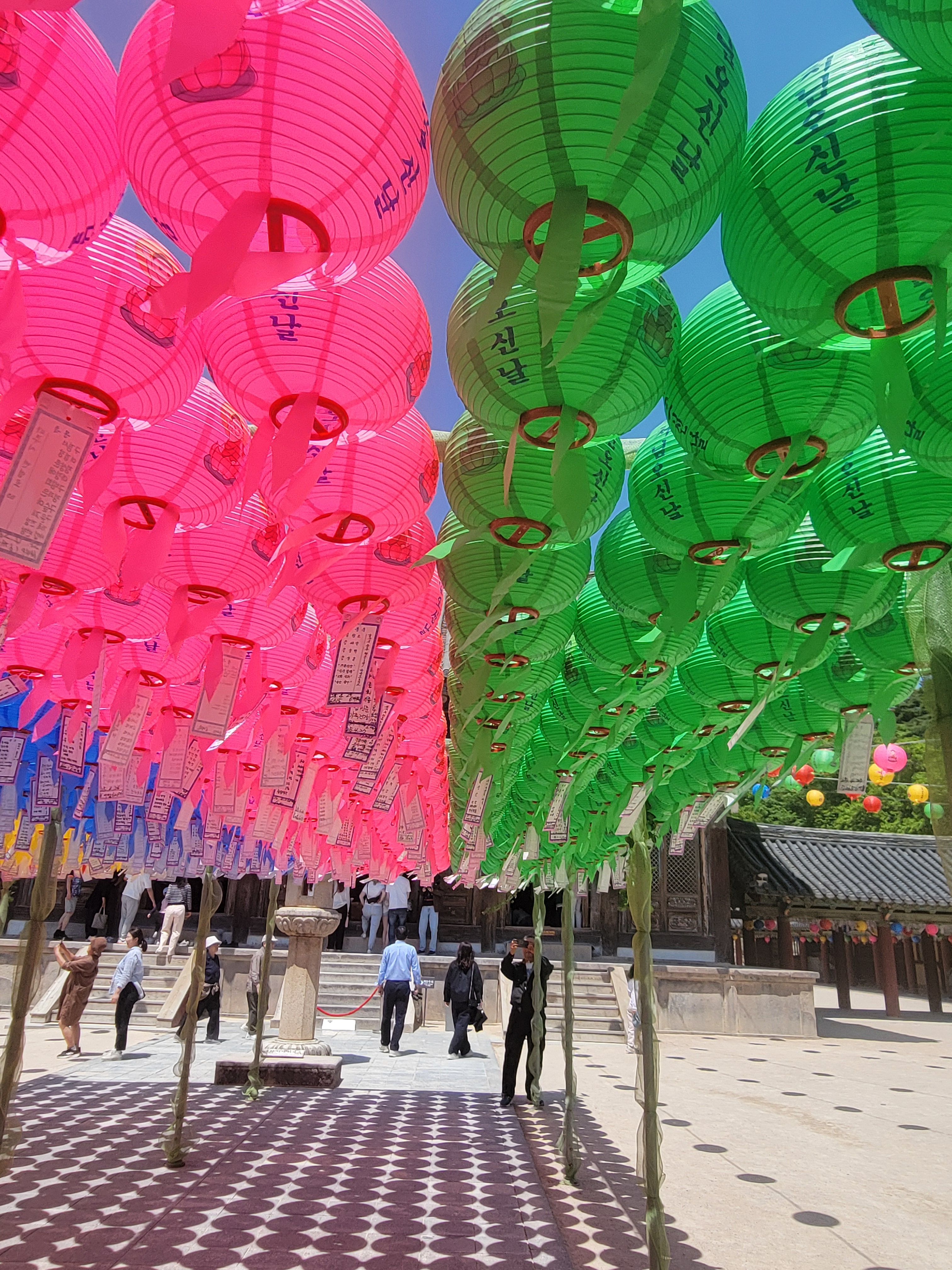
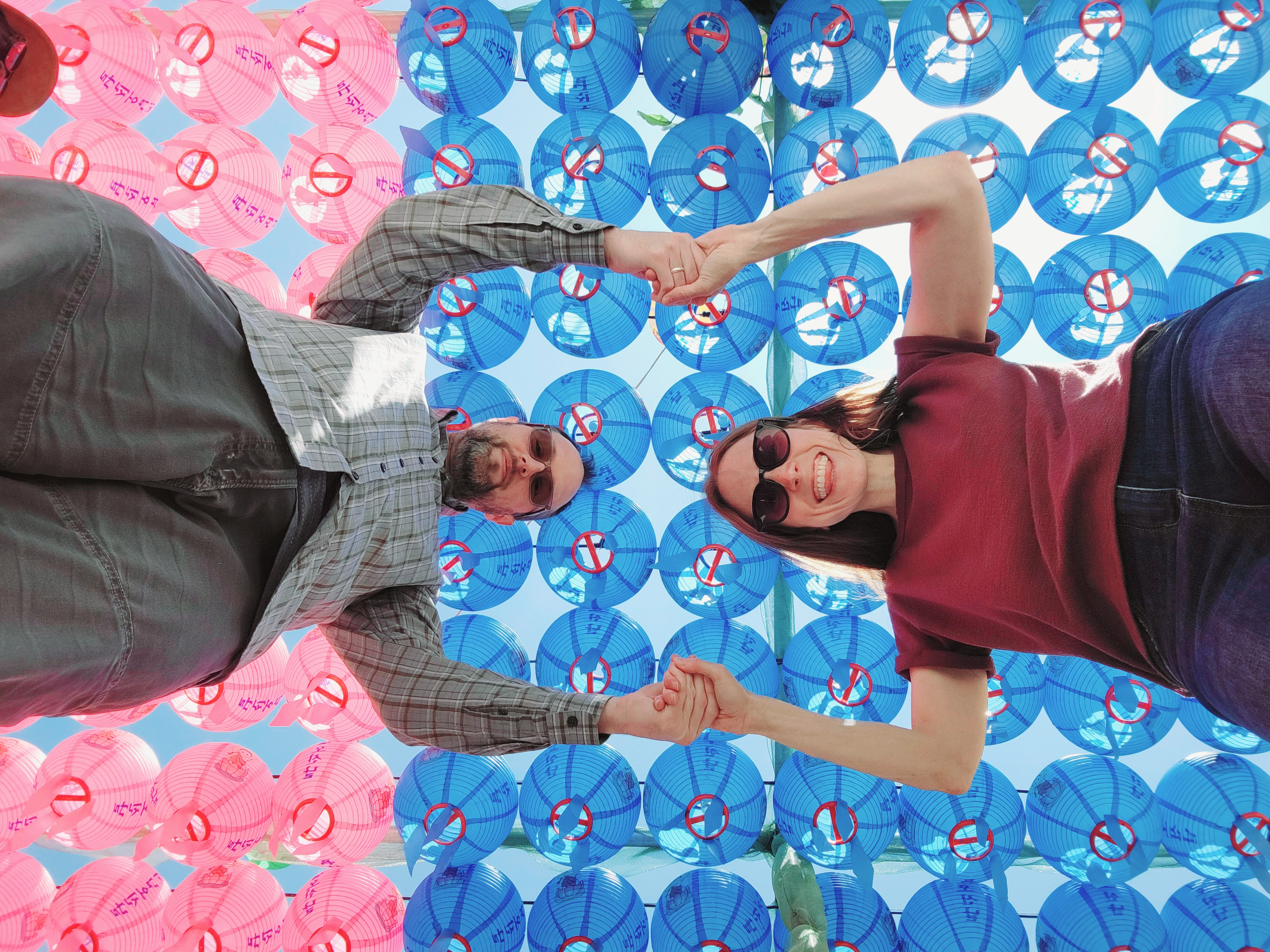
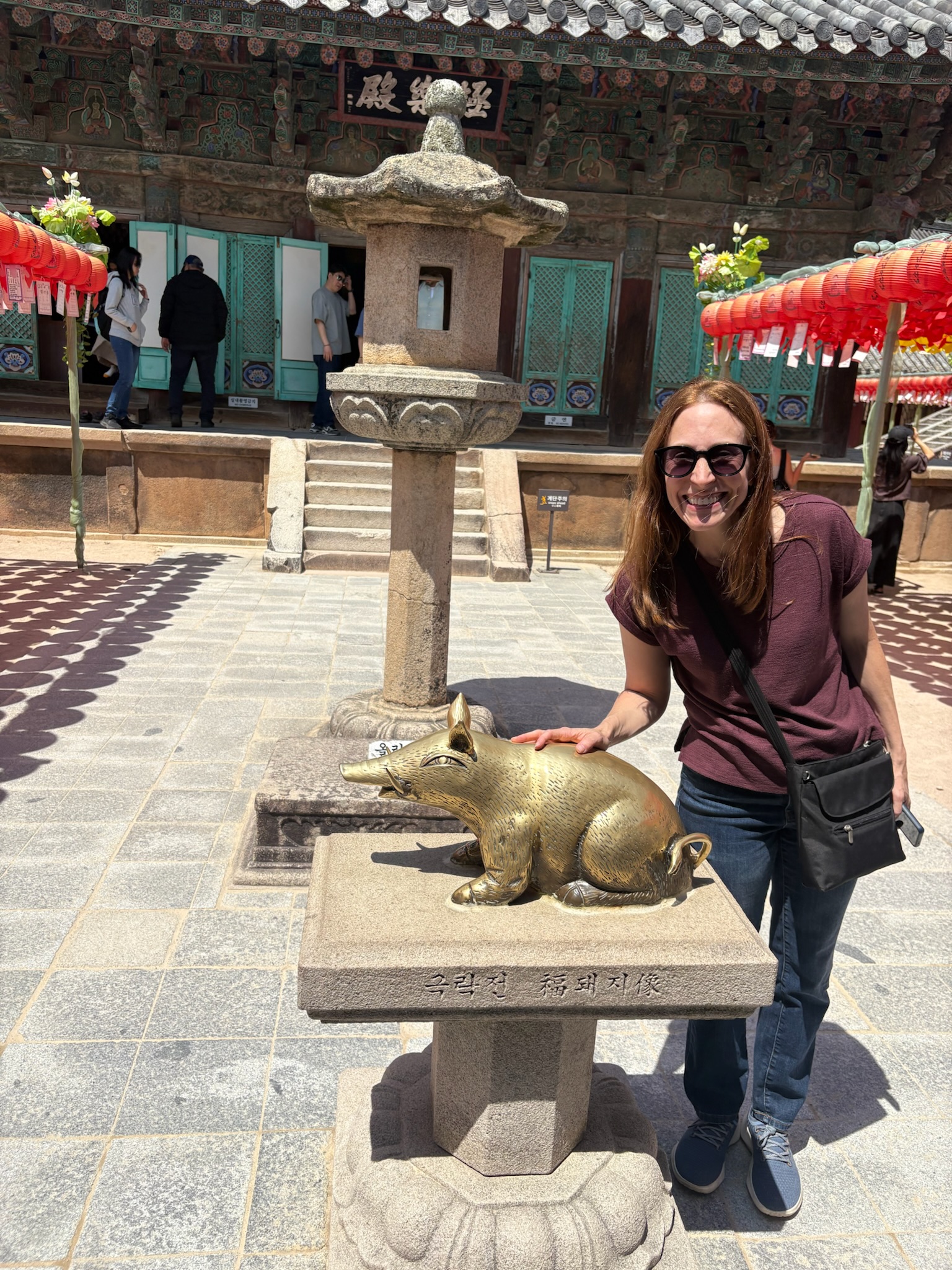
First we went to Bulguksa Temple, a Buddhist temple built during the Silla period in 751. The Buddha’s birthday is celebrated on May 5th (yes, cinco de Maio 🙂 ), so there were a lot of lanterns. If you look, you can see pieces of paper hanging from the lanterns–those are wishes! I have been honestly surprised by how much wishing and fortunes are tangled up in Buddhism. I don’t really let myself wish for things too often, I guess. You could also make a wish by buying a roof tile and writing it on that. When they need a new roof tile, they’ll incorporate your wish into the temple! Petting the warthog is supposed to bring good fortune. 🙂
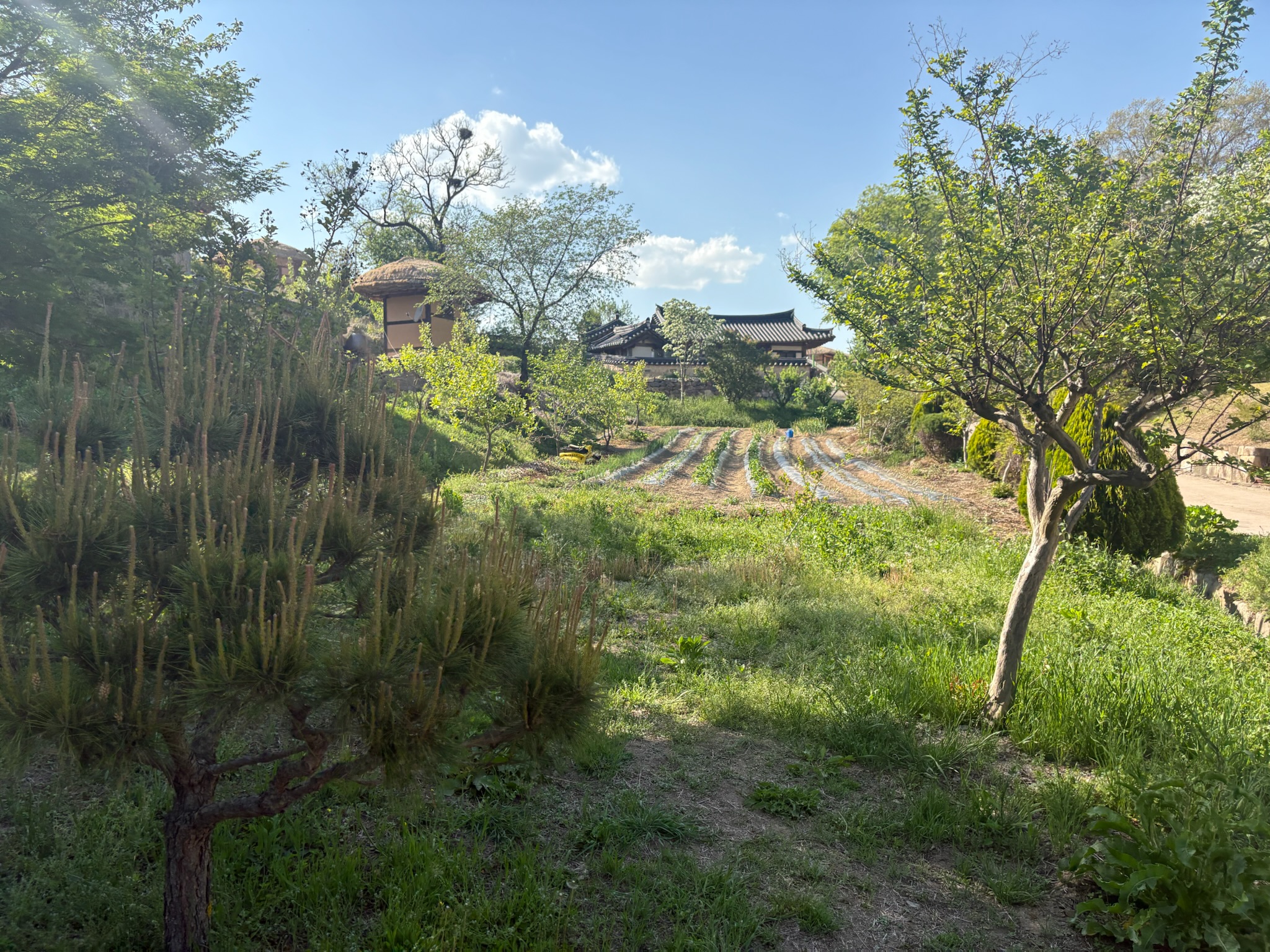
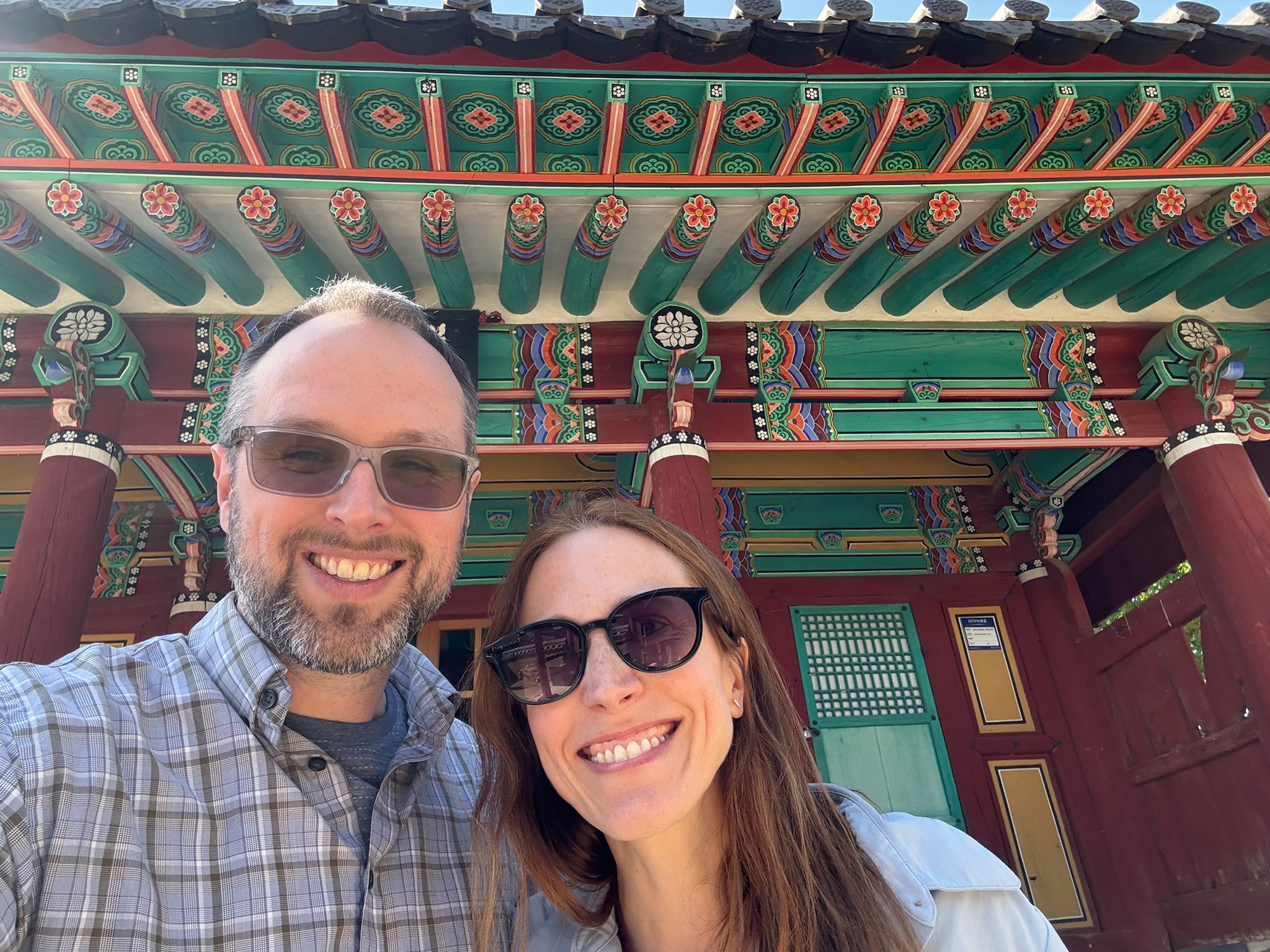
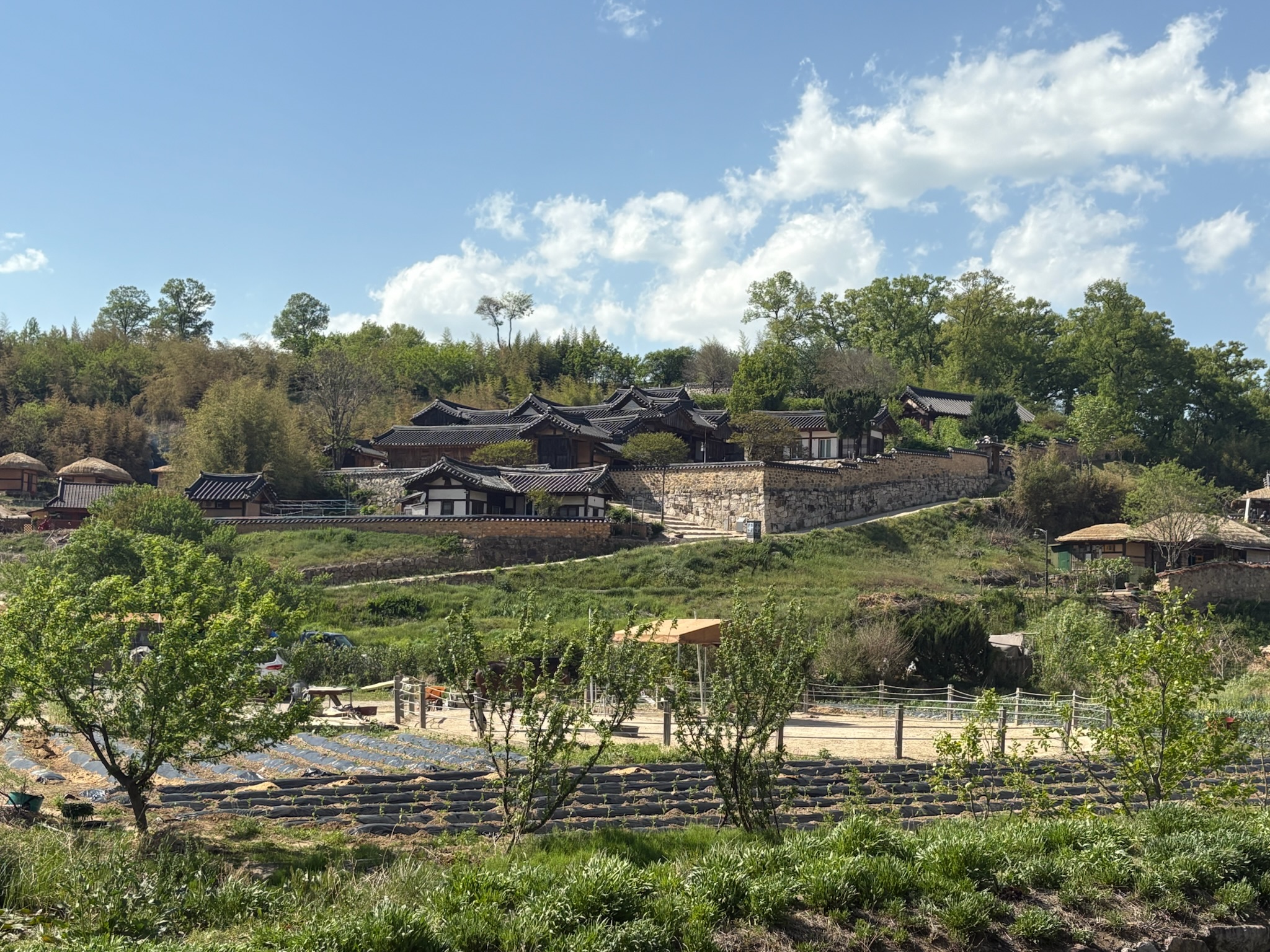
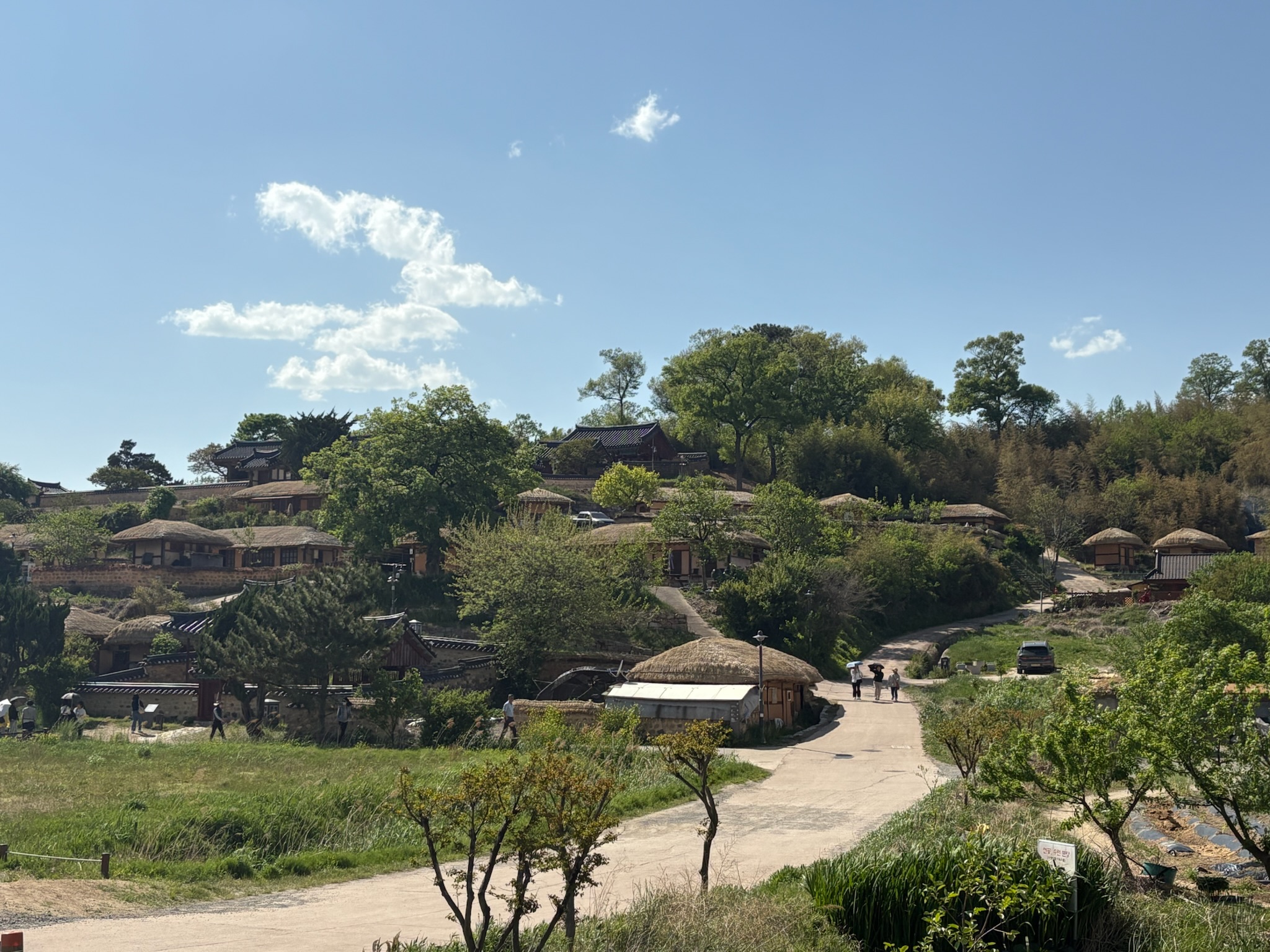
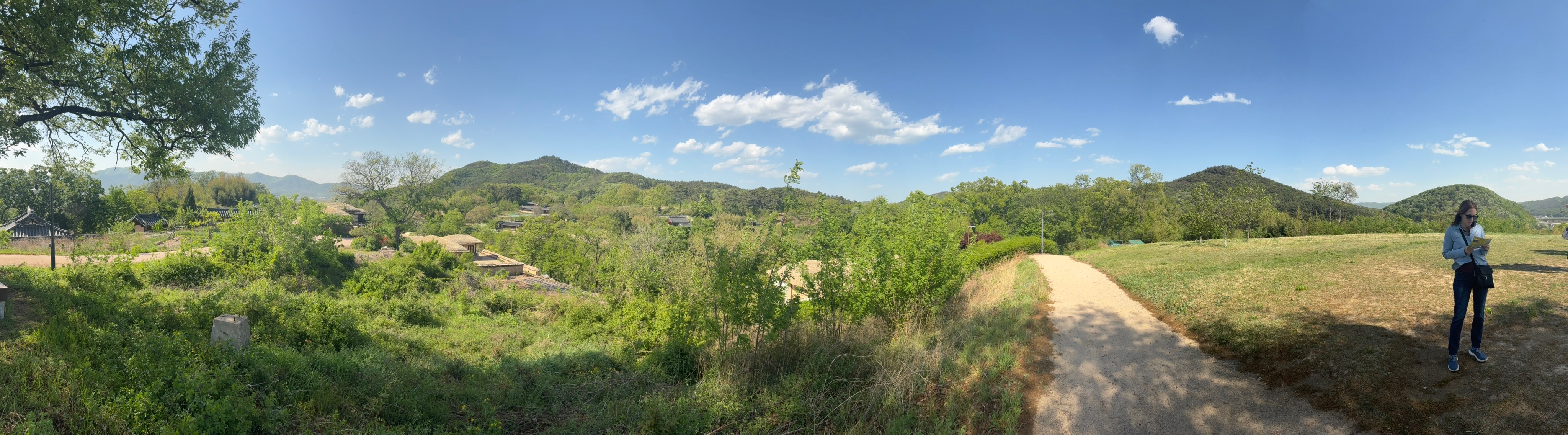
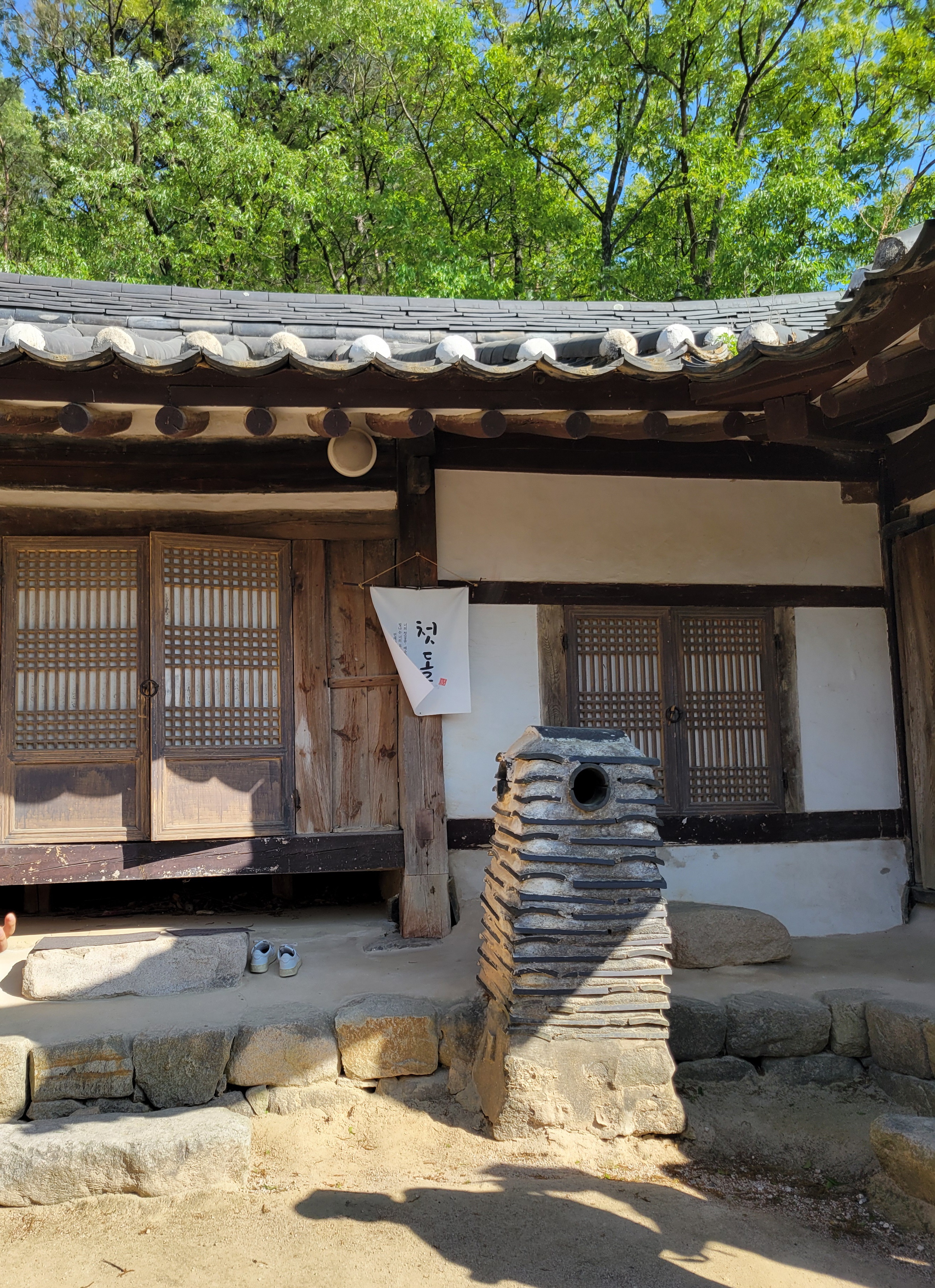
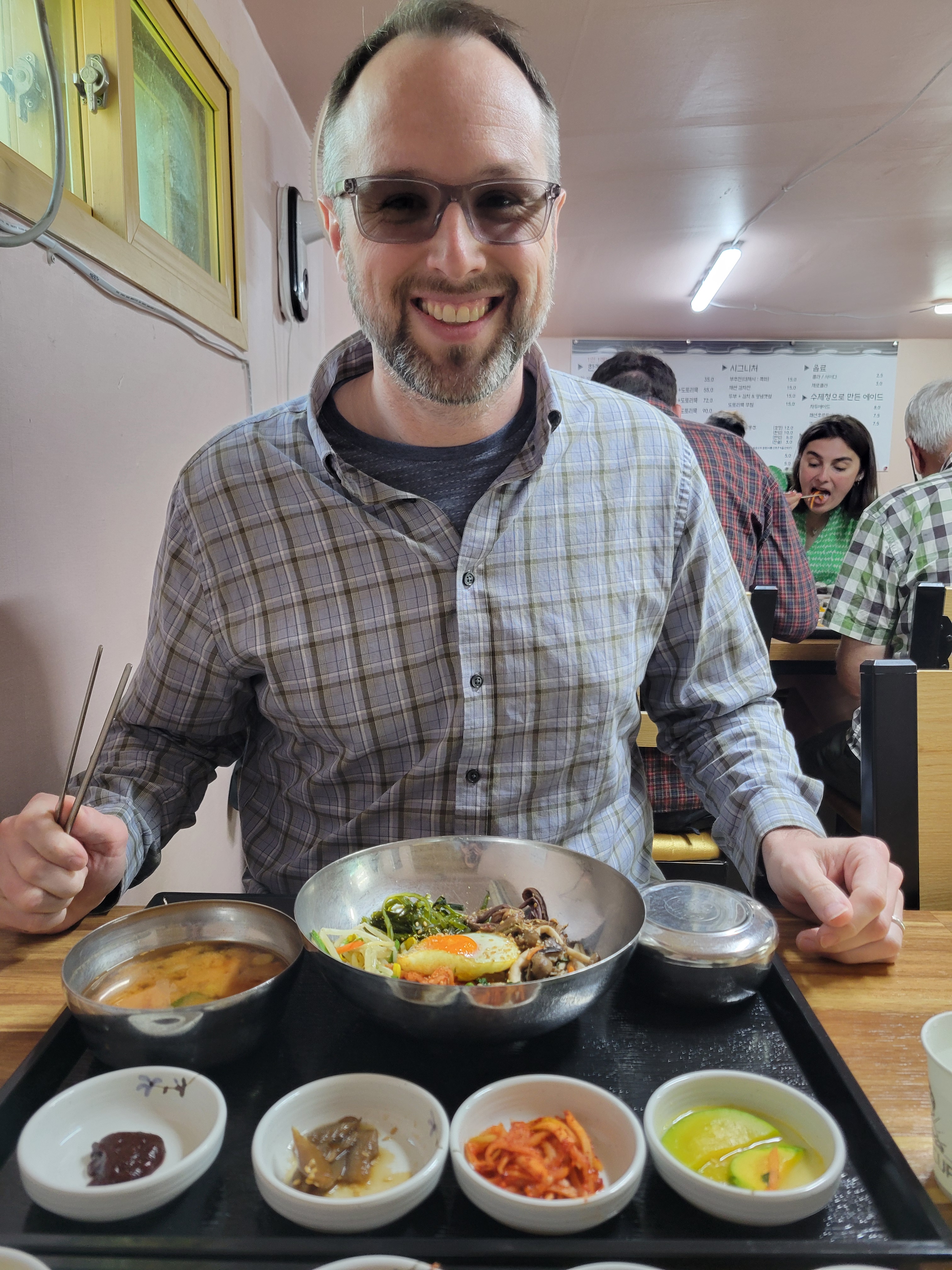
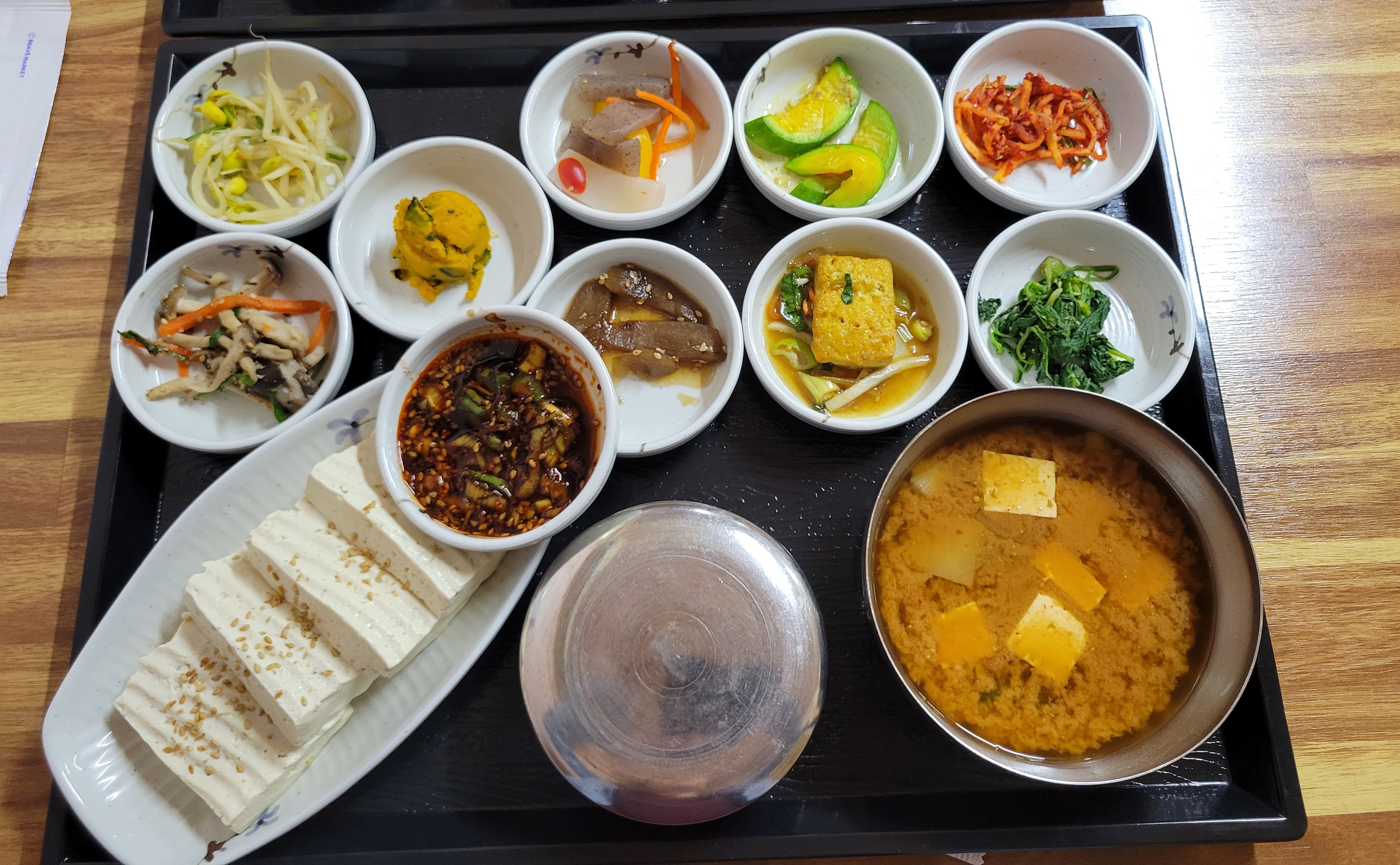
We also went to the Yangdong Village, a traditional village. It wasn’t super interesting historically to be honest–there were just buildings, no furniture or other belongings. It could just be me though; I like to imagine ancient people’s lives and it wasn’t very easy from what was preserved. It was a beautiful day–10 out of 10, would recommend for Japanese/Korean weather in April–and we had a lovely countryside walk and a really delicious meal. One really cool thing–traditionally the Koreans used a hypocaust system to heat their houses. Basically, they warmed the floors to heat the rooms. I always wondered why there were no fireplaces in the houses and why they slept on the floor. I guess I just thought they were hardier than Europeans, lol. In front of the house below, the stack of bricks with the holes is a chimney to release the smoke from the fire used to heat the floors.
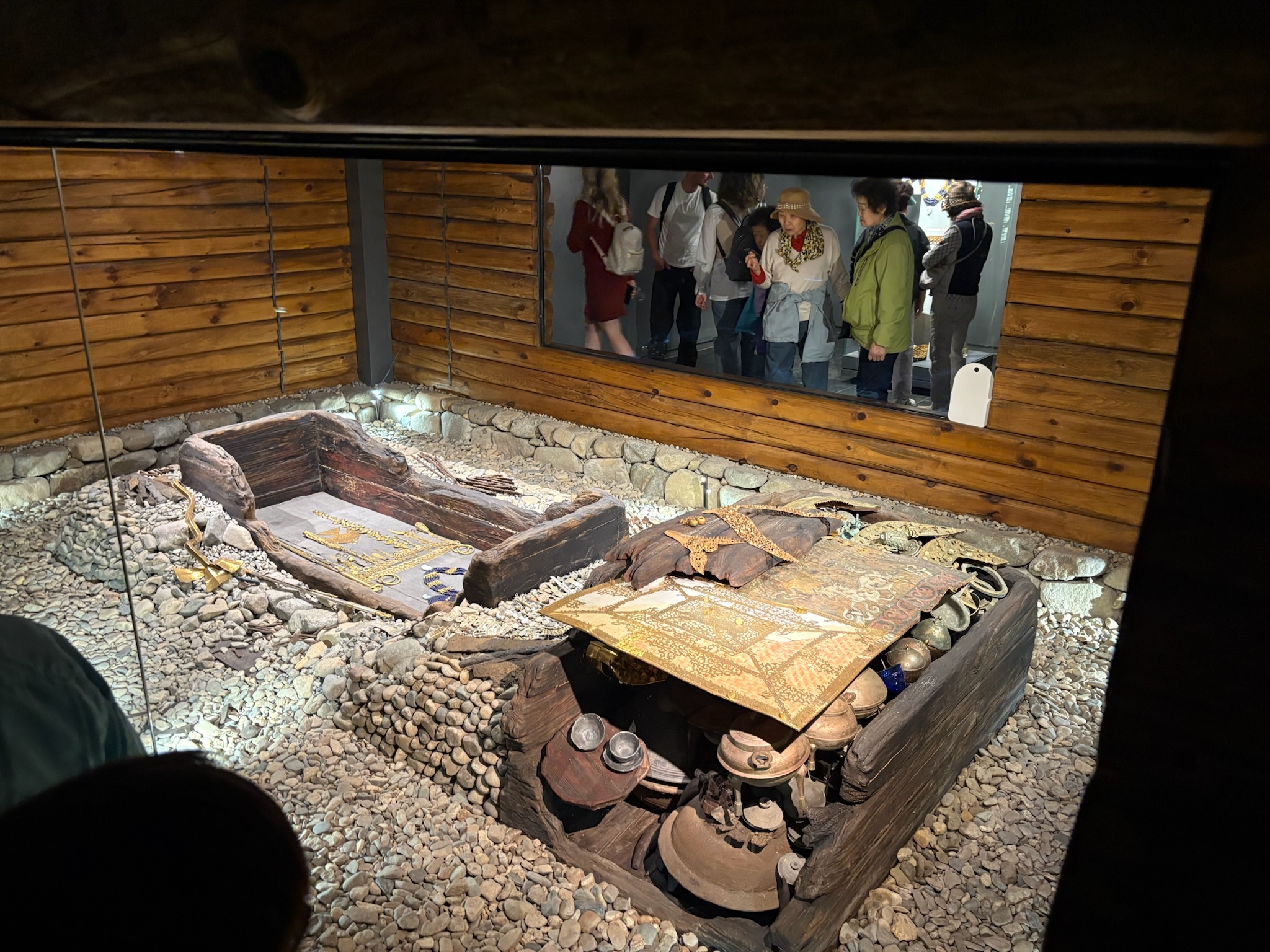
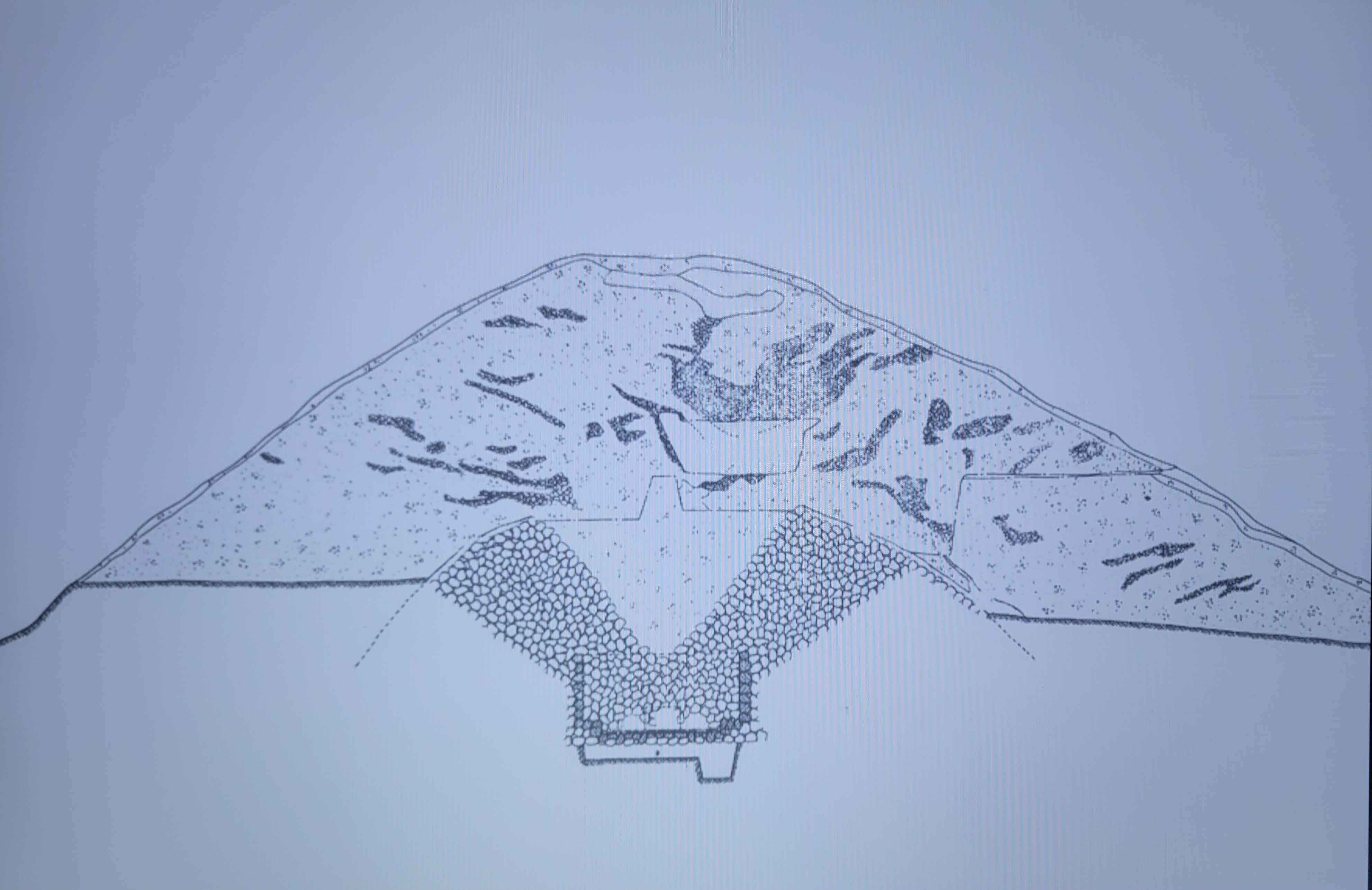
We saw some amazing tombs in the Daereungwon Tomb Complex–check out the hill tombs! There were so many of them. Obviously only the important people got buried in these, but it is a beautiful place to be buried.
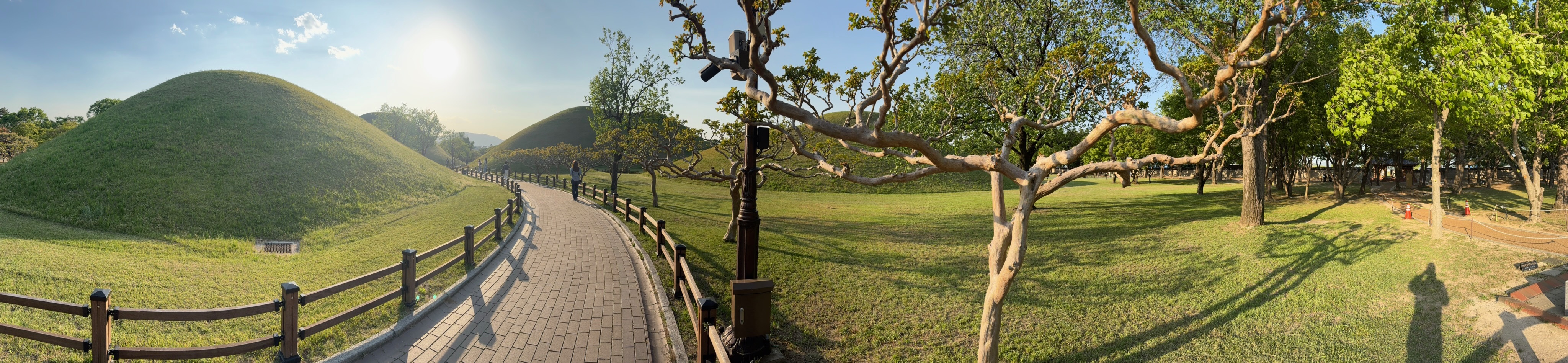
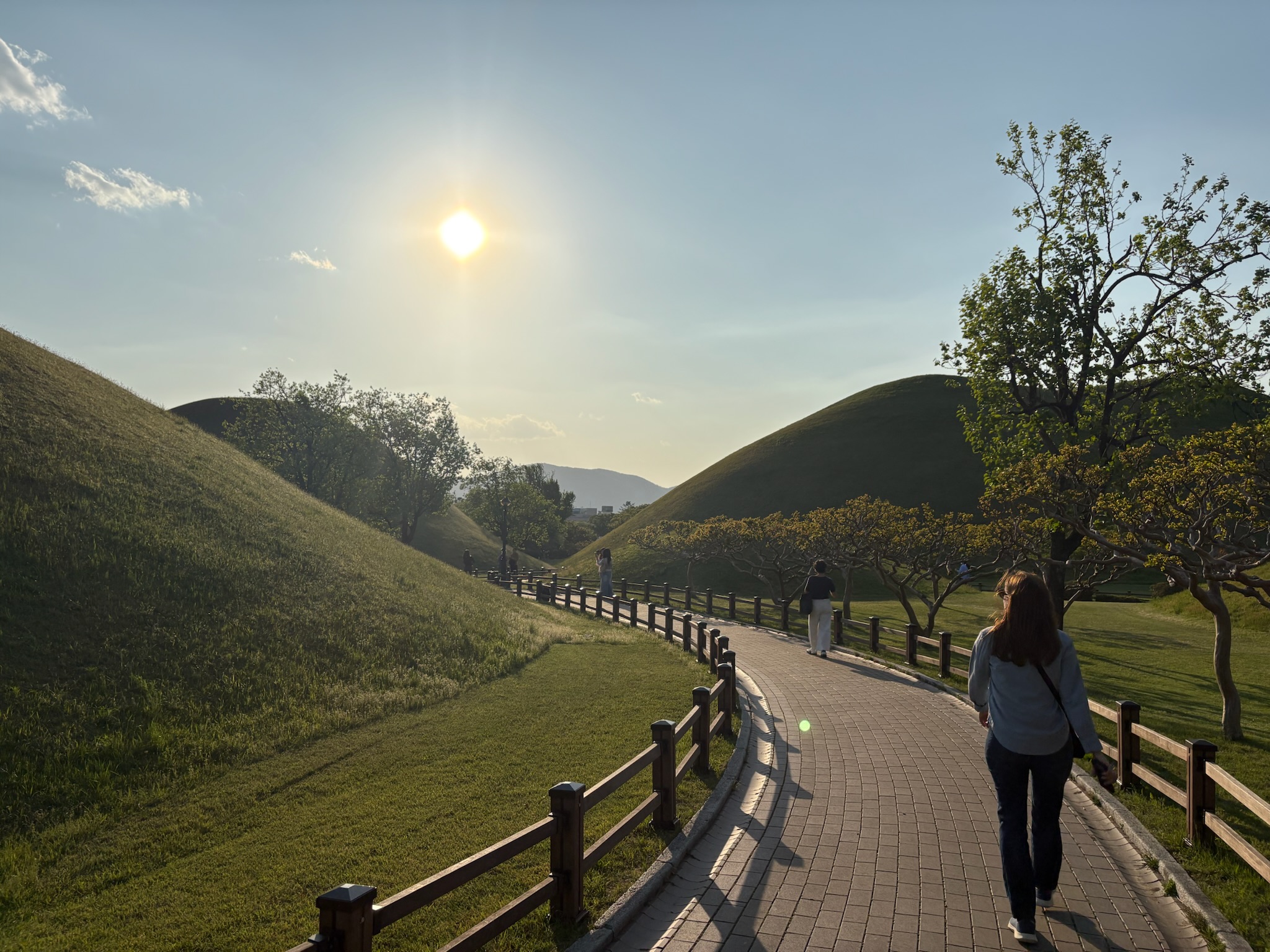
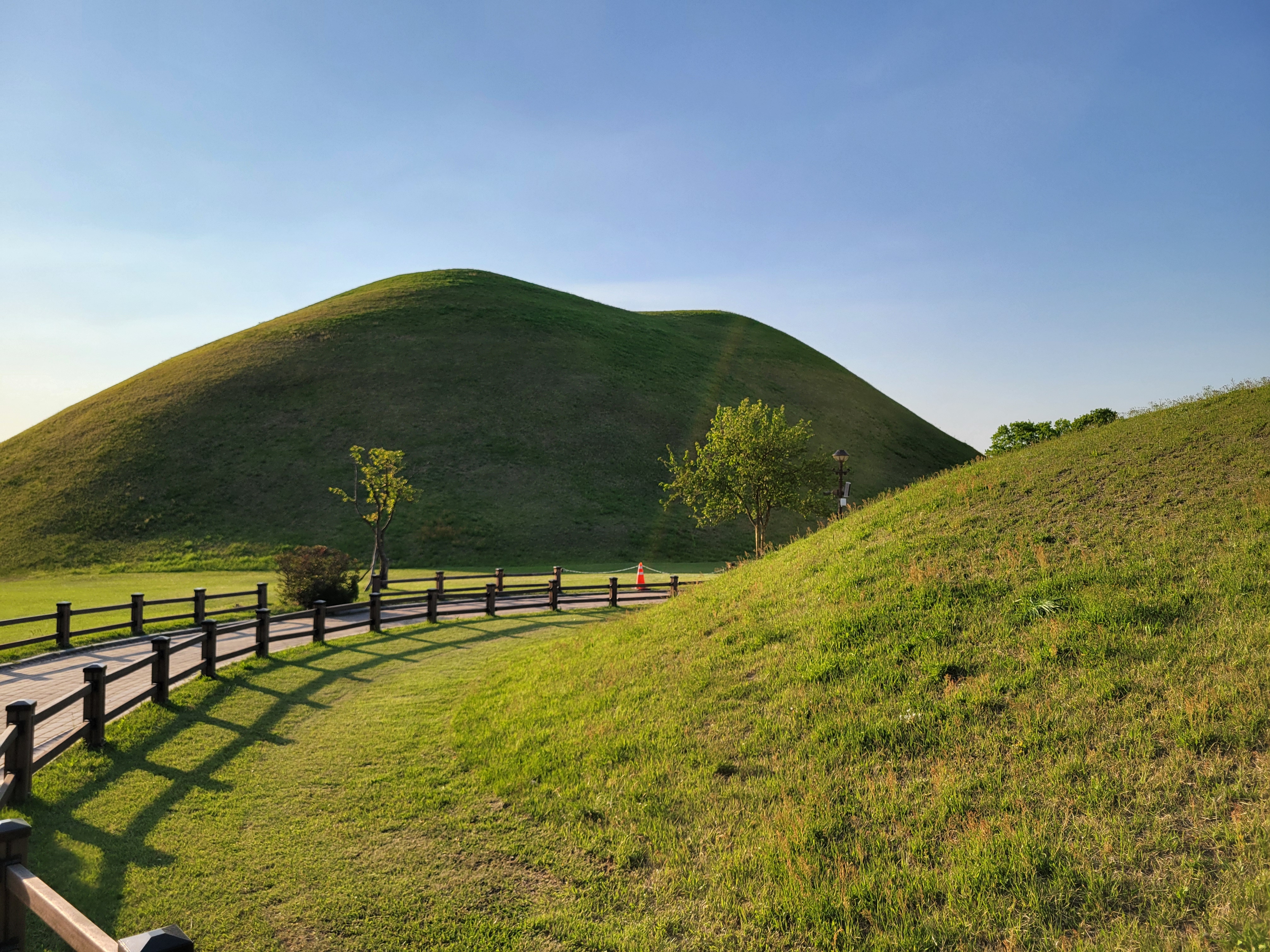
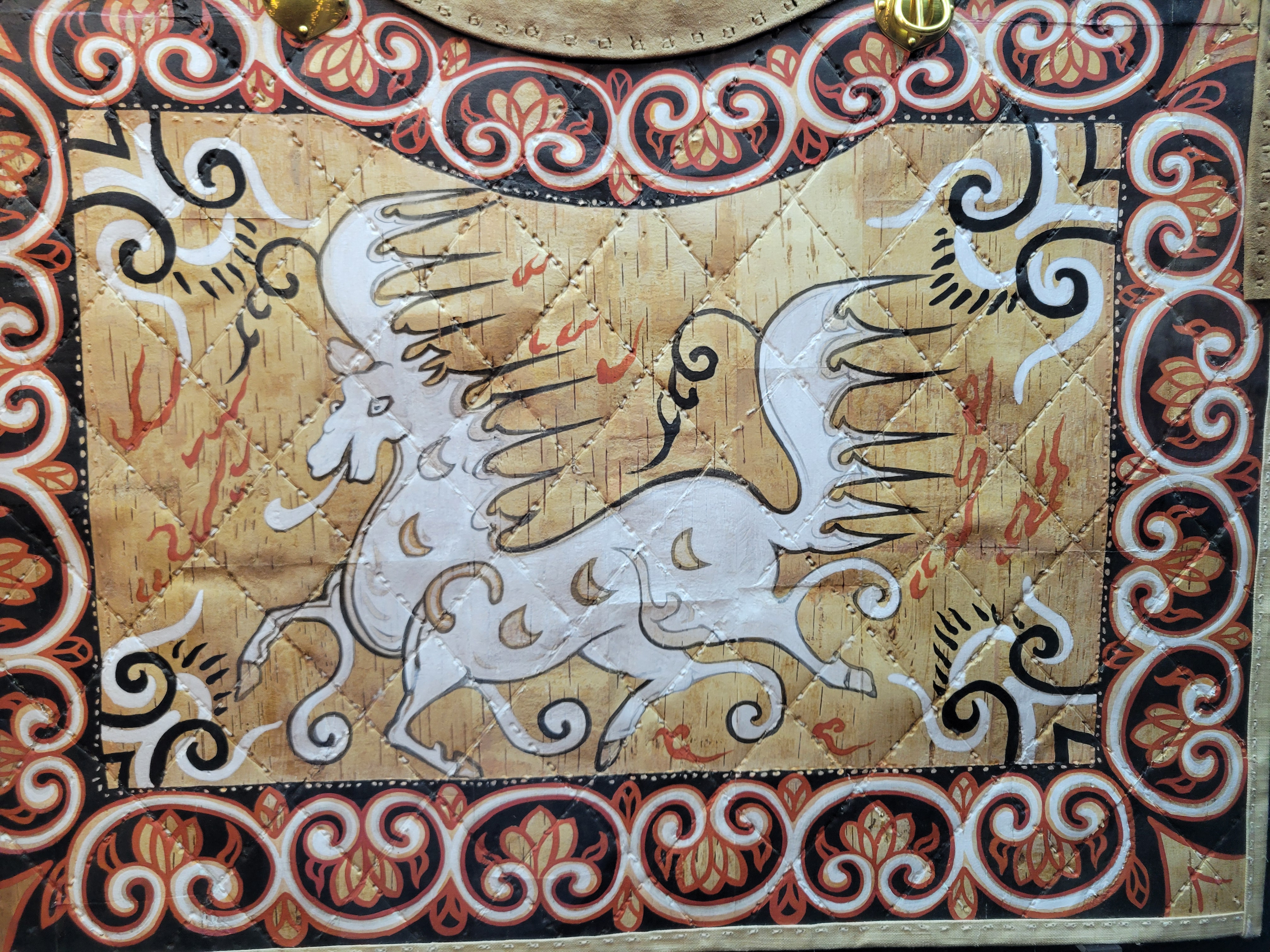
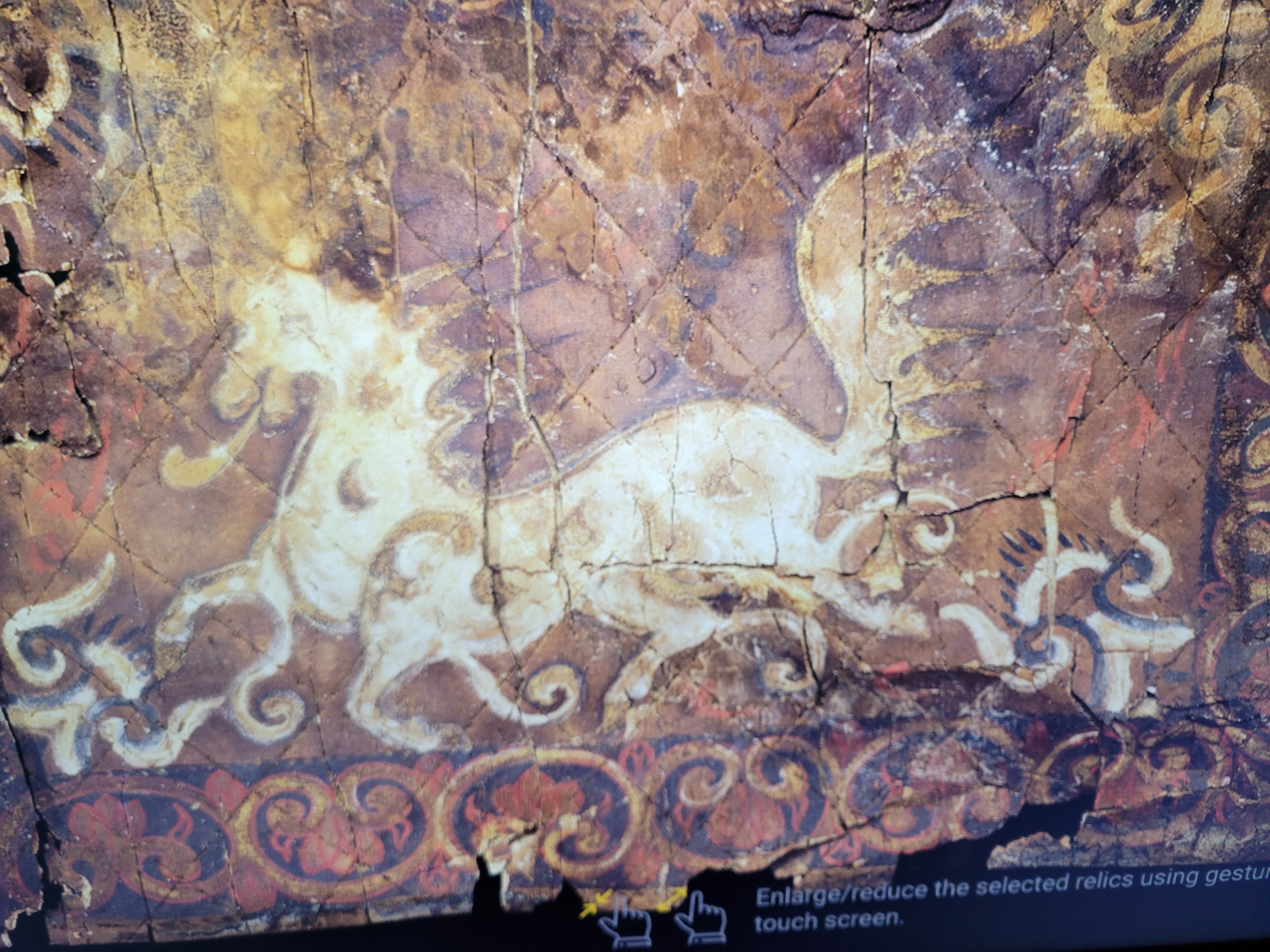
These important people were also buried with all their best stuff. There was one tomb that you could actually enter. It was for a King who was really into his horse. I’m not going to upload all the things he had to dress up his horse, but trust me, he loved it. The horse depiction on his saddle’s mud guard has become a symbol for the area.
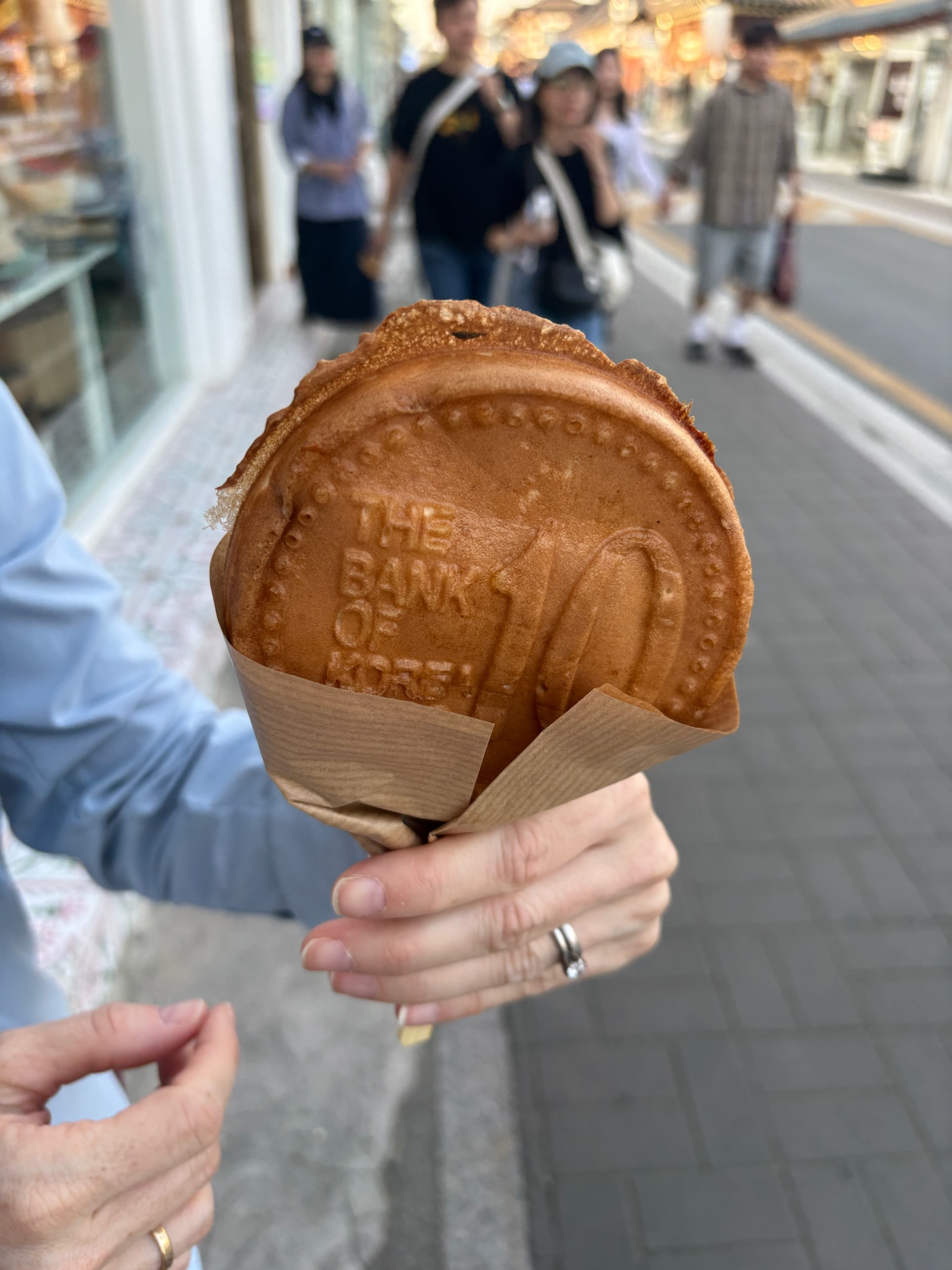
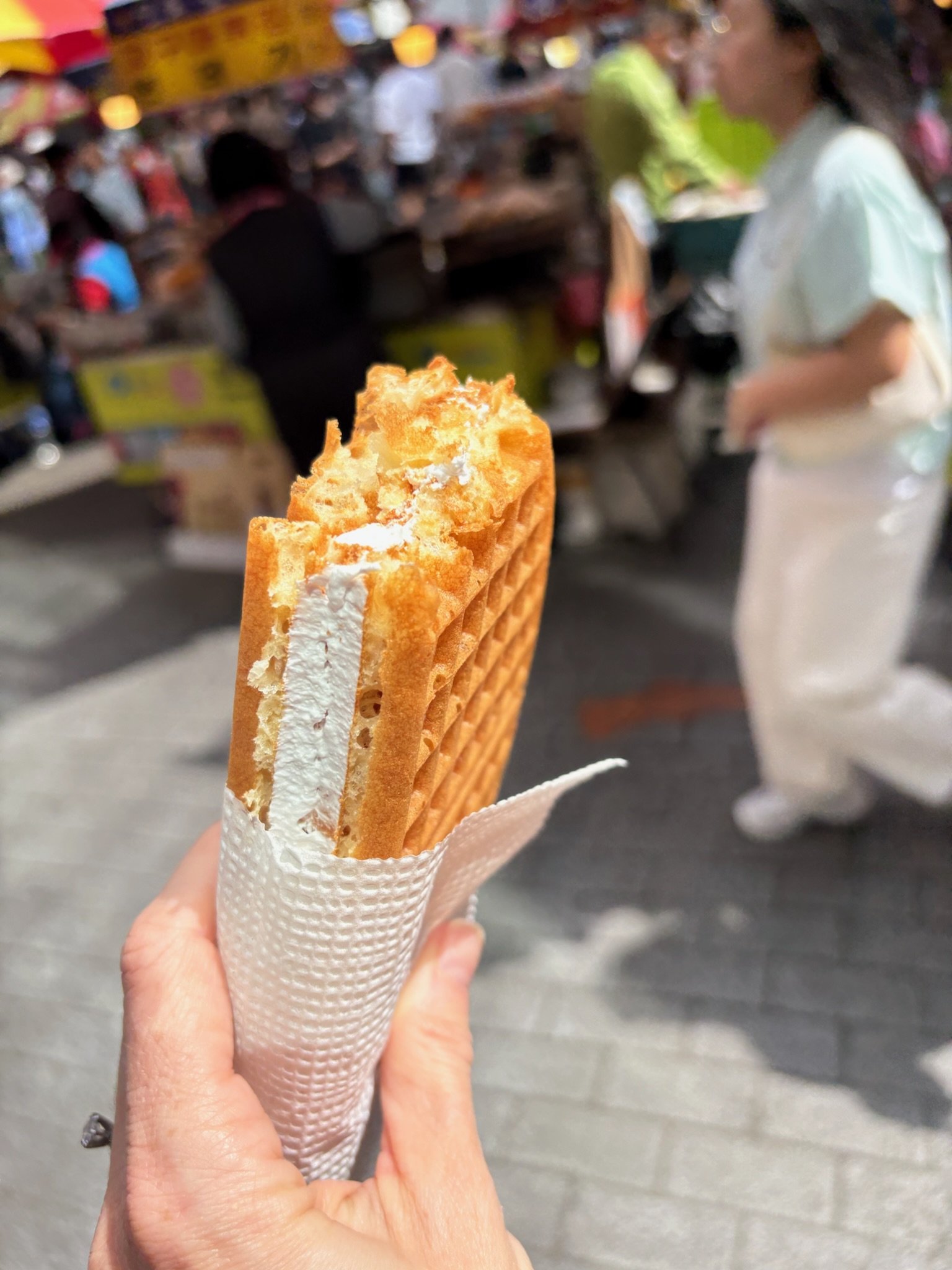
We spent a little time walking around the area, which was called Hwangnidan-gil, and got a traditional bread from a surly woman. It looks like the 10 won coins here and it tastes like a waffle with some really stretchy mozzerella inside. With all the cheese-stretching it was pretty fun to eat.
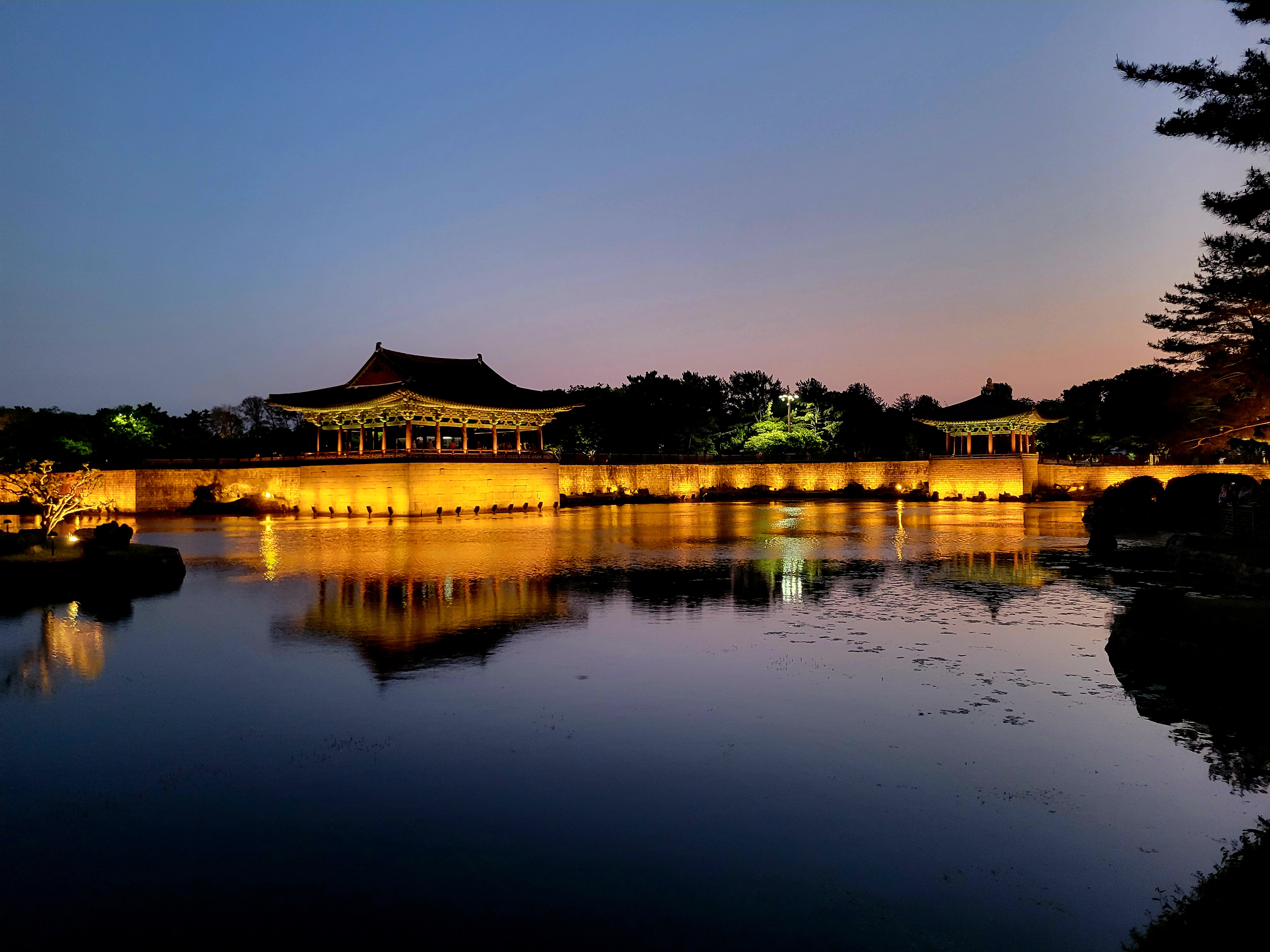
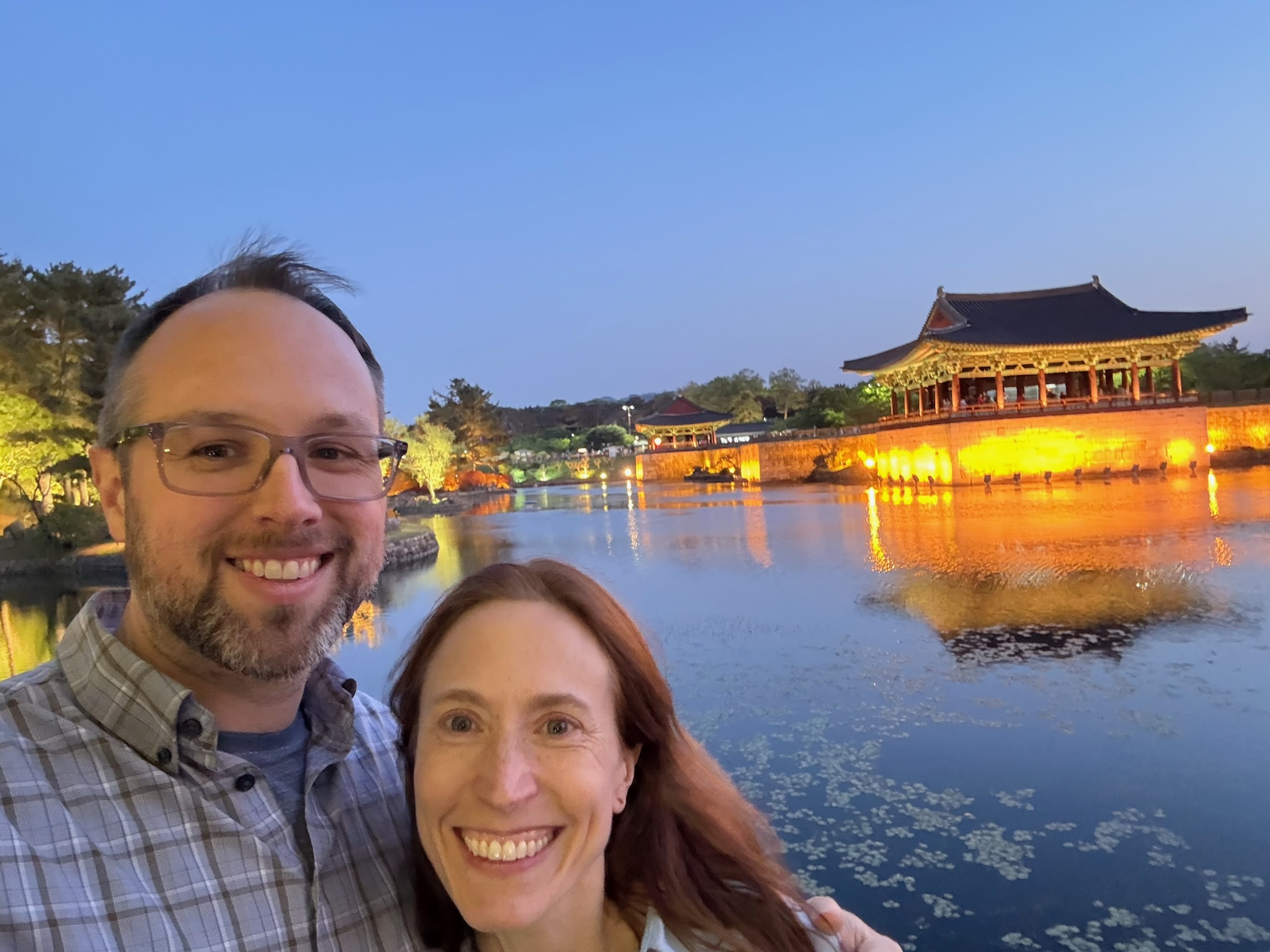
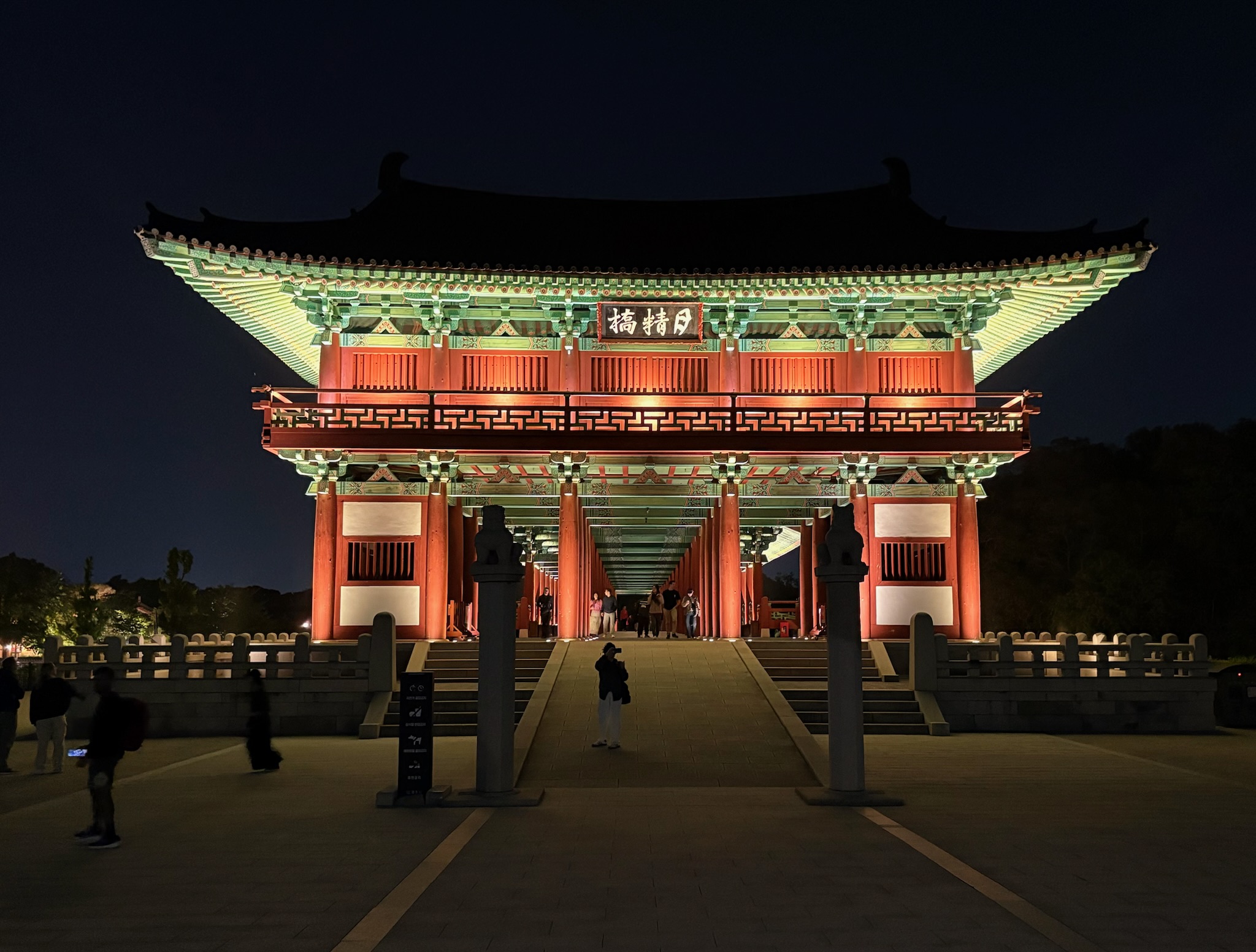
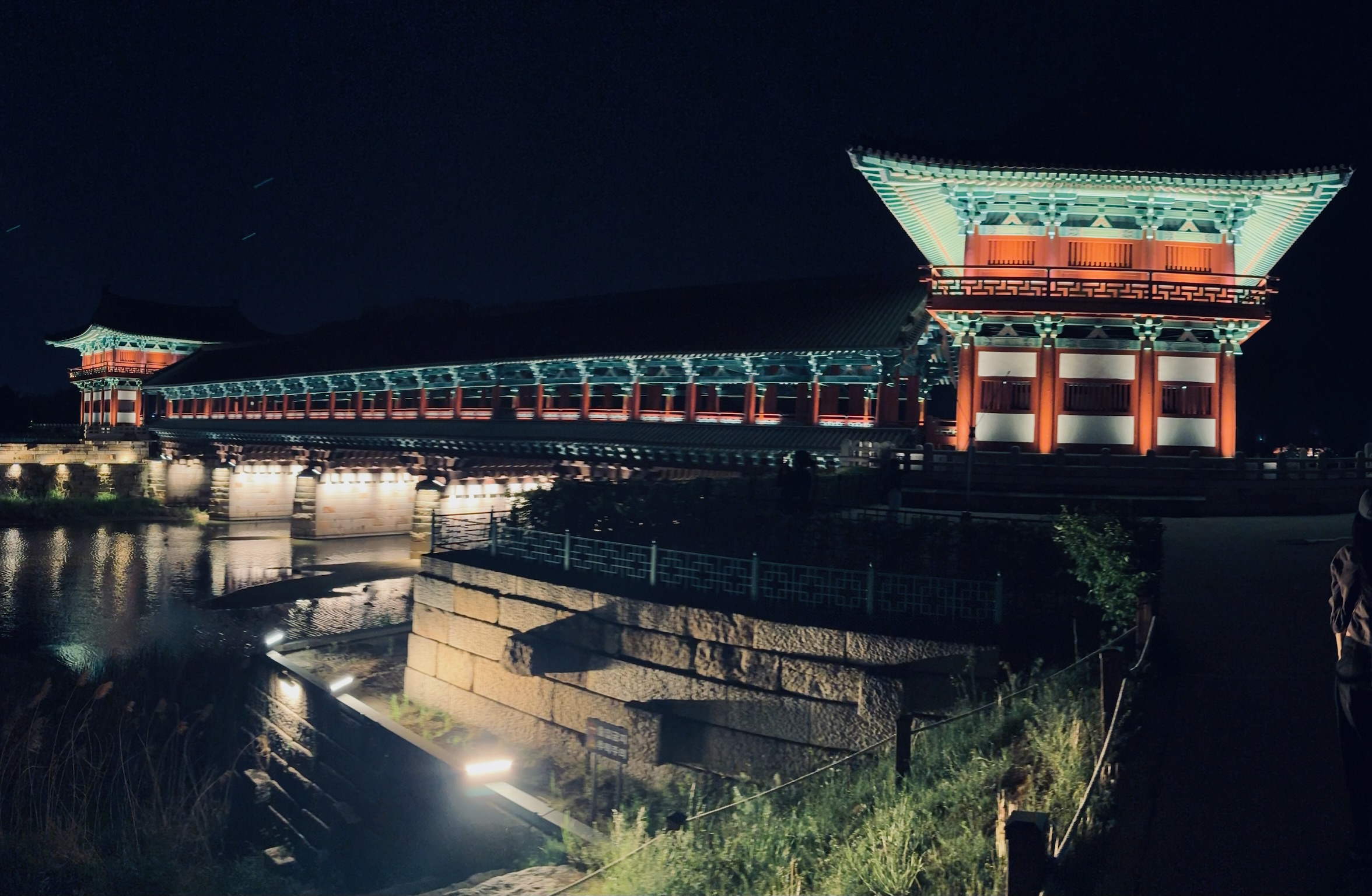
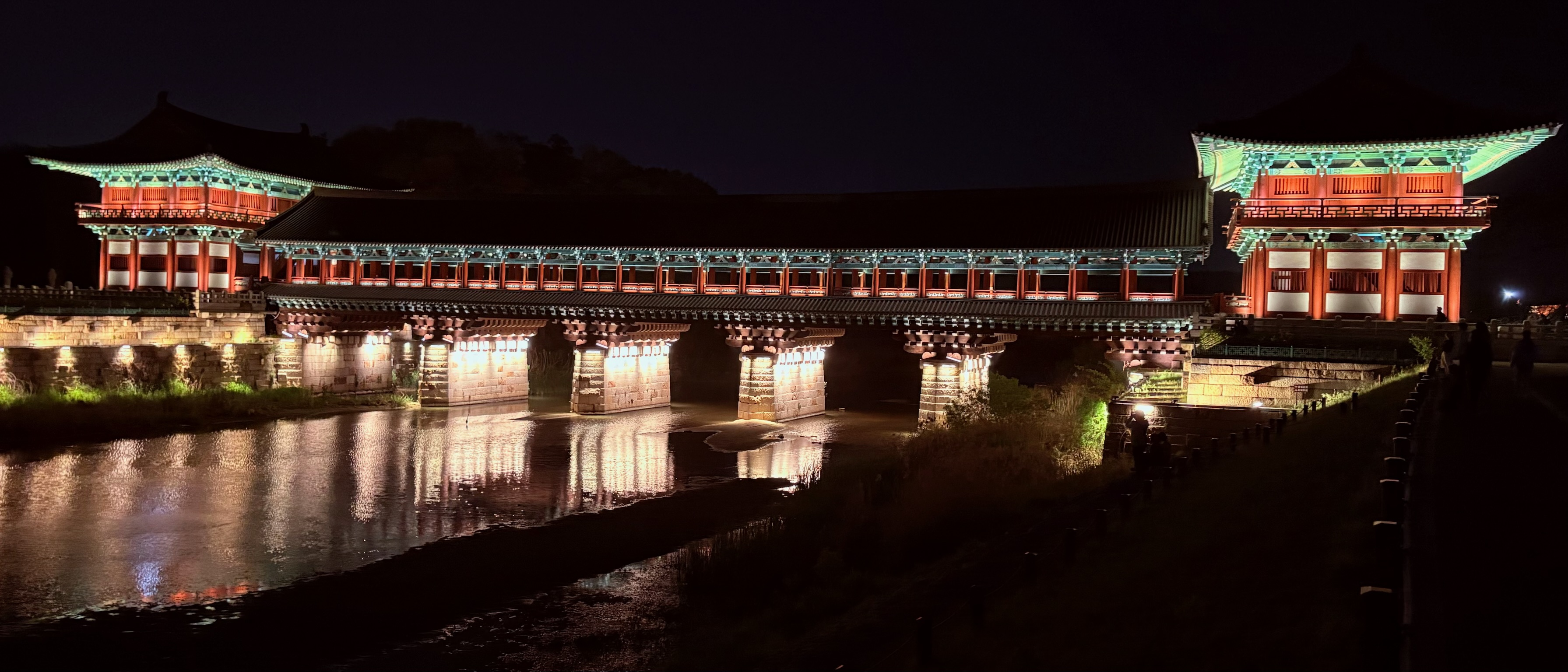
We were starting to flag at this point, but went to two more sites. One was a noble palace complex, Donggung Palace and an artificial pond called Wolji Pond built in 674. These buildings are reconstructions of the originals. “Wolji” means “pond that reflects the moon.” It did provide lovely reflections of the buildings especially as it got dark. The other site was the Woljeonggyo Bridge; this was another reconstruction, but very beautiful at night.
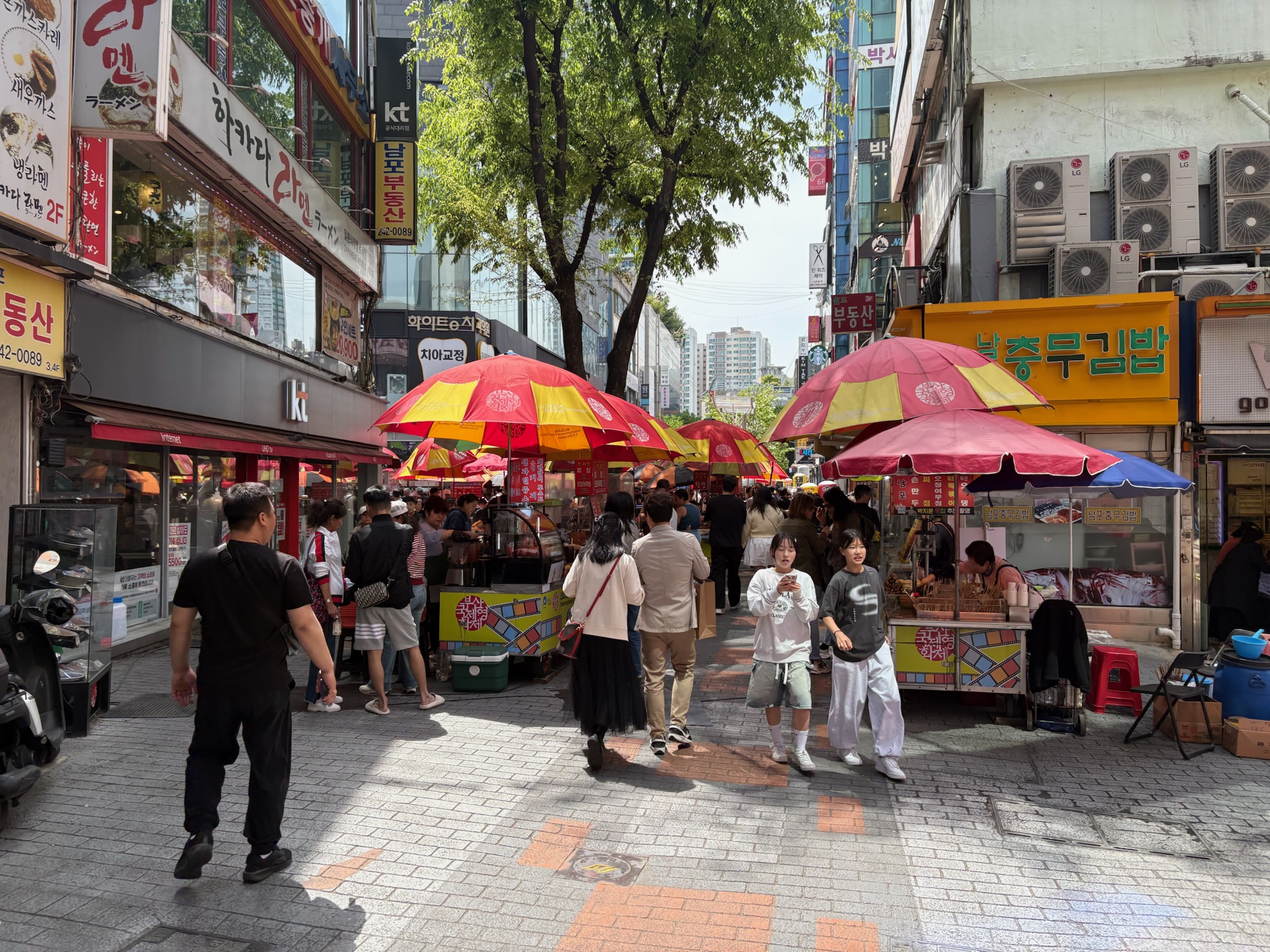
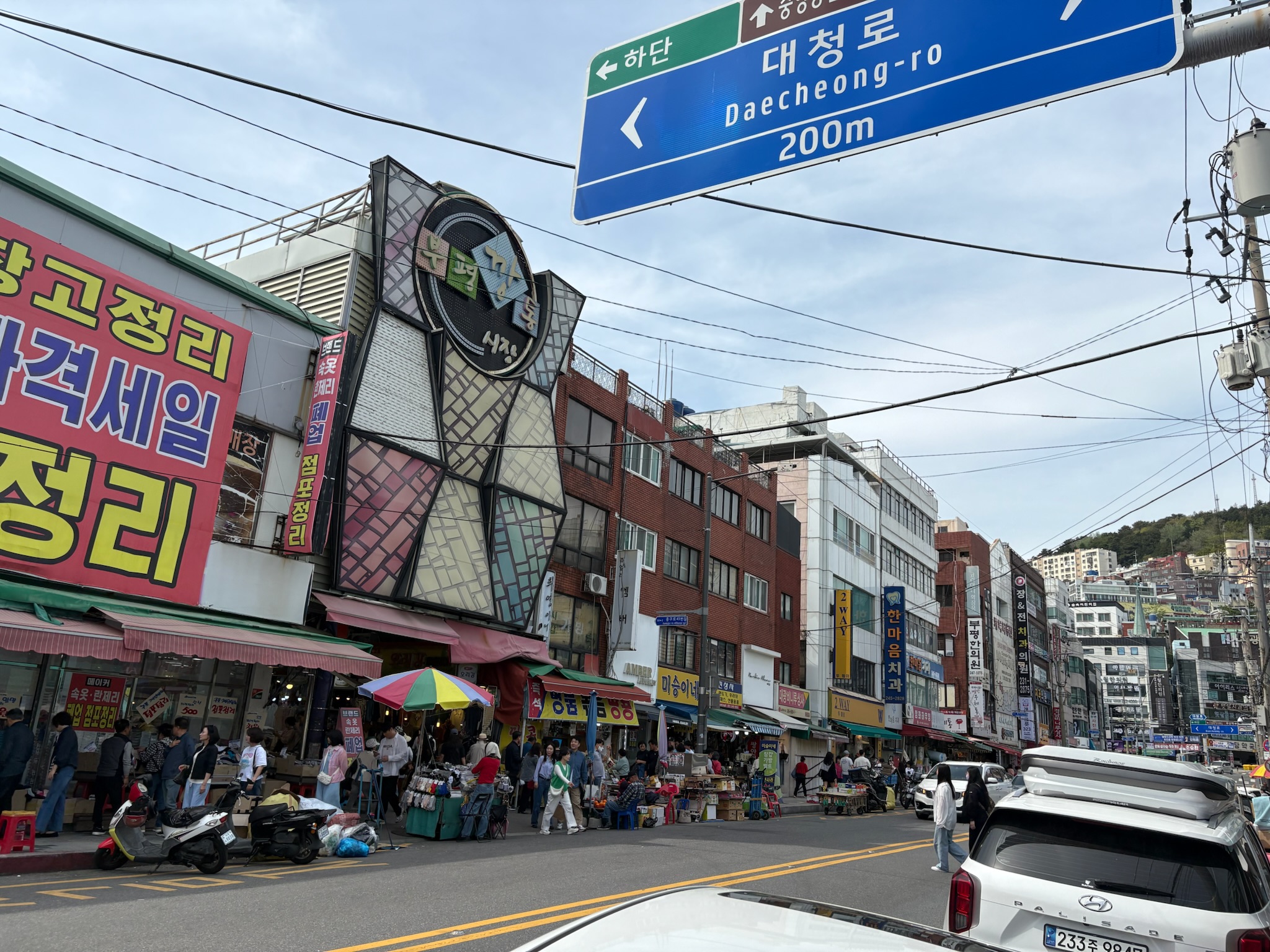
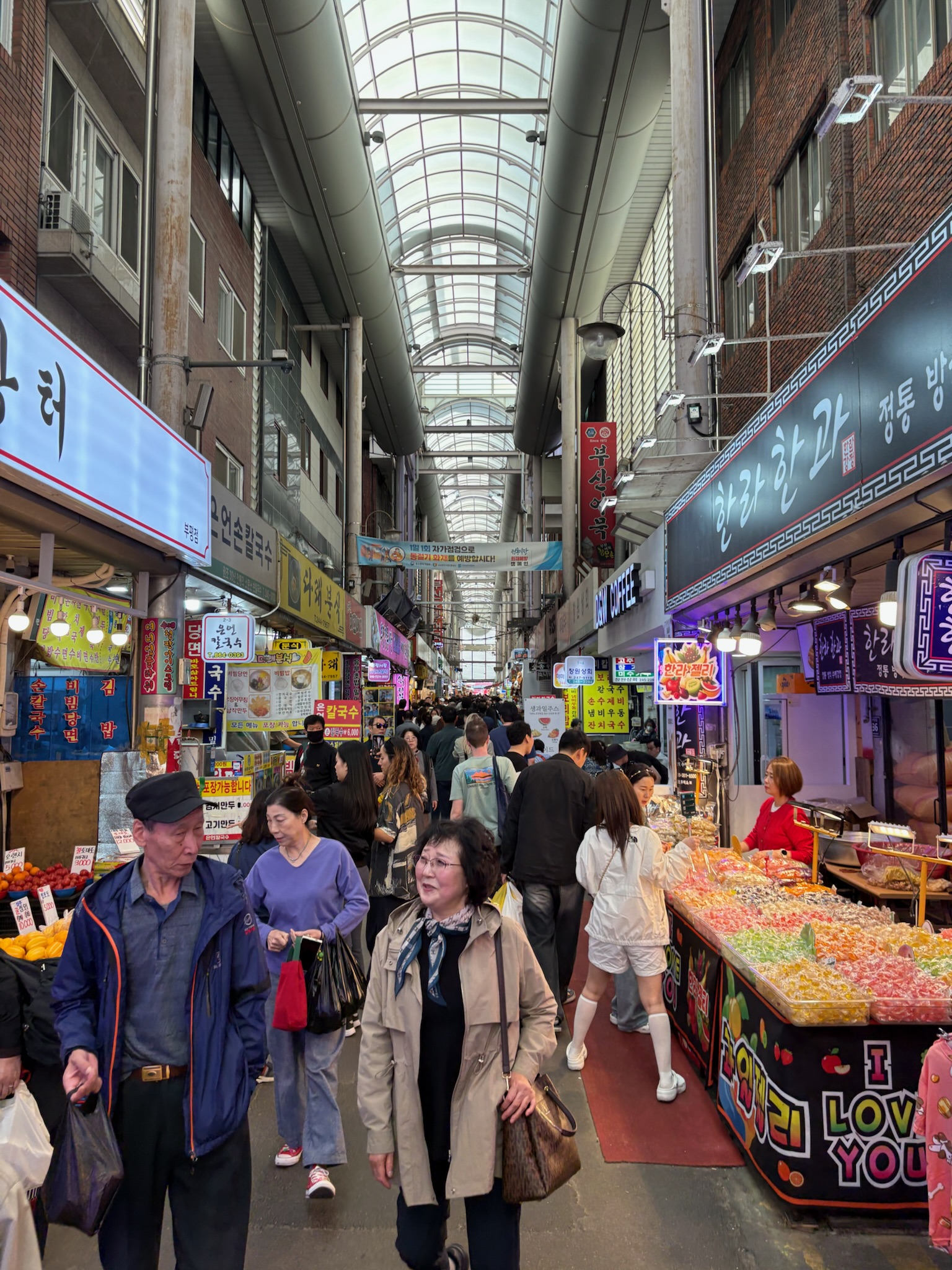
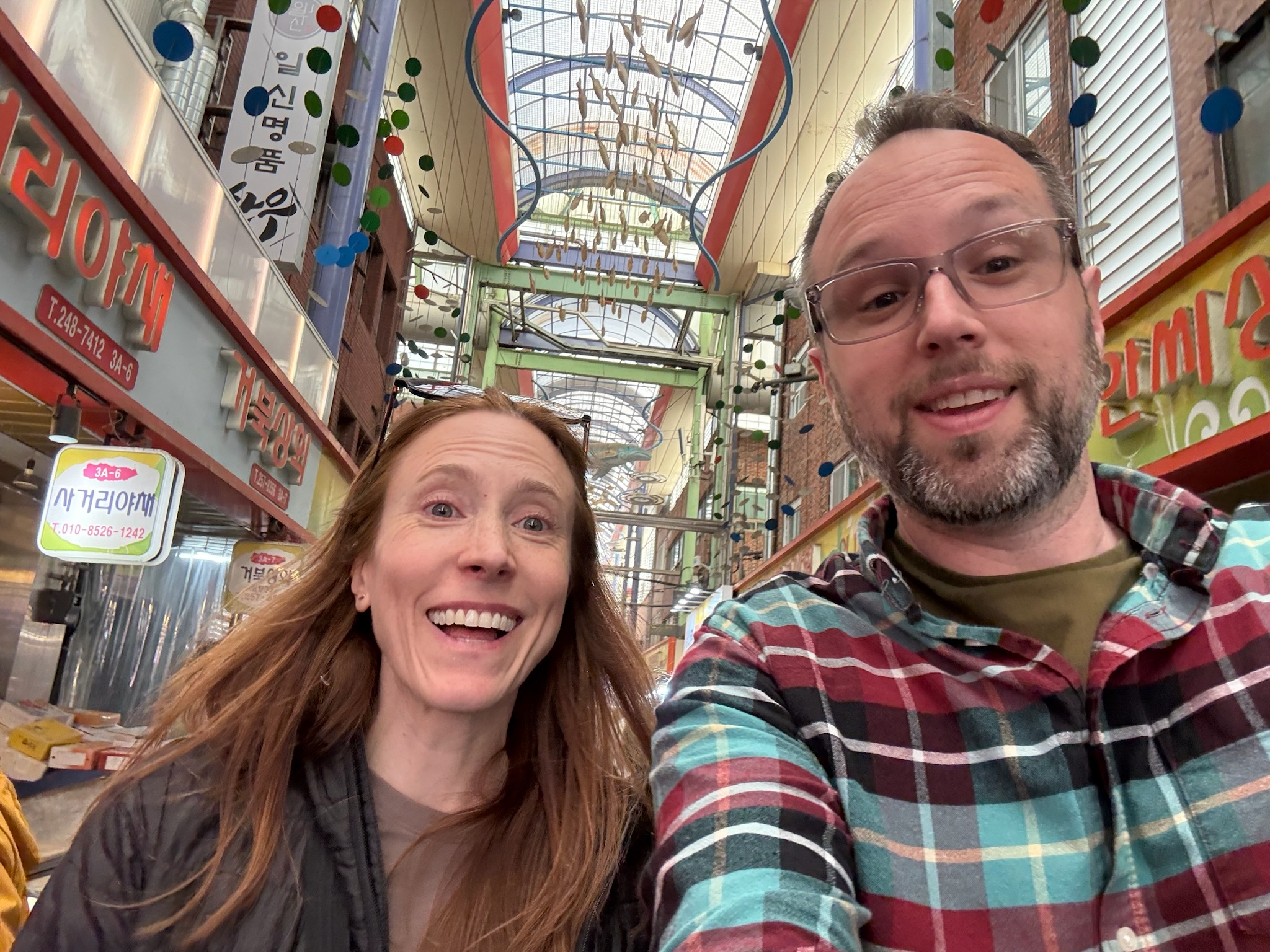
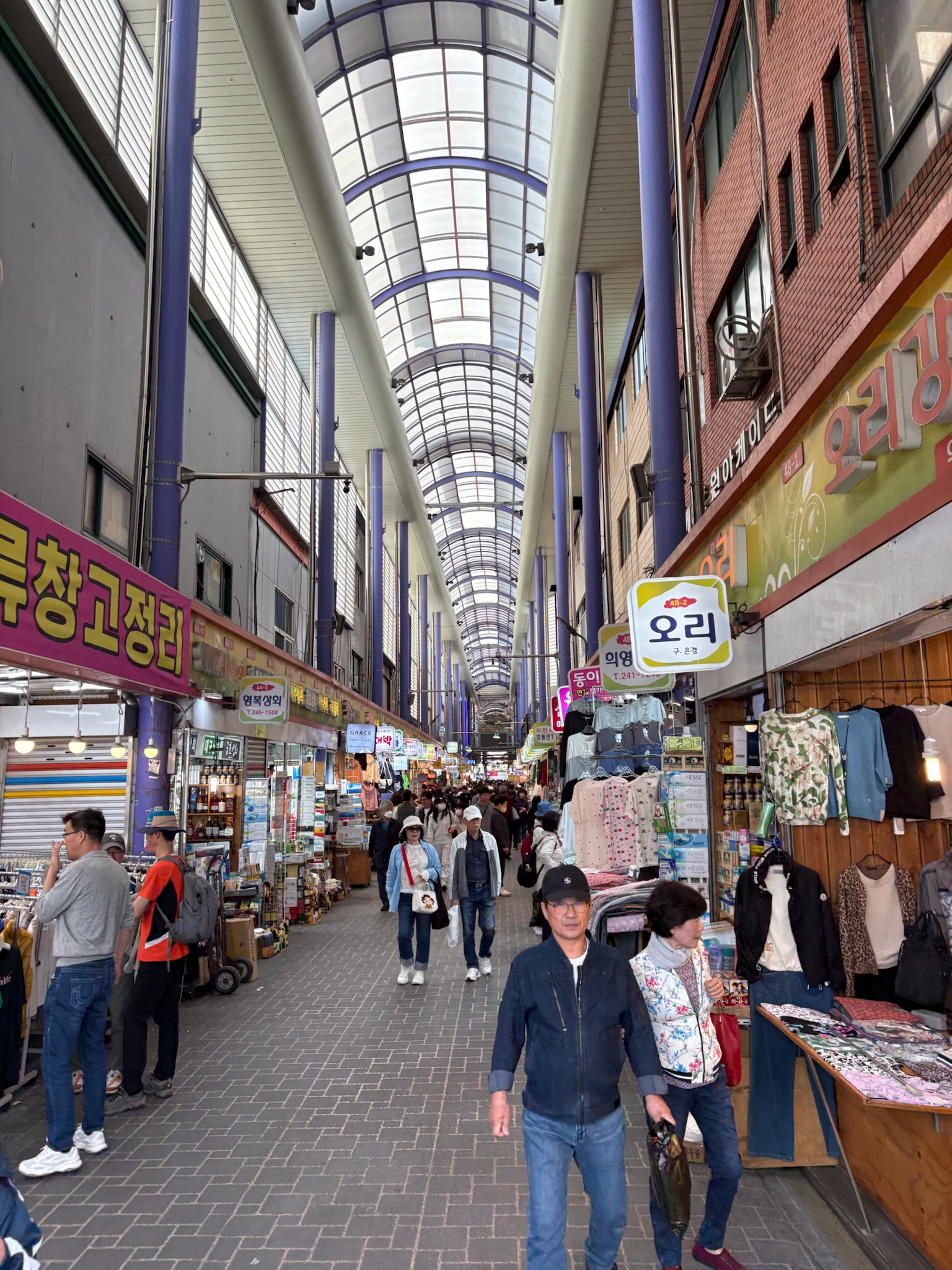
Finally some street views and pictures of the markets of Busan–these looked pretty similar to the ones in Japan–lots of dead sea creatures and sweet treats, but with fewer tourists and fewer major stores.
Thanks for reading!
 Kelly and Garett Get Away